


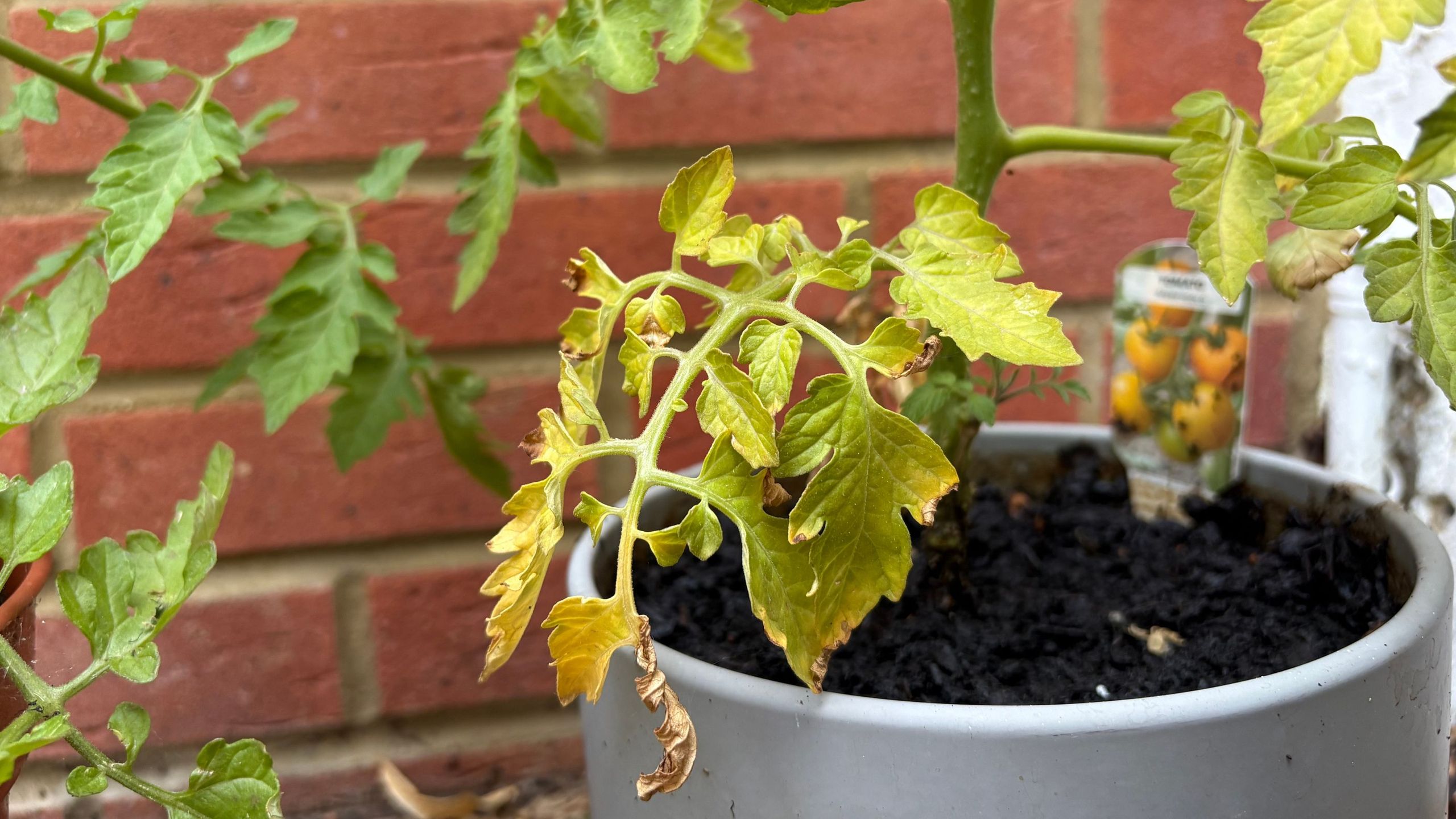
Tomatoes are rewarding crops, but thanks to this year’s heatwaves (I’m defending my tomato care skills at all costs), the leaves on my tomato plants are yellowing more than they usually would.
Learning how to grow tomatoes isn’t that difficult once you know how to water, feed and support them properly, but this summer’s heatwaves have taken some of their fate out of our control in recent weeks.
If you’ve found yourself wondering why the leaves on your tomato plant are turning yellow, there are four likely culprits.


Tomato growing essentials
Levington
Tomorite Concentrated Tomato Food, 1L
Levington Tomorite has long been a bestselling classic tomato fertiliser.
Halatool
2 Pack Tomato Cages
Tall tomato cages are ideal for supporting cordon tomato plants.
TradeXone
Strong Heavy Duty Professional Bamboo Canes
Bamboo canes and string make durable, budget-friendly tomato supports.
1. Heat stress
As you’d expect, heat stress is one of the leading causes of yellowing tomato plant leaves during a heatwave. Tomatoes are tender crops and love the sun, but the UK has already hit extreme temperatures this summer.
‘Tomato plants thrive in daytime temperatures of between 21-27°C during the day, and nighttime temperatures falling to between 15 – 18 °C,’ explains Lucie Bradley, gardening and greenhouse expert at Easy Garden Irrigation. ‘With temperatures reaching well into the mid 30s, your tomato plants will be suffering in this intense July heat.’
Lucie also explained that tomato plants enter survival mode when temperatures remain consistently high.
‘They try to conserve energy and water by getting rid of their older leaves,’ she explains. ‘It does this by actively withdrawing nutrients and chlorophyll from the older leaves. As chlorophyll is directly responsible for the green colour of the leaves, they turn yellow and eventually dry, turn brown and fall off.’
You can shade your plants using cloths like this shade netting from Amazon to take some of the heat off of your tomatoes – but there are also plenty of ways to protect potted plants in hot weather if you’re growing your tomatoes in pots. Lucie also recommends shade paint if you’re growing your tomatoes in a greenhouse (try this Vitax Summer Cloud Greenhouse Shading from Amazon).
2. Watering incorrectly
The most obvious reason behind the leaves on a tomato plant turning yellow during a heatwave might seem like heat stress alone, but it’s often the way we respond to the heat that can affect the plant. Watering is one of the most important July tomato plant tasks, but you can actually be too enthusiastic with the watering can during a heatwave.
‘Older lower leaves turning yellow can be natural ageing, but if yellowing climbs up the plant, it’s more likely stress,’ says Julian Palphramand, head of plants at British Garden Centres. ‘Overwatering can make leaves look yellow and dull because soggy roots can’t do their job, while underwatering in a heatwave can also cause yellowing, especially in pots.’
It’s difficult to save an overwatered plant, so prevention is better than cure. If you’re struggling to gauge how much water your tomato plant needs or when it needs it, it’s worth investing in a budget-friendly soil moisture meter like this one from Amazon.
3. Nutrient lockout
Nutrient lockout is another side effect of overwatering your tomatoes during a heatwave and a leading cause of yellowing tomato plant leaves. Feeding is a crucial tomato task if you want the plants to fruit well, but your watering habits might be cancelling your efforts.
‘Nutrient lockout is another possibility as the plant can’t access nutrients if the soil is too wet, too dry or out of balance,’ says Lucie. ‘If you’ve been feeding heavily but the leaves still look unhealthy, check the watering and soil before piling on more.’
Lucie recommends removing the yellow leaves to redirect the plant’s energy into its healthier stems and fruit production.
‘Removing them also helps to improve airflow around the plant and helps to prevent fungal diseases,’ she adds.
4. Fungal diseases
Sadly, there is a fourth reason that the leaves on your tomato plants are turning yellow – and it’s perhaps the least desirable.
‘If the leaves are just speckled with yellow or still show green veins, it’s more likely to be a nutrient deficiency,’ says Lucie. ‘If you see spots or fuzzy mould, then the yellow could be caused by fungal diseases.’
Fungal diseases are harder to tackle, but Julian recommends removing affected leaves, improving airflow and avoiding wetting the foliage to give your plant its best chance of survival.
‘If you rule fungal diseases out, then you can help your plants to cope and recover from heat stress by not only removing the yellow leaves, but also providing shade and keeping a close eye on the moisture in the soil,’ Lucie adds.
Yellow tomato leaves at the base of the plant can be a normal sign of ageing, but keep the above causes in mind if you notice yellowing on other parts of the plant.
TOPICS
Read the full article here