


Our gardens will soon start to wind down for the summer, and that window gives us the perfect opportunity to prune certain plants in August.

Many plants should be deadheaded in August to keep them blooming for longer, but others will have finished flowering by now, and benefit from a harder prune instead. Others can be tidied up to encourage healthier growth and better fruiting next year.

Not sure where you can and can’t use the secateurs this month? I’ve pulled together a guide on what to prune in August to get you started. It’s wise to have a thick pair of garden gloves or gauntlets to hand, since some of the plants on this list have sharp thorns.

Latest Videos FromIdeal Home

What you’ll need

1. Trained fruit trees

Seeing apples and pears on a list of plants to prune in August might seem bizarre, since the best time to prune them is during the colder months of the year – but trained fruit trees, like espaliers, can be lightly trimmed this month.

‘If you have trained apple and pear trees, these can be pruned in August by shortening side shoots to about three leaves above the basal cluster,’ says gardening expert Paul Parker from plants and bulbs specialists J. Parker’s. ‘This keeps their shape tidy and encourages fruit bud development for next year.’

A sharp pair of high-quality secateurs like the WOLF-Garten Bypass Secateurs (available at Amazon) are ideal for pruning fruit tree side shoots.

2. Pyracantha

It won’t be long before red berries start to appear on pyracantha shrubs, offering vibrant displays throughout autumn and winter. Pruning pyracantha at the end of August will make room for the berries to be fully visible during the colder months.

These shrubs have sharp thorns, so you’ll need a thick pair of tough garden gloves or gauntlets like these Woodside Heavy Duty Thorn Resistant Gardening Gloves from Amazon to protect your skin while you prune them.

‘When making your first cuts, be wary of going too hard and aim to remove the fluffiness of fresh foliage but not the ripening berries behind it,’ advises Cal Stewart, head gardener at the National Trust’s Gibside in Tyne and Wear.

‘Train the stems to strict formal wire rows in which the plant can be precisely pruned to promote robust flowering and an abundance of fruit. In late summer, this form can be pruned to two leaves above a cluster of berries to emphasise their appearance.’

Make sure you remove all clippings from the ground after pruning, particularly if you have pets or children, and check that there are no active nests before trimming.

3. Wisteria

If you’ve learned how to train wisteria on walls, fences or arches, you’ll know how breath-taking the displays are from mid-spring. It’s important to learn how to prune wisteria if you want full blooms year after year.

‘The wisteria at Jamie’s definitely needs pruning in August,’ says Chloe Carter, gardening expert from Jamie Oliver’s new series Jamie: What to eat this week. ‘Once established, wisteria are vigorous plants, and if we don’t control the new growth, these can work their way into drain pipes, roof spaces and all sorts.

‘Tie in the stems you want to keep for shape, then cut back all whippy stems to five to six leaves. This encourages flower bud formation and lets light and air into the plant.’

4. Laburnum

Otherwise known as the golden chain tree due to its beautiful cascading flowers, laburnum also makes the list of what to prune in August.

‘Some gardeners may be lucky enough to have trained laburnum over an arch, pergola or similar support like the world-famous Laburnum Arch at the National Trust’s Bodnant Garden, a 55-metre long avenue of golden splendour,’ says Cal from Gibside.

‘Late summer pruning of these forms of laburnum requires you to keep the plant tight to the framework with a focus on extending the branches over and around the supports, tying them down and encouraging the flowers to drape below.

‘Stems that are poorly placed, such as by growing outwards and away from the support, can be tidied up or manipulated back into place.’

5. Lavender

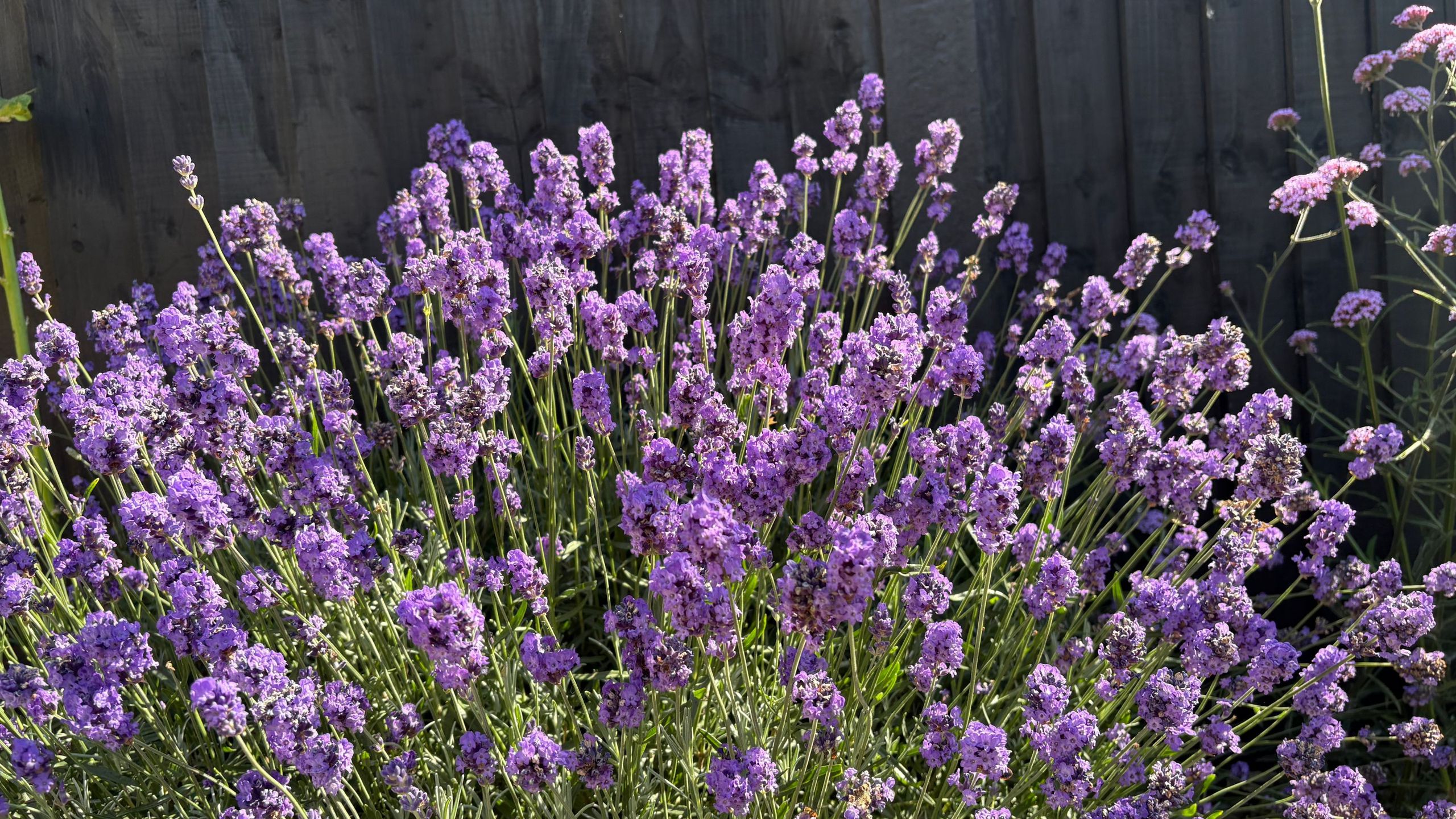
Most hardy lavender plants will have finished flowering by now, and pruning lavender will enable that healthy growth to continue next year.

‘Prune lavender after flowering to maintain shape and encourage bushier growth,’ advises Morris Hankinson, founder of Hopes Grove Nurseries.

Pruning is a crucial task for lavender, so it’s important not to skip this stage.

‘Unpruned lavender plants can quickly become straggly and leggy, liable to sprawl and open up to reveal unsightly gnarled-looking branches that bear few flowers,’ Morris adds. ‘Once this stage is reached, they can be very difficult to rejuvenate as they seldom respond to very hard pruning.’

6. Hebes

Hebes, also known as shrub Veronica, boast striking ornamental leaves and flowers. In fact, they’re on our list of the best low-growing evergreen shrubs you can add to your garden.

‘Keeping hebes in check requires two actions,’ says Cal from Gibside. ‘Firstly, using secateurs, you can remove the flowers as they begin to fade, and this will support a longer flowering season.

‘Secondly, you can follow this up in late summer with a light prune of the whole plant to gently hold the shape together. Annual pruning is not essential as they are slow-growing plants and tend to maintain their dome-like appearance naturally, but this can vary depending on which hebe you are choosing to grow.’

7. Rambling roses

Rambling roses are also on our list of what to prune in August. They’re one of our favourite fast-growing climbing plants for decorating all kinds of garden structures, from archways to trellises.

While you might risk missing out on the hips which appear during the autumn, rambling roses sometimes need a late-summer prune to restrict spread or boost healthier growth next season.

‘Remove a third of the flowering stems, leaving new and healthy stems that can be either re-tied on to a support or encouraged to return to lofty heights,’ advises Cal from Gibside. ‘Reducing the side branches of these replacement stems by two-thirds will encourage branching the following year.’

Remember to wear a thick pair of garden gloves or rose gauntlets to protect your hands and arms.

FAQs

Can you cut back shrubs in August?

Several evergreen shrubs can be pruned in August, particularly ornamental varieties like hebes and pyracantha, as mentioned above. Exact pruning guidelines will vary by plant, but as a general rule, wait until flowering has finished and cut away any dead or damaged growth.

How late in summer can you prune?

‘Pruning at any time of year depends on the plant,’ says Morris from Hopes Grove Nurseries. ‘Different plants require pruning at different times of the year to help them thrive, keep them in shape, aid flower formation and ultimately fruit. Some ‘bleed’ in summer and therefore need winter pruning, so it’s important to check guidelines for individual plants for the best results.’


Now you know what to prune in August, you can dust off your secateurs and schedule in a few hours of garden TLC.

Read the full article here

Share.
Leave A Reply

Exit mobile version