







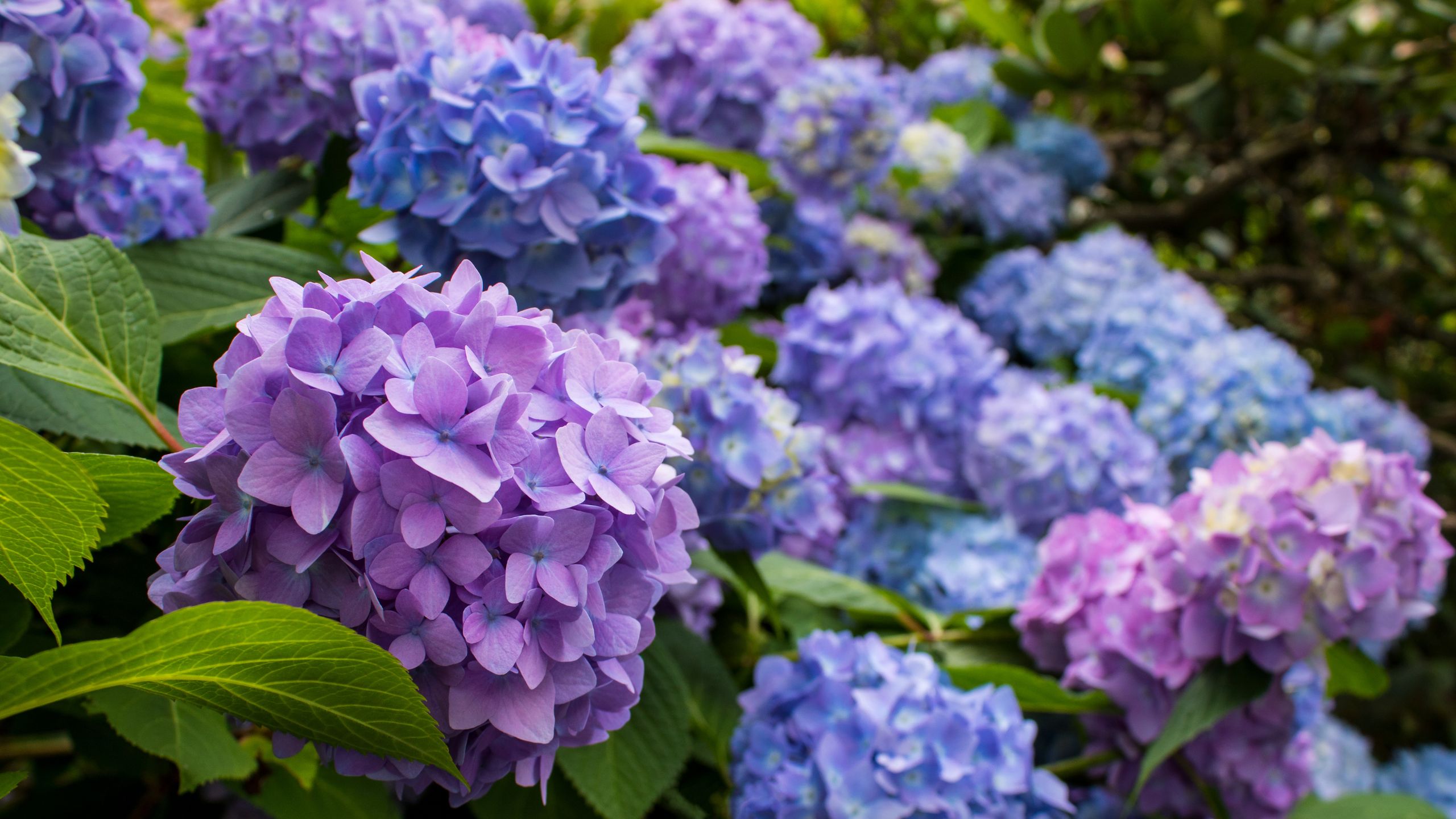
Every year your hydrangea shows it’s starting to wake up around now and then gives you months of beautiful blooms – right? But this year, well, it’s just not happening.
Whether your hydrangea is potted or in your border, a lot of factors can determine its growth.
Hydrangeas typically begin to bloom from mid-summer to autumn, though some can start in late spring, but conditions need to be right. With the help of garden experts, we look at why yours might be looking rather dormant and how to fix it.


Check for signs of life
According to Patrick Wall, horticulture expert at Verve, hydrangeas are late starters compared to many shrubs, especially after a cool or unsettled spring.
‘Soil temperatures have a big impact on when buds begin to swell, and new shoots emerge. Check stems for signs of life by lightly scratching the bark – green underneath usually means the stem is alive,’ he explains.
It can also depend on the type of hydrangea you have. ‘Big leaf hydrangeas (Hydrangea macrophylla) are particularly sensitive to colder nights, while paniculata types are slower to get started,’ says Patrick.
Typical big leaf varieties are like Crocus’s Mophead Hydrangea in white, £19.99 for a 2 litre pot.
Now that you know your hydrangea is alive, we can look at other reasons why it might not be growing yet.
1. Late frosts
‘A mild spell followed by a late frost can damage fresh buds before they fully open. This is especially common with mophead and lacecap hydrangeas, which flower from older stems formed the previous year,’ says Patrick.
Lacecap hydrangeas are really pretty. Check out Amazon’s Serrata Preziosa hydrangea, £13.99 for a 15-30cm pot.
Julian Palphramand, head of plants at British Garden Centres, agrees, ‘This, as well as overly wet soil from too much rain, can cause root rot which is common in the UK after our winters. Inspect your roots: brown and mushy means rot, whereas firm and white suggests it’s dormant.’
Frosts that happen in late spring can be the most damaging, says Richard Baker, horticultural expert and director of LBS Horticulture. ‘If there are any late overnight frosts expected, try to protect hydrangeas with fleece, or move potted hydrangeas to a more sheltered location.’
2. The roots might be establishing
A bit like the swan gliding along the river analogy, the same can be said for what might be going on underneath the soil.
Patrick explains, ‘Recently planted shrubs often focus their energy underground before putting on strong top growth. This can make them appear slow or inactive during their first season.’
To counter this, keep the soil moist during the warmer months and feed lightly with a balanced shrub fertiliser in the spring, like Empathy tree and shrub bio fertiliser granules, £13.98, B&Q. ‘Avoid overfeeding with high nitrogen products, which can encourage soft growth,’ advises Patrick. ‘Be patient – most hydrangeas establish strongly by their second year.’
3. It’s not got enough moisture
Although we tend to have more wet days than dry here in the UK, our hydrangeas still need the right moisture levels to thrive.
Richard agrees, ‘If the plant does not receive enough water, this can stunt growth and cause it to fail to produce flower buds. A drought in the previous year can also affect flowering the year after.’
Positioning is also important; if yours is located in full sun, it will need more watering. ‘Too much direct sunlight can stress hydrangea plants, causing them to conserve their energy by not producing flowers,’ says Richard.
We like the Spear & Jackson Kew 9L French style watering can, £28, from Argos, it’s super stylish and does the job perfectly.
4. Age
The age of your hydrangea can impact its growth at both ends of the scale.
Lucie Bradley, gardening and greenhouse expert at Easy Garden Irrigation explains, ‘If you have recently introduced a hydrangea into your garden or if it is immature (younger than three years), then this could mean that it may take longer to start growing in spring than older ones. This is due to the young shrubs concentrating their energies on becoming established and producing a strong, healthy root system, which will result in them being much slower to produce new foliage.’
The same can happen with older plants, as when their stems become woody, they are less productive.
To accommodate this, correct pruning is key, as mistakes can be made with hydrangeas. ‘Every spring, take out a couple of the oldest stems, pruning them back to the base to stimulate new growth. However, if you haven’t been doing this and your hydrangea is very overgrown with thick, old, woody stems, then you may need to cut all the stems back to about 15cm from the ground in late winter,’ suggests Lucie.
Woody hydrangea stems require stronger secateurs; as such, we recommend Burgon & Ball’s dark wood bypass design, £24, B&Q, as they’re strong and sharp.
Essentials that will help your hydrangeas grow
Antonki 2 Pack Plant Water Meter, Soil Moisture Tester, Hygrometer Sensor
This handy tester will give you soil moisture levels giving you three zones with 10 scales. The brass probe is 20cm long.
Vitax Hydrangea Liquid Plant Feed, 1L
Hyrdangeas need low nitrogen fertiliser and this specific to the plant mix is perfect. It will strengthen roots and help your plant to thrive.
YouGarden 2 x 100L Strulch Straw Mulch
A good quality, natural mulch like this straw mix will lock in all the good nutrients to help you hydrangeas grow.
There are a number of reasons why your hydrangea isn’t growing; we’ve listed the top four. Give your plants some love and most of all, have a little patience, as we’ve had a wet winter.
TOPICS
Read the full article here


