







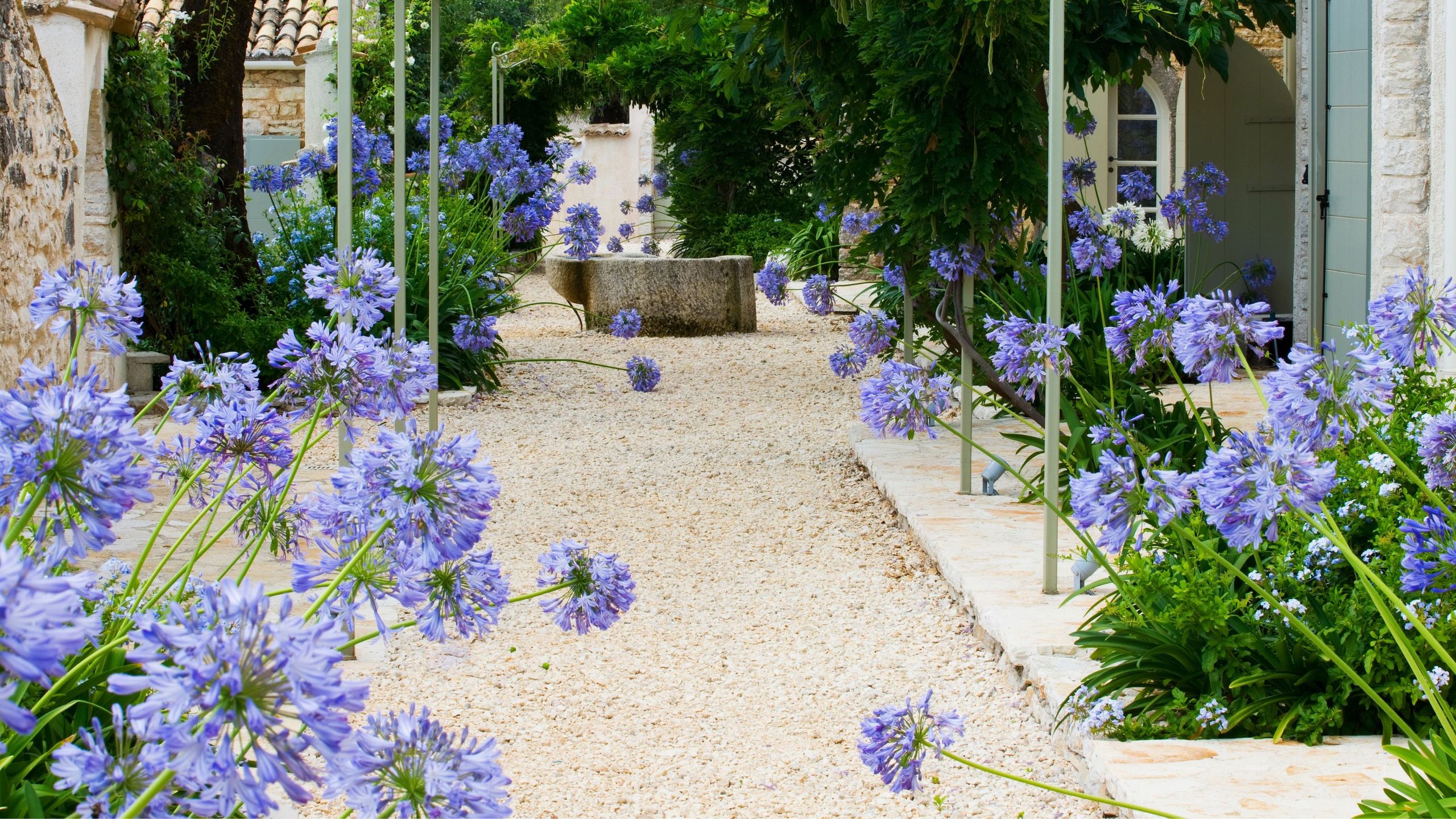
We’re in the peak of summer right now, and if you have agapanthus growing in your garden, it will be looking its best, despite the unseasonably hot weather. Agapanthus look stunning in full bloom with their striking blue flowers, long stems and lush foliage and if you’re wondering how to keep yours looking its best for longer, the good news is that when it comes to what to do with agapanthus in August, the answer is ‘not a lot’…which is a relief considering the heatwave and hosepipe bans that many of us are under at the moment.
‘August is really all about keeping agapanthus neat and not pushing them to do more than they already are,’ says Julian Palphramand, Head of Plants at British Garden Centres. ‘During August it’s mainly a matter of deadheading agapanthus flowers as they fade, plus keeping on top of watering. Do both of these (and hold off on doing other tasks), and you’ll keep the plant looking fresher for longer.’
Find out which jobs you should be doing right now and what jobs you don’t need to be worrying about below.
Latest Videos FromIdeal Home
1. Deadhead faded booms but don’t cut back the foliage
‘To keep your agapanthus looking healthy and blooming for as long as possible, once the flower head has completely faded, use clean, sharp secateurs or snips to remove the entire flowering stem,’ advises Craig Wilson, Co-founder and gardening expert at Gardeners Dream.
‘Follow the stem down and cut it off low at the base, just above where it emerges from the clump, taking care not to damage the crown or surrounding foliage. When deadheading, make sure to keep any healthy, green leaves on the plant as these are needed to absorb sunlight to help feed the roots, which helps direct energy toward continued flowering.’
When it comes to what to do with agapanthus after flowering, when the summer months are over, this will involve cutting back both flowers and foliage, but won’t need to be tackled until autumn once plants have fully finished flowering.
Shop for deadheading essentials
Spear & Jackson
Mini Pocket Sized Snips for Deadheading
Kent & Stowe
Carbon Steel & Red Precision Garden Snips
2. Water consistently but don’t overwater
‘Aside from when to deadhead agapanthus, you also need to water them regularly throughout the last few weeks of the summer season,’ says Craig. ‘This will help to keep your plant healthy and encourage some last-minute blooms before the plant is ready for budding next year.’
‘I would advise watering your agapanthus around once or twice per week in August, depending on how warm the weather gets, ensuring the soil is moist throughout but not waterlogged as this will rot the roots and destroy your plants,’ adds Chris.
When it comes to agapanthus in containers, these may require watering more frequently as pots and containers tend to dry out much more quickly than plants growing in the ground. Check how dry the soil is by poking your finger into the compost before you water, as agapanthus benefit if the soil dries out a little before watering.
‘If the weather is very dry, give agapanthus a proper soak now and again rather than lots of little splashes of water, which won’t do much good,’ advises Julian. ‘But do avoid overwatering agapanthus as they dislike sitting in wet soil, especially when in pots, and they’ll always perform better when free-draining, so consider pot feet or a well-draining but moisture-retaining mix, like this Miracle-Gro Moisture Control Peat-free compost, £8.50 from B&Q, which can help prevent plants from drying out too quickly.’
3. Ensure plenty of sunshine
Agapanthus require direct sunlight for at least two-thirds of the day, so it’s important to factor this in at the agapanthus planting stage. Moving a plant into a sunny spot too late in the season may mean that it doesn’t flower the following year.
‘Find a sun-kissed area of the garden to plant agapanthus that also benefits from a bit of rain shelter,’ advises Craig. ‘This normally consists of planting near a sun-facing fence and should encourage fresh new growth as well as more flowers.’
When it comes to the extremely hot weather that we’ve been experiencing this summer, although agapanthus handle hot dry spells better than most plants, prolonged heatwaves can require more targeted care like deep watering or a smart irrigation system to ensure that plants don’t suffer in the heat.
‘For agapanthus in containers, do make sure that they’re not baking in all-day sun with no room for moisture to stay in the compost,’ advises Julian.
Shop for DIY irrigation kits
Hozelock
Drip Irrigation Kit
Primrose
Solar Drip Irrigation Kit
4. Hold off feeding agapanthus in summer
While it can be tempting to whip out the plant fertiliser if you want to encourage a healthy plant to produce more flowers, adding fertiliser is something that you actually shouldn’t be doing in high summer when it comes to agapanthus.
‘You don’t need to feed agapanthus heavily at this point in the season,’ advises Julian. ‘Too much fertiliser now can encourage lots of leafy growth at the expense of flowers, which will weaken the plant.’
When it comes to feeding agapanthus, this should be done during the growing season from Spring until flowering, using a high potassium feed, such as Levington Tomorite Liquid Tomato Food, £3.99, Amazon.
And remember that plants in containers have less access to nutrients than plants growing in the ground in borders, so feeding any agapanthus you have growing in pots is essential during the growing season.
5. Don’t divide agapanthus in summer
‘When it comes to dividing perennial plants like agapanthus, I would always advise not splitting them in August as doing this so late into the season will stress the plant and hinder its growth,’ says Craig. ‘I’d therefore recommend waiting until early spring to separate them,’ advises Craig.
The benefit of dividing agapanthus plants is that they can become crowded and congested over time, which starves the roots of space and nutrients and can cause a lack of flowers. Established agapanthus clumps are best lifted and divided into smaller clumps in springtime, which will give extra plants for free that can then be planted elsewhere in the garden.
How are your agapanthus faring this summer? Let us know how you’ve been looking after them.
TOPICS
Read the full article here


