




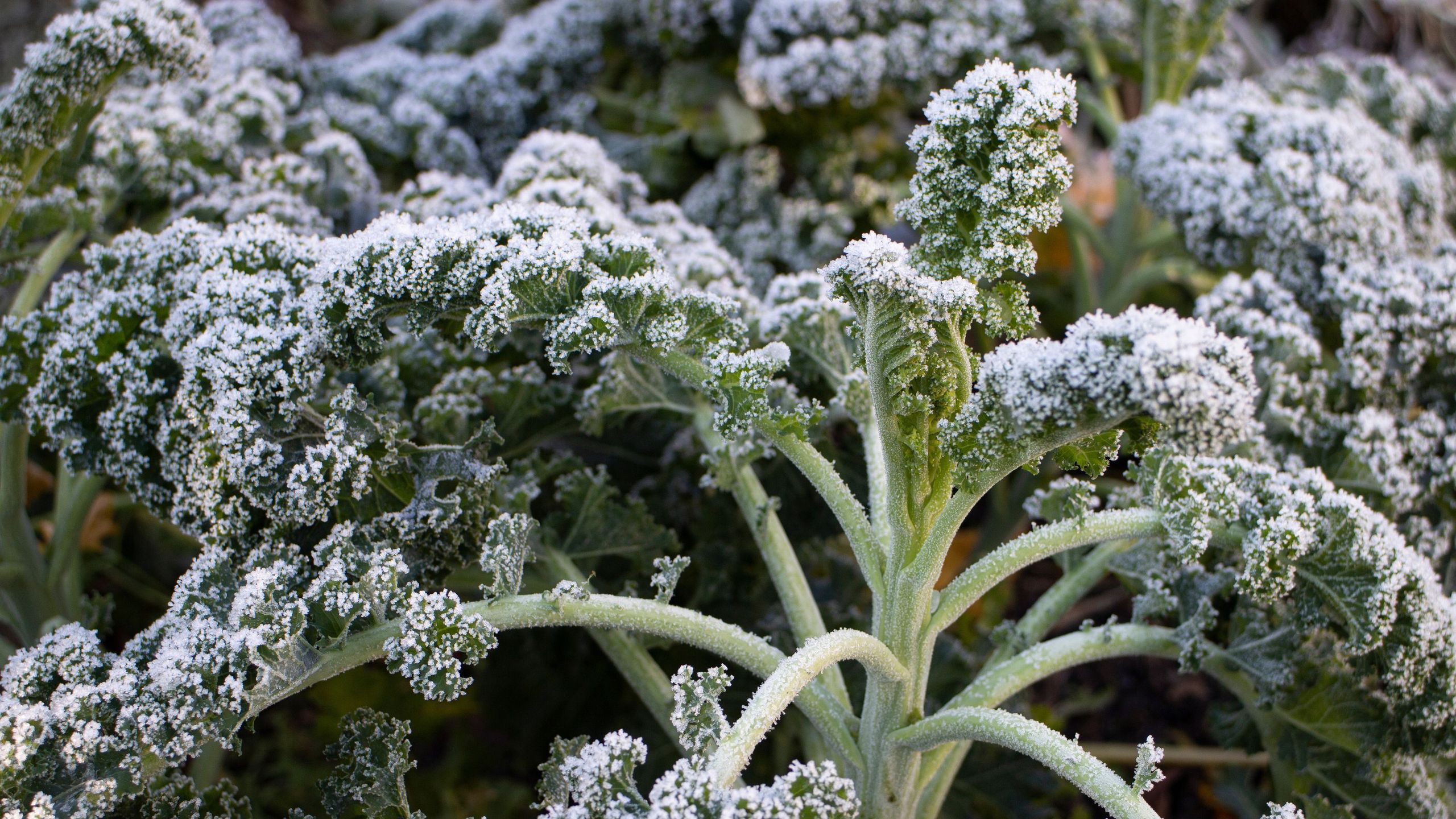
If vegetables are growing in your garden right now, you’re probably wincing at the bitter weather that crept up on us last week. Don’t panic just yet, though; there are actually some vegetables that benefit from frost and snow.
Plenty of vegetables grow in winter, but waking up to a twinkling layer of frost on your crops can be an alarming sight. What some gardeners might not know is that frost can actually enhance the flavour of some vegetables. Only to a certain extent, though.
Below, I’ll be explaining which vegetables benefit from frost and snow, how it can enhance their flavour, and how to know when to step in before they cross the line between flavour upgrade and poorly plants.
Vegetables that benefit from snow and frost
Whenever I speak to my grandad about gardening in January, he recalls one of his favourite winter crops from his days on the allotment: ‘January King’ cabbage.
They’ll stand the winter, he says – and they’re one of the hardiest cabbages you can grow. As a bonus, the cold weather makes them taste even better.
‘A hard frost and even a dusting of snow can seem like the end of the garden, but for certain vegetables, winter weather is actually a flavour upgrade,’ says Lucy Hutchings, co-founder of heirloom seed company She Grows Veg.
There are plenty of fruits and vegetables that grow in January, and for many of them, this month’s weather is crucial for the development of their flavour.
‘Some cool-season crops become noticeably sweeter after exposure to frost,’ explains Lucy. ‘The reason is simple plant chemistry. When temperatures drop, these plants convert stored starches into sugars, which act like a natural antifreeze inside their cells.
‘That sugar buildup protects the plant from freezing damage – and gives us a sweeter, richer-tasting harvest as a bonus.’
Cabbages are shining examples of winter vegetables that sweeten up after a frost, but vegetables like Brussels sprouts, kale, carrots, parsnips and turnips also take a flavour upgrade.
‘Parsnips turn velvety and roast-ready, carrots shed their bitterness, Brussels sprouts soften without the bite, and leafy greens like kale and cabbage lose their pungency for a milder flavour,’ explains Julian Palphramand, head of plants at British Garden Centres.
Not all winter vegetables will appreciate repeated hard frosts, though – and it’s important to know when to step in.
When to protect winter vegetables
It’s true that most winter-hardy vegetables will tolerate harsh winter weather and don’t strictly require frost protection, but that doesn’t mean that they’re invincible. If we’re set for repeated hard frosts over the coming weeks, it’s worth considering ways to protect your plants from frost.
‘Many of them are frost-tolerant but not frost-proof,’ says Lucy from She Grows Veg. ‘Light to moderate frosts usually enhance flavour without harming the crop, but repeated deep freezes can damage tissues or stop growth altogether.’
It’s worth mulching over root crops like carrots and parsnips, for example. Strulch, which you can buy at Amazon, helps suppress weeds and improve the soil, too.
‘In harsh winters, a loose mulch layer over root crops like parsnips or carrots can keep soil from freezing solid for easier digging,’ says Julian from British Garden Centres.
You can also invest in outdoor plant covers for winter, like this horticultural fleece from Amazon, for an extra layer of protection. Just make sure it’s securely fastened and nailed down to protect wildlife. Surprisingly, the snow itself can help, too.
‘It acts as an insulating blanket, keeping temperatures more stable underneath,’ explains Lucy.
That said, most winter-hardy vegetables are perfectly capable of withstanding frost and snow. Just keep an eye on the weather forecast – if recurring hard frosts are predicted (typically anything below -2°C), it’s wise to start thinking about frost protection.
Allow them exposure to a few frosts first, though! You’ll still want that sweetness to kick in before the weather warms up again.
Frost protection kit
Strulch
Strulch Mineralised Straw Mulch
Insulates, suppresses weeds and enriches the soil.
Elixir Gardens
Thermagro Frost Fleece
Some lightweight horticultural fleece.
Levington
Levington Composted Bark Mulch
Another high-quality mulch.
So, winter vegetables can benefit from snow and frost after all. Frost protection isn’t strictly necessary, but it can be a good step-in measure if hard frosts decide to make repeated comebacks over the next few months.
Read the full article here