







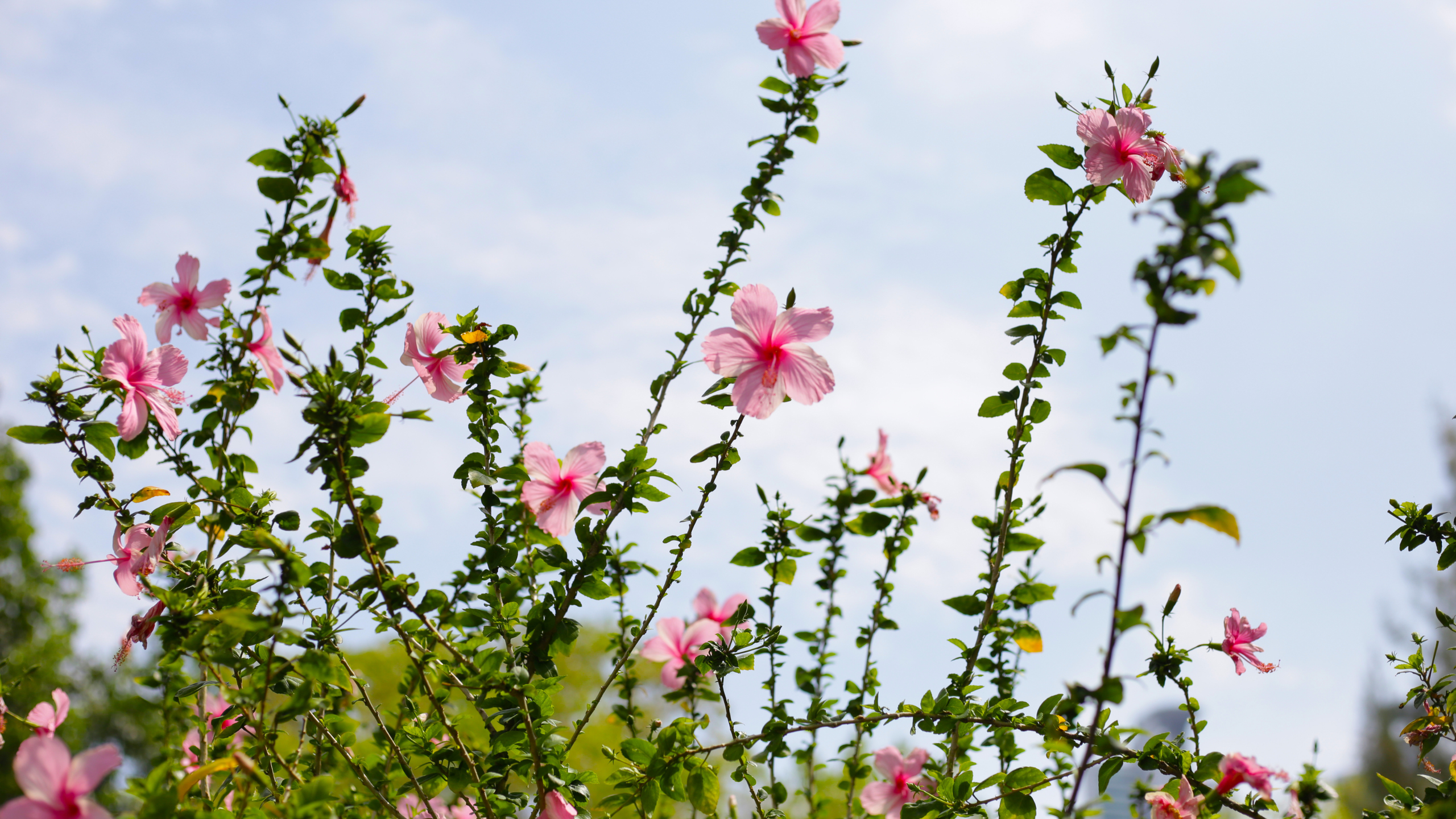
If you love peonies but want a low-maintenance plant that offers similar vibrant blooms for much longer, you might want to consider planting hardy hibiscus instead.
Peony season is one of my favourite times of year, and for those of us who have learnt to grow peonies and grappled with how difficult peonies can be to care for whilst establishing, seeing the beautiful flowers is a joy.
However, with a peony’s flowering window lasting between seven and 10 days, I say this feels too short. If you want a statement plant to fill your borders with stunning colour, hardy hibiscus can be a brilliant alternative.


I’m not about to start slating peonies. There are so many beautiful peony varieties to choose from – my main problem is that they can be tricky to care for, and they don’t flower for very long. Because of this, it’s a popular choice amongst gardeners to opt for peony lookalikes to enjoy longer-lasting blooms. And hardy hibiscus is a stunning alternative you should definitely consider.
‘Hardy hibiscus, most commonly Hibiscus syriacus, tends to be valued for extending colour well beyond the peak of summer. It typically flowers from late summer into early autumn, which means it keeps borders looking active at a time when many earlier flowering plants are starting to fade,’ explains Dr Russell Sharp, founder of Eutrema.
‘Peonies, by contrast, are a much shorter season plant, usually giving a strong but relatively brief display in late spring to early summer. That difference in timing is often the deciding factor if the aim is to maintain interest in the garden for longer rather than concentrating colour into a single moment.’
Is hibiscus easier to grow?
Another key point to consider is that hardy hibiscus can be easier to grow compared to peonies. Not only do hibiscus plants produce showy, bold-hued flowers that are perfect for attracting pollinators, but they are also low-maintenance.
‘Hibiscus tends to be low maintenance in a more forgiving sense, meaning it will still perform reasonably well even if care is not exact, as long as it has decent light and soil that does not stay waterlogged. Peonies can also be low-maintenance once established, but only if they are planted correctly from the start. If the depth, drainage or position is wrong, they can underperform for years without much improvement, which makes them less reliable in difficult sites,’ says Dr Russel.
‘Hibiscus is also generally less demanding in terms of structure and ongoing maintenance. As a woody shrub, it supports its own growth and does not usually require staking, whereas peonies often need support once their large blooms develop, particularly in wet or windy weather. Hibiscus also tends to be more forgiving in how it responds to pruning, because it flowers on new growth. That means a cutback in late winter is unlikely to ruin the season’s display, which is not always the case with plants that rely on older stems.
‘The key distinction is that hibiscus tends to recover and adapt, while peonies are more dependent on getting the fundamentals right at planting. In colder, shaded or poorly drained areas, neither plant will perform particularly well, but hibiscus is generally more forgiving of small mistakes in positioning or seasonal variation.’
In terms of hibiscus care, you will need to learn how to prune hibiscus and fertilise it, but as Dr Russel says, this is all pretty straightforward.
‘Outdoor hibiscus plants should be fed annually in spring, using a slow-release fertiliser that is high in potassium, such as rose food. The plant may die back during autumn if there are any hard frosts, but this is normal, and any dead stems should be cut back to a few centimetres above ground level,’ advises Richard Barker, horticultural expert and commercial director from LBS Horticulture
‘Once your hibiscus has reached around 1.5m in height, you should begin pruning annually to help the plant keep its shape. Prune after flowering, cutting back each branch to just above a leaf node and removing old wood from the middle of the plant to improve air circulation.’
Where to buy hibiscus
If you want the colour and drama of a peony, hardy hibiscus provides both of these, as well as a longer flowering period and easier care.
Read the full article here


