
Sorry hydrangeas, there’s a new shrub in town. Gardening experts are recommending viburnum varieties as a low-maintenance alternative to hydrangeas that are well-suited to small gardens.
Growing hydrangeas has been a popular choice for gardeners for well, forever. These beautiful, showy shrubs are popular cottage plants and are found in plenty of gardens across the UK.
But caring for hydrangeas can be notoriously difficult, which is why garden experts are recommending viburnum as a low-maintenance alternative. Featuring just as pretty flowers, drought-tolerant planting and a lovely fragrance, here’s why we’re all riding the viburnum wave right now.
Hydrangeas vs Viburnum
If you love the look of hydrangeas but lack the time or space to properly care for one, this article is for you. While stunning, hydrangeas require a lot of time and effort to keep them happy.
‘Whilst hydrangeas rely on you placing them in the correct type of soil, light position and pruning them at the right time to ensure they thrive in your garden, viburnums are much more easy-going, quickly adapting to different types of soil and soon becoming self-sufficient once they are established in your garden,’ says Lucie Bradley, gardens and greenhouse expert at Easy Gardens Irrigation.
Hydrangeas prefer moist, damp soil, which means they require a lot of watering during summer, which isn’t always ideal if you’re worried about hosepipe bans. By contrast, viburnum is more drought-tolerant and doesn’t typically require additional watering once established.
‘When it comes to pruning, viburnums rarely need pruning, and it usually just involves maintenance ‘4 D’ pruning to remove dead, damaged, diseased or dysfunctional wood.’
‘Hydrangeas need pruning with care, and depending on which variety you are growing will affect when they should be pruned. If you get it wrong, you can easily end up with a shrub with no blooms for a year,’ adds Lucie.
Viburnum is largely considered a low-effort shrub that thrives on neglect, and it will also add stunning colour and fragrance to your garden. It’s also considered quite a compact shrub, meaning it can thrive in small gardens and balcony spaces.
‘Vibrunums can be well suited to being included in a smaller garden, provided that you choose the right variety,’ says Richard Barker, horticultural expert and commercial director of LBS Horticulture.
‘For smaller gardens, it is best to choose a dwarf or compact cultivar, as other varieties can potentially grow to be 5 metres tall. Smaller growing cultivars will grow well in pots, and dwarf varieties often need little pruning.’
What variety of viburnum should you plant?
If you’re feeling tempted by viburnum, the easy-to-grow shrub is best planted in either spring or autumn. And given that there’s plenty of viburnum varieties to choose from, I asked our experts what they recommend.
‘Viburnum fordiae is a good variety to grow for birds and pollinators, as it produces panicles of white flowers in summer and glossy berries in autumn,’ recommends Richard.
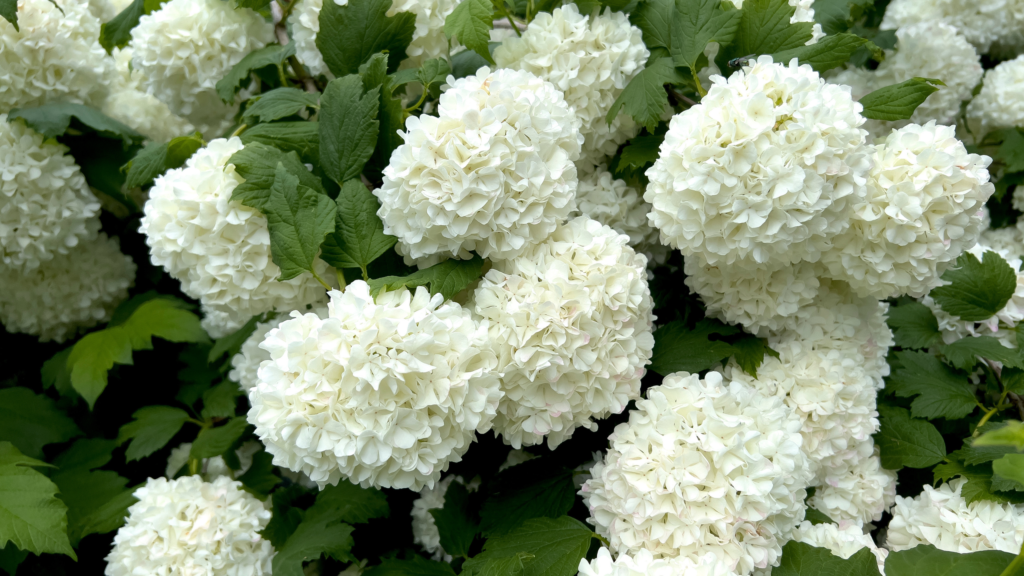
These white flowers have a mild, yet fragrant scent, and their autumn berries will fill your garden with colour when it looks a little bleak outside. However, this shrub is a little rarer, so you will have to head to a specialist garden centre if you want to pick it up. Alternatively, Lucie recommends Viburnum Opulus (£12.99, Thompson & Morgan), whose mophead blooms look very similar to those of a hydrangea.
‘Perfect for modern, monochromatic gardens, Viburnum opulus ‘Roseum’ is a glorious deciduous shrub which brings drama to your garden from late spring into early summer when it produces its large ‘snowballs’ formed of clusters of pure white flowers, hence you often find this viburnum being referred to as the ‘Snowball Tree’,’ she says.
‘This sterile cultivar doesn’t develop berries once its flowers fade, so to keep it tidy, you are best trimming away the spent flower heads and doing any pruning required at the same time so it can direct its energies into keeping its foliage lush and healthy whilst setting its flower buds for next year.’
Where to buy viburnum
‘Although viburnum is unlikely to replace hydrangeas completely, it is becoming a popular alternative because it is much hardier and does not require as much maintenance, making it easier for beginner gardeners,’ Richard concludes.
If you want the drama of a hydrangea without the hassle of caring for one, viburnum is an equally high-impact shrub that will make your garden look beautiful.
Read the full article here