


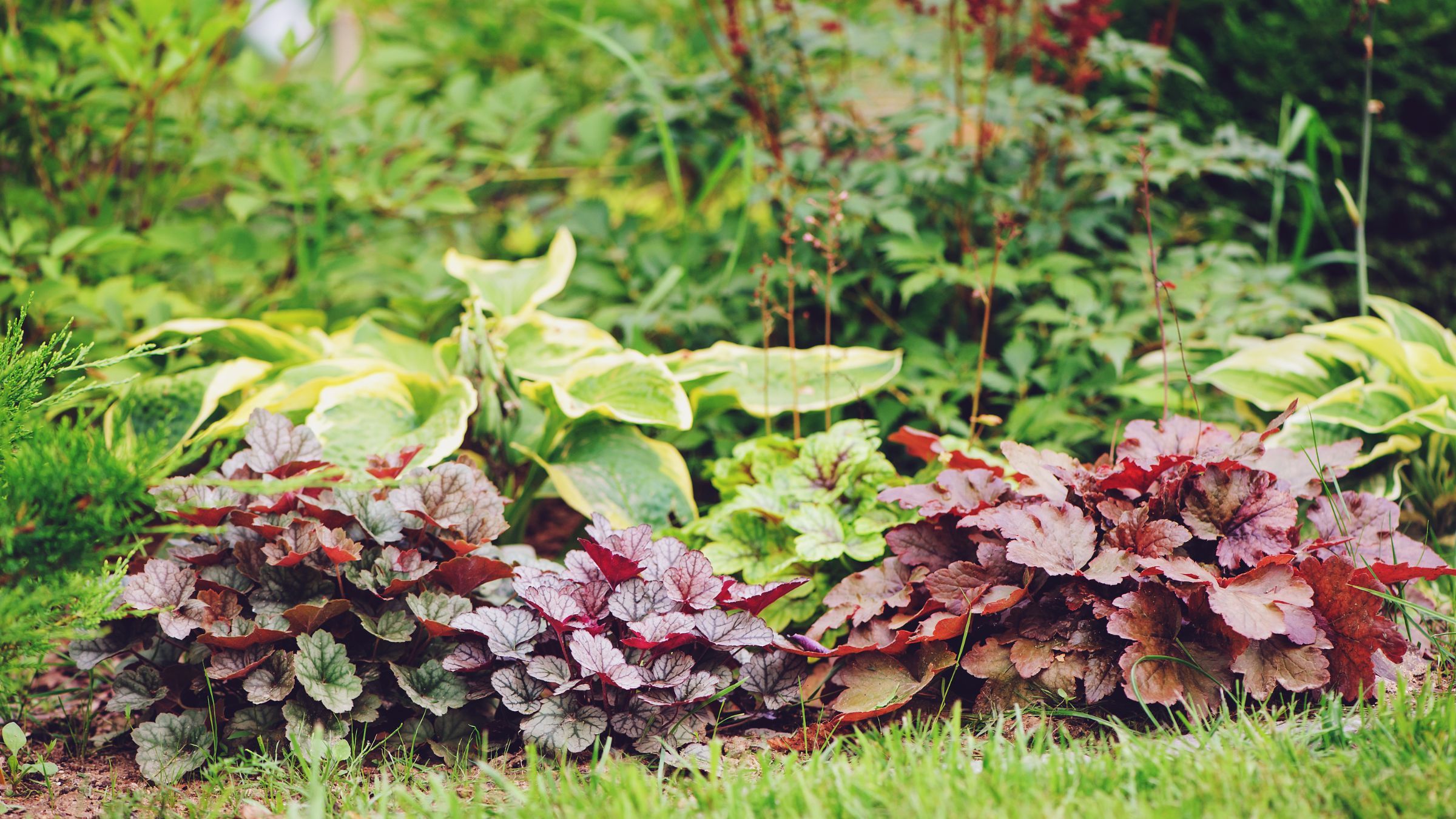
As much as I like hostas, they’re not the plant I’d recommend for brightening up a shady garden – heucheras are even more reliable, and, truly, they’re a breathtaking foliage plant.
Whether you’re looking for frilly lime foliage or flame-coloured leaves, there really is a heuchera for every planting scheme (there are so many varieties to choose from). Plus, they’re generally slug- and snail-repellent plants, while hostas are a target for the slimy critters.
Here’s why experts recommend heucheras for shady gardens – and one or two varieties I’ve got my eye on!
Latest Videos FromIdeal Home
What you’ll need
Gardening Express
Handsome Heuchera Collection
A pack of four randomly selected heuchera plants.
Spear & Jackson
Spear & Jackson Elements Carbon Hand Trowel
A sturdy hand towel for planting in pots and borders.
Gardening Express
Heuchera ‘Wild Berry’
Heuchera ‘Wild Berry’ produces unusual purple foliage.
Heucheras are available in a spectrum of colours, from deep purple to lime green, which is why they’re such brilliant plants to add to pots in September for instant colour. Many varieties have frilly foliage, providing texture as well as colour – and since they’re perennial, they’ll bounce back every year. Some varieties are evergreen in milder climates, offering winter interest in the garden, too.
Heuchera ‘Eternal Flame’, which you can order from Thompson & Morgan, looks exactly as you’d expect it to: the fiery golden foliage acts as an effective groundcover plant for suppressing weeds in garden borders, but it’s just as striking in a pot arrangement.
Television presenter David Domoney just dedicated an Instagram reel to heucheras, celebrating their value in the garden as shade-loving plants.
‘Here’s the beauty,’ he said. ‘Under that tree where you thought nothing would grow, heucheras will bring colour all year round with their foliage, and they also have spectacular little flowers as well, otherwise known as ‘Coral Bells’.’
I also spoke to Syon Park’s head gardener, Topher Martyn, who told me that heucheras make brilliant plants for small gardens.
‘These plants are all about their leaves, and plant breeders have given us a wide range of leaf colours which will brighten up a gloomy corner, making them ideal for a small garden,’ Topher said.
‘Heucheras are one of those all-round versatile plants, with the added benefit that they’ll put up with a degree of neglect (although they won’t want to dry out entirely).’
You don’t have to banish hostas from your garden completely, though. Both have their merits in the garden and work well together – it’s just that heucheras are less vulnerable to slugs and snails, and offer a broader spectrum of colour and texture.
‘They’re better suited to certain situations,’ says Ross Dyke, horticulturist, founder of Get Children Growing, and host of The Plant Pod. ‘The biggest advantage of heucheras is arguably their resistance to slug and snail damage. Hostas are famously attractive to slugs and snails, whereas heucheras are much less likely to end up covered in the characteristic holes and ragged edges.
‘Heucheras also have the advantage of retaining their foliage for much of the year, whereas hostas are deciduous and die back in autumn. That makes heucheras particularly valuable if you’re trying to keep a shady border looking interesting beyond the main growing season.’
Ross also mentioned that hostas are great if you want bold, architectural foliage that thrives in the shade, concluding, ‘I would use the two together rather than treating them as rivals: heucheras bring long-lasting colour and slug resistance, while hostas provide larger leaves and a very different texture.’
Heucheras are beautiful all-rounders: they add colour to pots and borders, suppress weeds and manage to avoid the appetites of slugs and snails. Plus, they thrive in shady spots – so they’re ideal for brightening those problem areas in the garden.
TOPICS
Read the full article here