



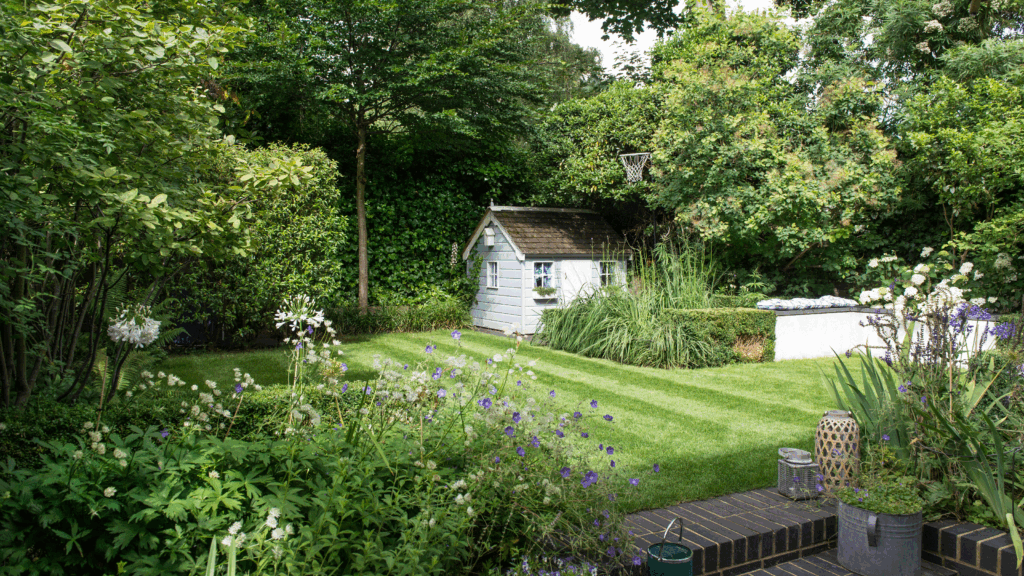
Let’s face it, everyone wants to avoid neighbour disputes, especially when you actually like the people you live next door to. So when our (lovely) neighbour told us our hornbeam tree was blocking too much light into her garden, I got really worried that the situation could turn awkward.
She’s actually been incredibly nice since we moved in, so the last thing I wanted was tension between us, especially while we were already getting work done on our house. The whole situation sent me down a bit of a rabbit hole, wondering if you can actually complain about a neighbour’s tree blocking your light.
With her main concern being that our tree was shading her magnolia tree and affecting its blooms, I felt it was fair enough, as we love seeing it flower too. So rather than letting things escalate any further, we decided that we’d keep the peace and trim the tree back. And we now pre-empt the issue rearing its head by giving it a haircut before it comes into leaf and any birds set up home in it.
However, I decided to reach out to legal and home insurance experts to find out whether we’d actually made the right call, and asked if we’d done nothing at all, whether there would have been any room for legal action from our neighbour. This is their advice if you ever find yourself in a similar situation.
Were we legally obliged to cut the tree back?
The interesting thing is that, legally speaking, we probably didn’t have to do anything at all. According to Alex Harvey, Head of General Litigation at HCB Widdows Mason, there is generally no legal obligation to reduce or remove a healthy tree simply because it casts shade over a neighbouring garden.
‘By carrying out the limited trimming of the tree, you have not admitted legal liability or accepted that your neighbour had a legal right to demand the work,’ he explains.
‘In any event, there is generally no legal obligation on you to reduce or remove a healthy tree simply because it shades a neighbouring garden or affects the growth of neighbouring plants. Whilst a neighbour may acquire a right to light through defined windows or openings to buildings, there is no automatic legal right to sunlight for a garden.’
What we used to trim our tree
Why we still chose to trim the tree back
Even knowing that we didn’t have to, we still felt trimming the tree was the right thing to do. It turned out to be a good decision because, as Alex explains, neighbour disputes surrounding trees can spiral unnecessarily fast.
‘It is worth noting that disputes of this nature very often escalate quickly and incur disproportionate legal costs as a direct consequence. Your actions in trimming back the tree voluntarily and thereby seeking to maintain good relations is a very sensible and reasonable approach to take in this instance,’ explains Alex.
Phew! I feel a bit smug knowing that this was the right call, but ultimately, we just wanted a peaceful solution rather than a stressful stand-off over a tree. And while our neighbour technically has the right to cut back branches crossing into her boundary, there are limits, says Alex.
‘For the avoidance of doubt, your neighbour would be entitled to cut back branches or roots which encroach onto their land, but only up to the boundary line and subject to any planting protections applying to the tree.’
The legal responsibilities homeowners actually have
Although blocking light and creating shade usually isn’t actionable, homeowners do still have responsibilities when it comes to trees on their property. Alex explains that, whilst I do have some legal obligations when it comes to the tree, ‘they would generally be to ensure it does not present a foreseeable danger and or does not cause an actionable nuisance, such as direct physical damage to the neighbour’s property.’
Kara Gammell, Home Insurance Expert at MoneySuperMarket agrees, explaining that property damage is where issues can become more serious.
‘In the UK, a ‘right to light’ easement only applies to light entering a property through windows and skylights and not to gardens or outdoor spaces. This means you were not legally required to cut back your tree because it was affecting your neighbour’s garden or magnolia tree,’ explains Kara.
That said, Kara says that ‘disputes over trees can quickly become a source of tension between neighbours, so taking reasonable steps to address concerns can help prevent issues from escalating further.’
And she adds that as the tree’s owner, I do have a duty of care to prevent trees from causing damage to my neighbour’s property. ‘Tree roots and falling branches can, in some cases, lead to structural damage, and if this happens, you may be held liable, which is something homeowners should be mindful of.’
What we do now to avoid future issues
Since this occurred, we’ve vowed to simply stay ahead of it. Before the hornbeam fully comes out in leaf, and armed with the Gtech LHT50 Lightweight Cordless Hedge Trimmer (£220 at Argos), we give it a trim each year to keep it manageable and prevent excessive shade.
It’s a spring garden maintenance job that’s worth doing purely for neighbourly harmony. And Kara says that this kind of practical compromise is often the smartest route forward.
She says if we were happy (happy is questionable as it was a lot of work) to do so, and it didn’t affect our privacy or enjoyment of our own garden, trimming back the tree was a good way to navigate the situation smoothly.
However, there are a few important things to check before carrying out any major tree work, explains Kara.
‘Always check whether the tree is protected by a Tree Preservation Order (TPO) or located within a conservation area, as you may need to seek council permission before any significant pruning.’
‘Cutting back a protected tree without permission can lead to legal action even if it is in your own garden.’
Gtech
LHT50 Lightweight Hedge Trimmer
We love this Gtech cordless hedge trimmer. It’s so lightweight which makes it so easy to manoeuvre and tidying awkward spots without the restriction of a cable.
Alex also recommends keeping records of any conversations or agreements, just in case things get a little sticky later.
‘Notwithstanding the above, I would certainly recommend she keeps a written record of any discussions or agreements with the neighbour and retains photographs showing the condition of the tree and extent of any encroachment onto the neighbour’s land,’ he suggests.
In our case, the situation never became hostile, thankfully (even if we felt a bit under pressure and stressed). But it did remind me that sometimes the best outcome isn’t necessarily about being legally right.
It’s simply finding a reasonable middle ground that keeps everyone happy enough to enjoy their gardens in peace!
If you enjoyed reading this, sign up for the Ideal Home newsletter for all the latest home decor trends and inspiration delivered straight to your inbox
Read the full article here