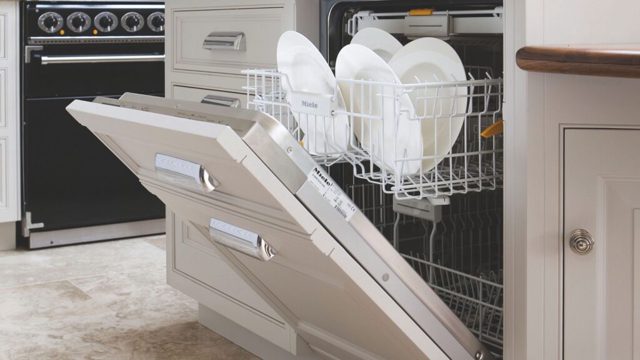




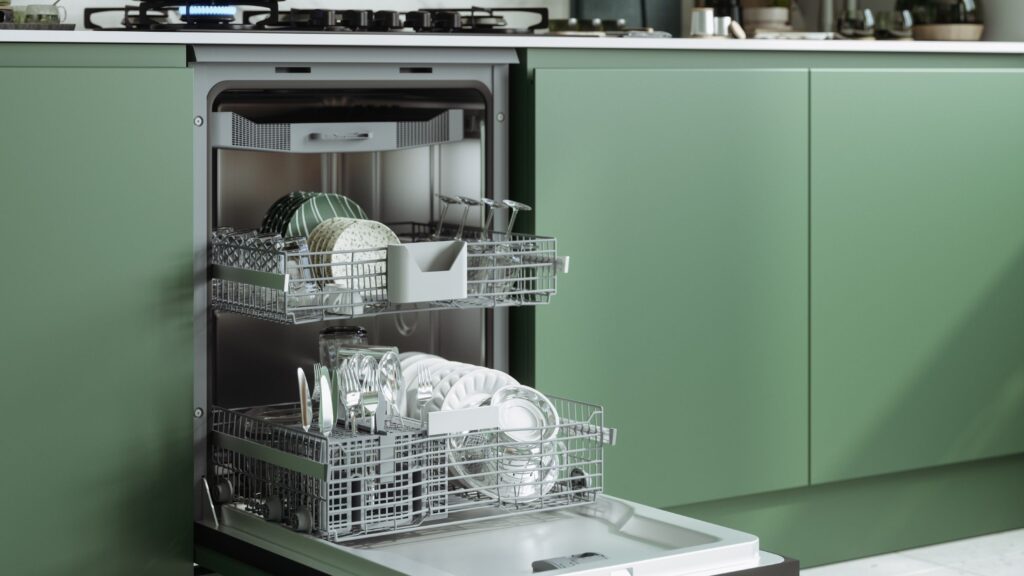
With four of us in the house, the dishwasher is often in use. Between juggling work and after school clubs, meal times can sometimes feel rushed, so we end up resorting to using the dishwasher at least five times a week.
The good news is that dishwashers are actually more eco-friendly than handwashing dishes. So I’m already part way there!
However, as energy bills have remained high over the past few years, it has been my mission to find new ways to save energy around the home, which will have a positive effect on our energy bills. And that’s meant doing a bit of research around the settings on our dishwasher to see which is most energy-efficient, and therefore cost-effective.
Article continues below
Why I switched from the standard to the eco setting on my dishwasher
Around a month ago, I made the switch to using the eco setting on our dishwasher in a bid to save energy.
The eco setting on my particular Hisense dishwasher takes around 1 hour 10 minutes longer than the standard setting, and a total of 3 hours 41 minutes. So it’s natural to assume that the eco setting would use more energy than the standard.
However, after doing some research I realised that because the eco cycle washes dishes at a lower temperature — often around 45° to 55°C instead of 60° to 70°C — it actually uses less energy. And as a result, making the switch to eco is an easy way to lower energy bills.
‘Although the run time can be a lot longer, it is estimated that this setting could reduce your water usage by up to 25% and electricity usage by 33% (based on 260 cycles in one year) due to pumps running for longer instead of heaters,’ says Natasha Payne, heated laundry and dishwasher expert at AO.
‘The biggest bonus of all, is that the total average savings for UK households can amount anywhere between £20 – £50 per year if they regularly use eco mode.’
Do my dishes still come out clean?
Initially I was concerned that the lower temperature might mean the dishes weren’t as clean as before. But so far that has not been the case.
When using the eco cycle, dishes are soaked and rinsed for longer which means dried-on food softens and breaks down before being washed away.
Modern dishwasher detergents are designed to work as effectively in lower temperatures too, using enzymes that target grease, starch and proteins. These enzymes actually work best over longer contact times, which is why eco cycles can still deliver a thorough clean.
Finish Powerball Ultimate Infinity Shine
Suitable for short and eco cycles, these dishwasher tablets will make easy work of cleaning your dishes while you try to keep your energy usage under control, and your bills as low as possible.
Ecover All-In-One Dishwasher Tablets
Promising a squeaky clean, sparkle and shine even on eco mode, these Ecover dishwasher tablets also do away with any plastic packaging to boost your eco credentials even further.
Fairy Platinum All-In-One Dishwasher Tablets (120 tablets)
These tablets come in an ultra soluble pouch that dissolves fast, so that it has plenty of time during an eco cycle to get your dirty dishes sparkling clean.
Having said that, there are limits to the eco cycle, and a hotter wash is still recommended in certain situations.
For instance, I still use a hotter cycle for items such as roasting trays with heavily baked-on grease, as the hotter, more intensive cycle fully breaks down the fat. For health reasons, it’s also safer to use a higher temperature wash for items such as kitchen chopping boards or utensils that have been in contact with raw meat.
But for general, everyday cooking and normally soiled dishes, for me, the eco setting works just fine.
What impact has it had on my energy bills?
As yet, switching to the eco cycle hasn’t had a huge effect on my energy bills, but that’s because the daily and weekly savings aren’t particularly noticeable. However, over time, the savings should build up.
The eco cycle on my dishwasher uses 0.87kWh of energy. At my current electricity rate of 25.40p per kWh, this works out to be around 22p per cycle, or £1.11 a week if I run it five times.
The standard setting uses more energy, up to 1.4kWh per cycle, depending on factors such as the room temperature and load size. This works out to be around 35.6p a cycle, or £1.78 a week.
That’s a difference of around 67p a week, or around £35 a year, simply by switching between eco and standard settings. So overall, it’s a pretty decent saving for no extra work.
A further benefit of using the eco cycle is the amount of water I save. The eco setting uses 11 litres of water per cycle, while the standard setting can use up to 20.5 litres per cycle. And with that fact that water bills have just gone up, that’s another saving I will happily make.
If you enjoyed reading this, sign up for the Ideal Home newsletter for all the latest home decor trends and inspiration delivered straight to your inbox
Read the full article here