




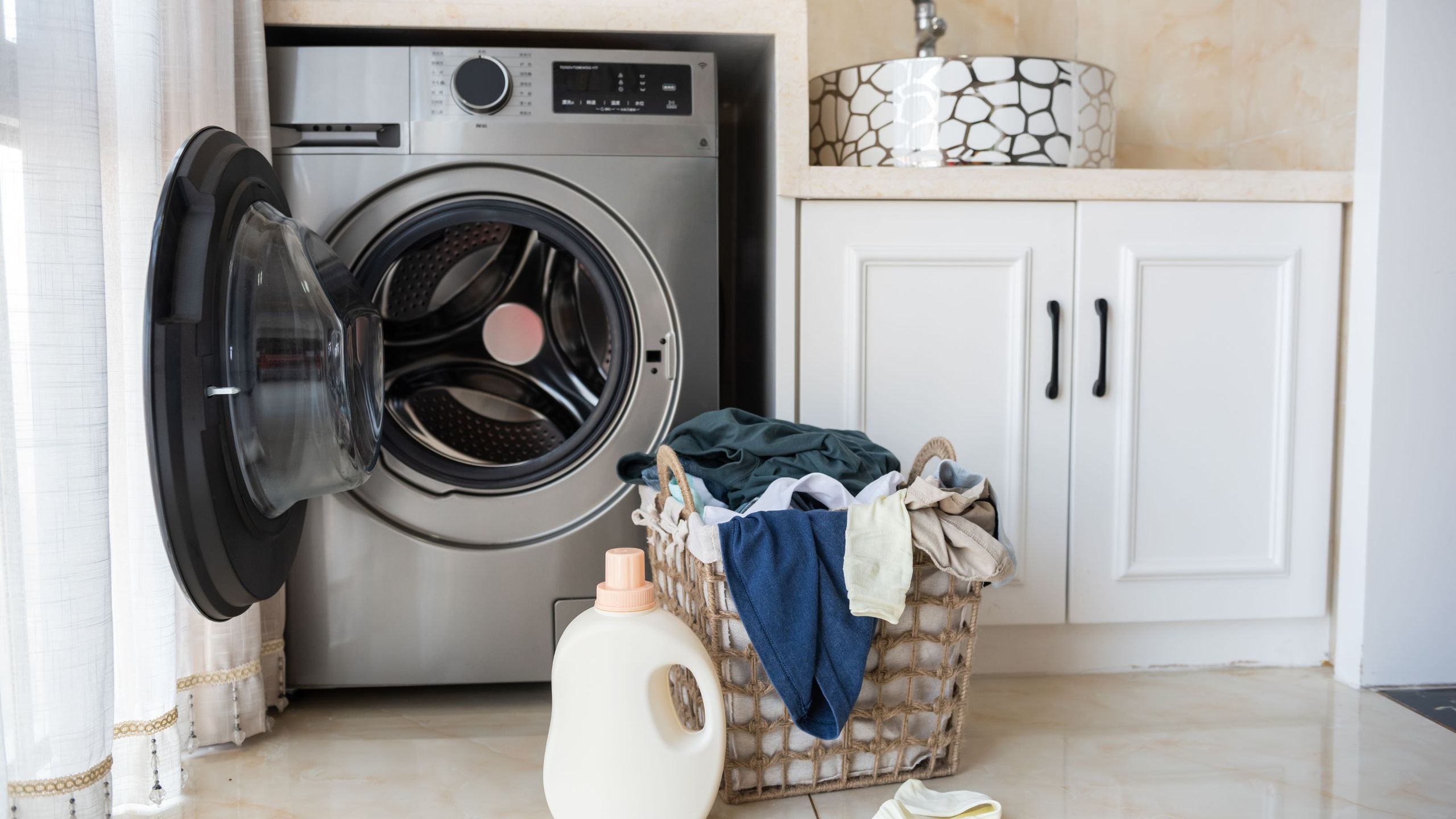
As someone who writes about saving energy for a living, I love setting myself little challenges to see if I can use less energy around my own home.
I’ve already tackled two of my most used and energy-hungry appliances — I went without my tumble dryer for a month, and then followed suit by switching from using my dishwasher to handwashing for the same amount of time.
Article continues below
Which washing machine cycles did I stop using?
I tend to use my washing machine 3-4 times a week, and tend to use either a 40° or 60° wash depending on what what I’m washing and how dirty it is (I’m regularly in woods and fields with my dog, who loves to greet me enthusiastically when incredibly muddy).
Over a normal four week period, this is how much energy I’d be using according to my washing machine’s instruction manual, and how much it’s costing based on the April 2026 price cap of 24.67p/kWh for a unit of electricity.
|
Cycle & temperature |
Energy usage per cycle (kWh) |
No. of cycles over four week period |
Cost per four-week period |
|
Cotton Standard (60°) |
1.13 |
8 |
£2.23 |
|
Cotton Standard (40°) |
1 |
4 |
£0.99 |
|
Coloured (40°) |
0.89 |
2 |
£0.44 |
|
Synthetic (40°) |
0.56 |
2 |
£0.28 |
Totting this up, my washing machine costs £3.94 to run over a four week period, which adds up to £51.22 a year.
But according to E.ON, around 90% of the energy used by a washing machine goes to heating the water, so its safe to say that I could reduce energy wastage and save money on my energy bills by switching to a cooler washing cycle.
How much did I save by switching to a cooler wash?
Instead of using my normal washing cycles, I used my washing machine’s Push & Wash cycle, which is describes as being ideal for cotton and synthetic fabrics. It washes at a temperature of 30° with a maximum spin speed 14% less than the cycles I normally use (1200rpm rather than 1400rpm).
This cycle uses 0.35kWh per use according to my smart meter. Used 16 times over a four-week period, this tots up to £1.38 based on current energy prices, £2.56 cheaper than the cycles I was using previously.
Over a year, using only that cooler cycle would cost £17.94, £33.28 (65%) cheaper than the annual cost of the hotter cycles.
Did my clothes come out as clean?
A big concern for many people around switching to a cooler washing cycle, is that laundry won’t be cleaned effectively.
Fortunately, more and more detergents are available that work on cleaning clothes on washes as cool as 20°, like Ecover’s laundry capsules (£8 from Amazon), that I used.
I’ve not seen a noticeable difference in how clean my clothes are when they come out of a cooler wash. They smell and feel nice, and any marks are gone. I did use both a bio version of the detergent, which uses enzymes to help break down any stains, as well as a non-bio version, and both seemed effective.
I will say though, that apart from some mud stains, I wasn’t dealing with any heavily soiled laundry loads during my experiment. I also don’t live in a household with any one who was poorly or works in a healthcare environment, where there is benefit to washing at higher temperatures in order to get rid of any nasty germs.
Ecover Bio Washing Capsules
These laundry capsules contain enzymes that help clean clothes in cooler washing cycles. They make the washing smell lovely too, especially combined with the fabric softener.
If you enjoyed reading this, sign up for the Ideal Home newsletter for all the latest home decor trends and inspiration delivered straight to your inbox
Read the full article here