







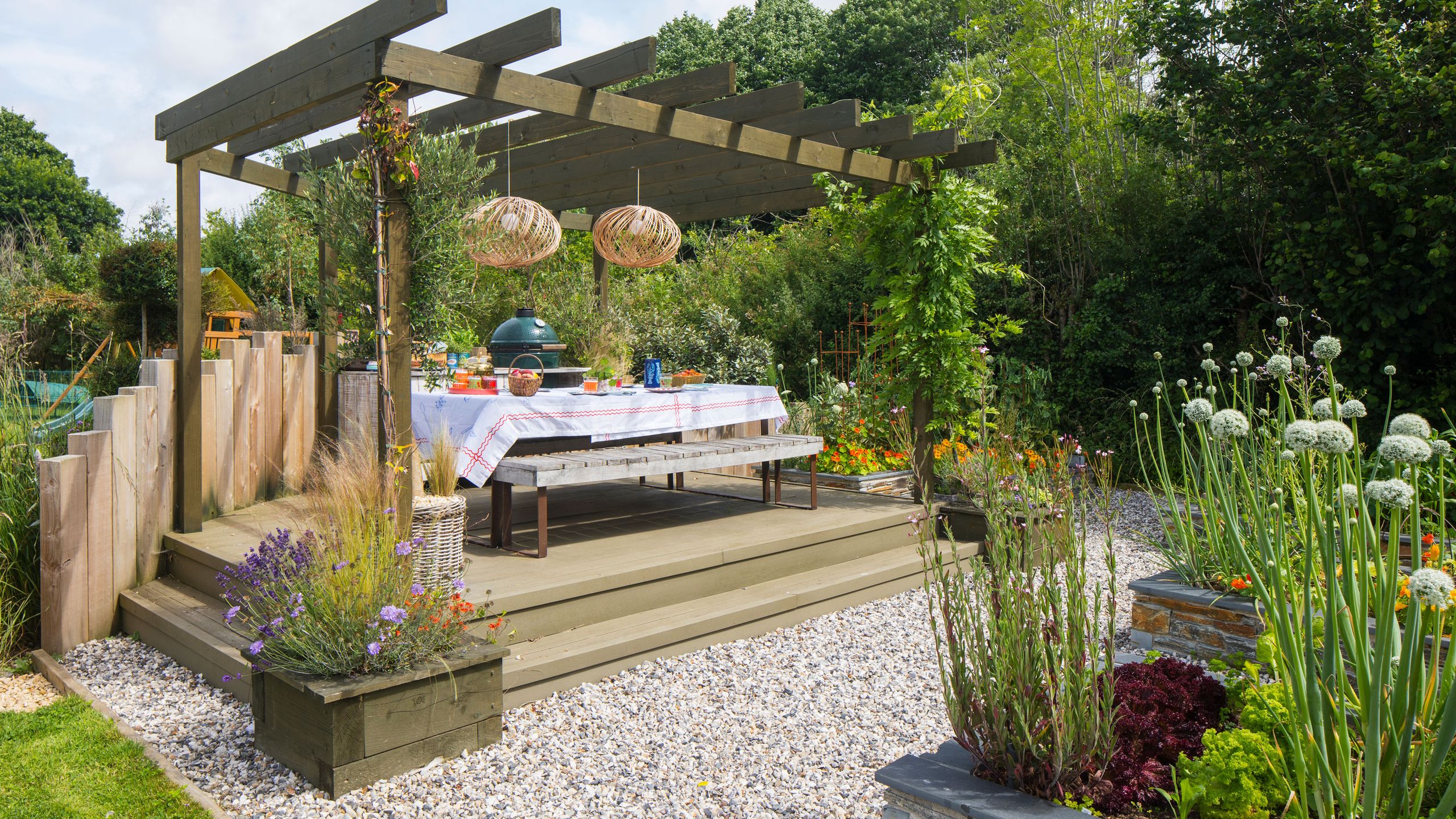
Adding a pergola is one of the most effective ways to elevate an outdoor space, creating shade, structure and a natural focal point for planting. But before any posts go into the ground, there’s one step that shouldn’t be skipped, and that’s talking to your immediate neighbours.
Before starting the conversation and sharing your pergola idea, it’s really helpful to think through a few key points, including things to consider when building a pergola, whether you’re building a pergola next to your neighbour’s fence and even practical questions like whether you need planning permission for a pergola.
Article continues below
Why it’s worth speaking to your neighbours first
While you generally don’t need neighbour permission to build a pergola on your own land, it’s important to consult them if it could affect boundaries, privacy, or access, or if any part of the structure may encroach on shared or neighbouring property, explains Martin Edwards, Director at HCB Widdows Mason.
‘Because pergolas can impact light, outlook and privacy, it’s helpful to be clear about the size, position and design so they fully understand your plans,’ he adds.
Bringing neighbours into the conversation early shows a little respect and gives them a chance to raise any concerns before work begins. It can also flag potential issues that might not have been considered, such as how close the structure is to a boundary, or whether climbing plants could encroach over time.
The best way to talk to neighbours about building a pergola
1. Check the rules before you approach them
The first port of call before approaching your neighbour is to understand where the build stands legally. In many cases, pergolas fall under permitted development, but this depends on factors such as height, position, and whether the property is listed or in a conservation area, explains Martin.
‘From a planning perspective, many pergolas fall under Permitted Development if they’re open-sided and within height limits (typically up to 2.5 metres near boundaries, and higher if set further away from the house),’ explains Martin.
‘However, if the structure includes a roof – particularly a solid or substantially covered roof – it may be treated more like an outbuilding under Permitted Development rules and could require planning permission depending on its size, height and location.’
Kara Gammell, Home insurance expert at MoneySuperMarket says you need to make sure your pergola plans sit within your property boundary and that there are no legal restrictions on building there.
‘A good place to start is the HM Land Registry title plan and your property deeds, which can help confirm ownership boundaries and highlight any restrictive covenants or rights that may affect what you are allowed to build.’
‘If you’re in a rented property, a pergola counts as an additional structure, so it’s best to get written consent from your landlord before going ahead.’
And if your home is a listed building (lucky you!), is located in a conservation area or is subject to specific planning restrictions, Kara says, ‘you may need consent before carrying out any work. Rules can also be stricter if the structure is positioned at the front of the property or faces a public road.’
It’s a good idea to review guidance from the Planning Portal or contact your local council to ensure the conversation is well-informed, because being able to explain that the structure complies with regulations will give your neighbours a bit more reassurance from the outset.
Martin crucially adds that ‘you will need permission if the structure encroaches onto neighbouring land or attaches to a shared or neighbour’s structure. Building in those circumstances without consent could lead to a civil dispute, including claims of trespass.’
Shop these affordable pergolas
If you’re still in planning stages, it’s worth browsing some pergola shopping picks to get a feel for sizes and finishes. Here are three budget styles we think are well worth investing in.
Klikstrom Alizé Rectangular Pergola, (W)3.95m x (D)2.9m x (H)2.33m
Outsunny 3 X 2m Metal Outdoor Pergola With Retractable Roof
Forest Garden 3.6m X 3.6m Pergola
2. Choose the right moment for the conversation
It’s pretty obvious, but timing does matter when it comes to raising conversations that might impact neighbours.
It’s best to try to avoid raising the topic in passing or when neighbours are busy and wait for a more relaxed moment, like on a weekend afternoon or when there’s time for a proper chat.
‘If your neighbours are not in, you can leave a polite note or send a letter outlining your proposal and inviting them to get in touch,’ suggests Martin.
3. Come prepared with all the details
If you do end up having a face-to-face chat, Kara says keeping the tone casual and open helps set the right foundation, as you aren’t asking for permission, but it’s just about being considerate and transparent with them.
She also advises explaining your plans and showing you’ve thought about privacy, sunlight and appearance, which can go a long way towards keeping communication positive. You could even come armed with a simple plan, sketch or product image so it’s easy to visualise it and have the height, footprint, distance, materials and colour and planting ideas handy.
Pergolas are often paired with climbing plants, lighting or even seating areas, which might raise concerns over privacy, so it’s worth chatting through how the space will be used and how privacy will be maintained, like, for example, positioning seating away from boundaries
4. Be open to feedback
Your neighbours might well have concerns about overshadowing, overlooking or noise during the installation, for example, so it’s important not to become defensive when these are raised, advises Kara.
‘It’s worth remembering that neighbours may have genuine concerns, and listening to their feedback can help you find a solution that works for both sides,’ she adds. If reasonable points are made, small adjustments, such as repositioning the pergola slightly or looking for a slightly different design, can make a big difference, as flexibility at the planning stage can prevent bigger issues down the line.
‘If they raise concerns or object, you may need to seek legal advice, as the outcome will depend on your boundary position, any rights affecting the land, and whether any restrictions apply,’ advises Martin.
5. Put things in writing if needed
Martin advises that even after a friendly conversation, it’s advisable to get agreement in writing to avoid misunderstandings later on. If the structure is close to a shared boundary, for example, it may be worth formalising the agreement, particularly if it affects a shared wall or fence. Referring to the Party Wall Act can help provide extra clarity.
While it’s not always necessary for every pergola situation, it can offer peace of mind for both sides where boundaries are tight.
5. Look into legal requirements
‘If you do get permission from your neighbour, it’s important to make sure your new fence complies with current regulations. Garden fences cannot exceed two metres in height without planning permission,’ explains Martin.
Another great tip from Kate is to take preventive measures to reduce the risk of a dispute. ‘This might include obtaining legal advice on property boundaries, the enforceability of restrictive covenants and planning requirements before commencing any work.’
6. Keep communication going
Once plans are agreed, a quick heads up before work begins is a polite and considerate final step.
Letting neighbours know when builders will be on site and how long work is expected to last helps manage expectations and maintain goodwill.
7. What to do when things go wrong
Even with the best intentions, disagreements can happen. If a neighbour raises concerns after plans are agreed, or once the pergola is built, the first step is to keep communication calm and constructive.
It’s really important not to get defensive, which could make matters worse. Instead, focus on understanding the specific issue and, where possible, look for practical compromises where you can.
Kara explains that if your neighbour objects despite you following all regulations, it doesn’t have to become a legal battle. Community mediation services can be an effective and affordable way to resolve conflicts without going to court.
Building a pergola or buying one ready-made, can transform a garden, but it shouldn’t come at the expense of neighbourly relations. A clear, constructive approach makes it far easier to move forward.
If you handle it well, that initial conversation can be the difference between a smooth project and a strained relationship and ensures the finished space is something everyone is comfortable living with.
Read the full article here


