






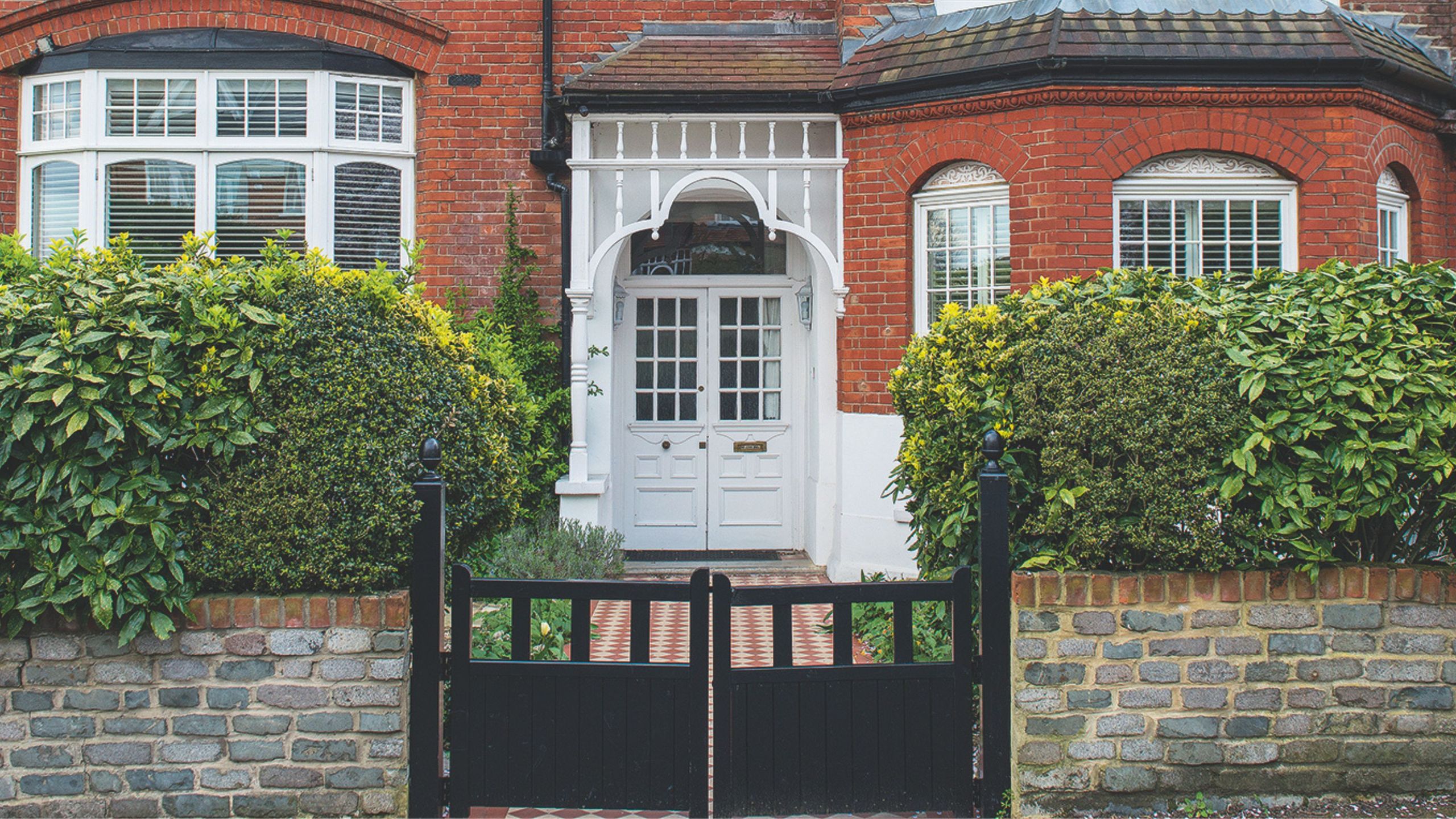
Whether it’s neighbours peering in, constant foot traffic, or simply feeling a little too ‘on display’, it can be difficult to relax if your front garden feels too exposed.
And while front gardens are often designed to feel welcoming, there’s a difference between open and overlooked. The good news is that creating more privacy doesn’t necessarily mean building a huge wall or completely shutting yourself off from the street. In fact, some of the best front garden privacy ideas work by softening boundaries and subtly changing sight lines, while still keeping the space attractive and inviting.
Planting is often the easiest place to start. A well-positioned hedge, a few tall planters or some climbing plants? You’d best believe they can quickly make a front garden feel calmer and more enclosed, not to mention reduce noise, support wildlife and even deter opportunistic intruders, especially when thorny shrubs are involved.


5 easy fixes for an exposed front garden
To find out the easiest ways to make an exposed front garden feel more secluded, we asked garden experts for their top fixes. And, as ever, they all had nothing but the best advice to share…
1. Plant a hedge
Christopher O’Donoghue, director of Gardens Revived, recommends hedging as the best long-term solution for any front garden that feels too exposed.
‘I can’t think of a better way to create privacy in a front garden than planting a hedge,’ he says. ‘I used laurel for mine after rescuing some struggling plants that were being thrown away, and they’ve grown into a lush green screen. Bare root hedging can also be surprisingly affordable if you’re working to a budget.’
Christopher adds that hedges bring environmental benefits too.
Ours is full of ladybirds every summer, and birds are constantly dipping in and out of it,’ he says.
Crocus
Prunus Laurocerasus ‘rotundifolia’
The large glossy, dark green leaves of a cherry laurel make for an attractive front hedge.
Thompson & Morgan
Ligustrum Ovalifolium ‘aureum’ (hedging)
This vigorous, oval leaf privet makes a crisp, pollution-tolerant hedge, which is ideal for anyone on a busy street.
This hedge boasts bright-red autumn fruits for a little added four-season interest (and wildlife benefit!).
2. Add a low fence with planting
According to Morris Hankinson, director of Hopes Grove Nurseries, combining a low fence with planting is ideal if you don’t want to completely close off the front of your home. This contemporary fence panel, £67 from B&Q, is the perfect backdrop for plants.
‘A low fence combined with shrubs or climbers can soften the boundary without making the garden feel closed in,’ he explains. ‘It’s a good middle ground if you still want some openness.’
For added security, he recommends thorny shrubs such as berberis, which can help deter intruders while still looking attractive.
‘Something like berberis will deter intruders as well.”
Add a pop of colour to yours by choosing the Berberis thunbergii f. atropurpurea ‘Harlequin’ from Crocus; its reddish-purple leaves are marbled with pink, making it a truly striking feature.
3. Use trellis panels
Trellis panels are another clever option if your front garden feels too exposed, especially if you want extra privacy without sacrificing sunlight. This trellis panel, £55 from B&Q, will provide just the right amount of screening.
‘Trellis is ideal if you want privacy without blocking light,’ says Morris. ‘Train climbing plants like jasmine, passionflowers, roses or clematis through it for a greener, more flowery option.’
This works especially well in smaller front gardens where solid fencing could make the space feel boxed in.
Passion Flower Caerulea – Passiflora
This passion flower is supplied in an approximately 2-litre container.
Premier Garden Supplies
6ft X 5ft Wooden Garden Trellis Panel
This trellis panel is similar to the one my mum has.
Vitax
Q4 All Purpose Plant Food
A top-rated slow-release fertiliser to promote more flowers.
4. Position planters strategically
For a flexible and renter-friendly solution, Morris recommends using oversized planters as movable screens.
‘Large pots with grasses, small trees or bamboo can act as flexible screens,’ he says. ‘They’re perfect if you want something movable or renter-friendly.’
Tall ornamental grasses can add softness and movement, like Stipa tenuissima, £15.19 for a two-litre pot, while multi-stem trees help break up direct sight lines into your home if your front garden feels too exposed.
Shop tall planters
URBNLIVING
Tall Rectangle Planter (anthracite)
Wayfair.co.uk
Dakota Fields Atonya Garden Raised Bed in Rusty Corten Steel
Primrose
Tall Fibrecotta Trough Planter in Terracotta 72 X 60 X 22cm
5. Create a zoned entrance
Sometimes, making a garden feel more private is about changing how the space is laid out rather than blocking it off entirely.
‘Even subtle changes such as a curved path, raised beds or a small seating area can shift the sight line and make your space feel more secluded,’ Morris explains.
Creating small zones within the front garden can make the area feel more intentional and sheltered, even without major structural changes.
FAQs
What to plant in the front garden for privacy?
According to Morris Hankinson of Hopes Grove Nurseries, a hedge is one of the most effective ways to create natural privacy in a front garden.
‘A hedge is one of the most natural and attractive ways to create privacy,’ he says. ‘It’s great for wildlife and gives so much interest in the garden.’
Faster-growing varieties such as laurel, privet and leylandii can quickly form a dense screen, while yew or box offer a smarter, more formal finish.
So, if your front garden currently feels more like a shop window than a peaceful retreat, a few smart changes can make a huge difference. Whether you go for a wildlife-friendly hedge, some strategically placed planters or a flower-covered trellis, creating privacy doesn’t have to mean shutting yourself away completely.
It just means thinking a little more creatively about the space… and planting accordingly.
TOPICS
Read the full article here


