




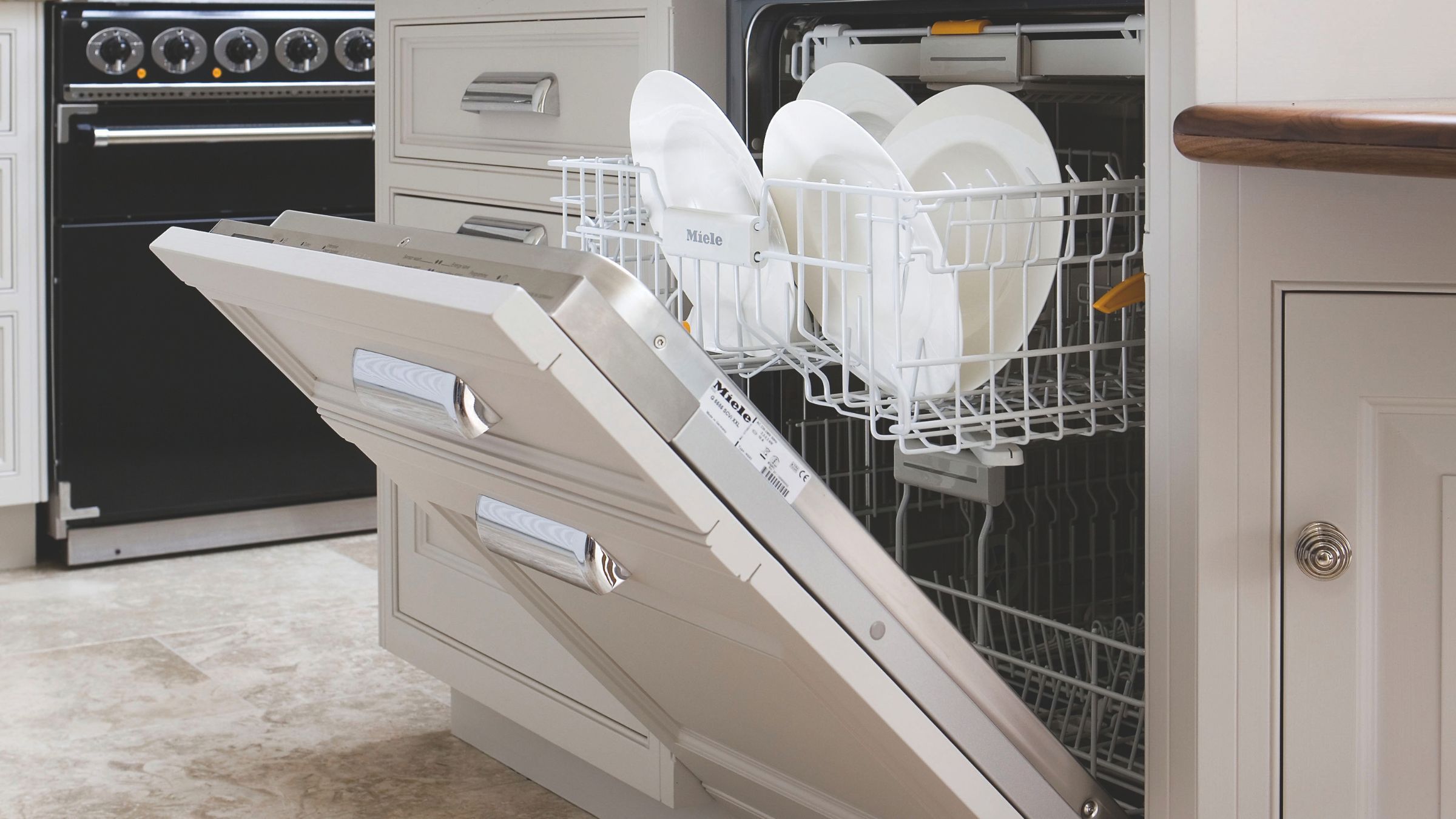
A few months ago, I moved to a new house and was over the moon to finally have space for a dishwasher in my kitchen. Having dreamed of one my whole adult life, I’m happy to report that it’s every bit the game-changer I’d hoped it would be. However, I have already run into a slight issue.
Although I’ve made an effort to keep on top of cleaning my dishwasher, I’ve noticed that my drinking glasses regularly come out looking cloudy and dirty – as though there’s a white haze lingering on the glass itself. Washing them again by hand gets rid of it, but defeats the purpose of using my dishwasher in the first place.
So, I reached out to experts to see where I was going wrong and what I could do about the cloudy glasses coming out of my dishwasher. And it turns out that it’s a common problem.
Latest Videos FromIdeal Home
Why glasses come out of the dishwasher cloudy
According to the professionals, there are two reasons why glasses look cloudy when they come out of the dishwasher. One has a quick fix, while the other is a little more complicated.
Rosy Green, Dishwashing & Cooking Product Manager at Haier UK & Ireland, says, ‘Cloudy glasses are often caused by hard water, as minerals can build up on glassware during the wash cycle.’ And this makes sense, as I’ve already shared my struggles with living in a very hard-water area of Kent and how that affects many of my other home appliances.
Using dishwasher salt like this Finish Dishwasher Salt (£4 at Amazon) will help soften the water and reduce limescale, so it is a quick, affordable fix. I can also vouch for it, as I haven’t noticed any cloudy glasses since topping up my dishwasher with this salt (and keeping it topped up, too).
If you want to take an extra step, Rosy also suggests adding a rinse aid – like this Finish Dishwasher Rinse Aid (£5.08 at Amazon) to your dishwasher. She explains, ‘It helps water drain more effectively from glassware during the final rinse, reducing the droplets that cling to the surface and leave behind water spots and streaks.’
However, there could also be a much bigger problem at play – especially if you don’t live in a hard water area or you can’t remove the cloudy residue with some white vinegar and a damp cloth. Jade Golding-Gault, AO.com’s appliance expert, echoes this warning.
She says, ‘The glass may have become permanently damaged over time. This can happen when too much detergent is used or when delicate glassware is washed at temperatures that are too high. Using the correct amount of detergent and selecting an appropriate programme for glassware can help keep glasses clearer for longer.’
Thankfully, this wasn’t the case for me. But if your glasses are cloudy because they’re permanently damaged, there’s sadly nothing you can do. It’s up to you whether you keep them or ditch them. Just remember that you can no longer recycle them due to new regulations.
Extra dishwasher tips to prevent cloudy glasses
1. Keep on top of cleaning
Dishwasher maintenance is key, Rosy says. She explains, ‘If your glasses are consistently coming out cloudy, cleaning the dishwasher filter every one to two weeks and running a dishwasher cleaner through an empty cycle once a month can also help tackle limescale and detergent build-up.’
And if your glasses are cloudy due to limescale build-up, it may be worth cleaning your dishwasher with white vinegar or citric acid, as these acidic cleaners break down alkaline mineral deposits. Alternatively, you could use a ready-made cleaner like this Dr. Beckmann Service-it Deep Clean Dishwasher Cleaner (£3.60 at Amazon).
2. Check your settings
One of the many things I’ve learned since buying and using a dishwasher is that they’re highly customisable, and certain settings can improve the overall experience – and the results. One of these is the water hardness setting.
Sophie Lane, Product Training Manager at Miele GB, says, ‘If the dishwasher is set incorrectly for the local water hardness, it can affect the finish on the glassware.’ If you’re unsure of the water hardness in your area, you can check this via your water supplier.
3. Avoid overstacking
Although there are many surprising things you can clean in a dishwasher, you still need to be careful to protect your glasses and avoid overloading or overstacking. Rosy says, ‘Avoid overcrowding glasses and make sure delicate glassware is securely positioned on the top rack to prevent movement during the cycle.’
For optimum placement, face all dirty surfaces toward the middle of the appliance, avoid piling items on top of each other or obstructing the spray arms, and place smaller items on the upper racks.
Dishwasher essentials
Dunelm
Pack of 2 Silicone Dishwasher Bag
Our News Writer, Kez, stumbled upon these dishwasher bags earlier this year and snapped them up immediately. They’re ideal for keeping smaller items like lost lids, stray bottle caps, and tiny utensils safe in the dishwasher.
Hotpoint
Hotpoint Full Size Dishwasher
If you have an old dishwasher and items are coming out cloudy, dirty or even damaged, it may be time to invest in a new one. This one has a Maxi Space tub for extra loading space and an Active Dry setting.
YouU
Youu Tether Silicone Dishwasher Attachment (8Pcs)
If you regularly wash stemmed glassware in the dishwasher, you can add an extra layer of protection by using these tethers. They won’t protect them from mineral deposits, but they will protect them from clinking against each other during the cleaning cycle.
So, say goodbye to cloudy glasses from the dishwasher!
If you enjoyed reading this, sign up for the Ideal Home newsletter for all the latest home decor trends and inspiration delivered straight to your inbox
Read the full article here