


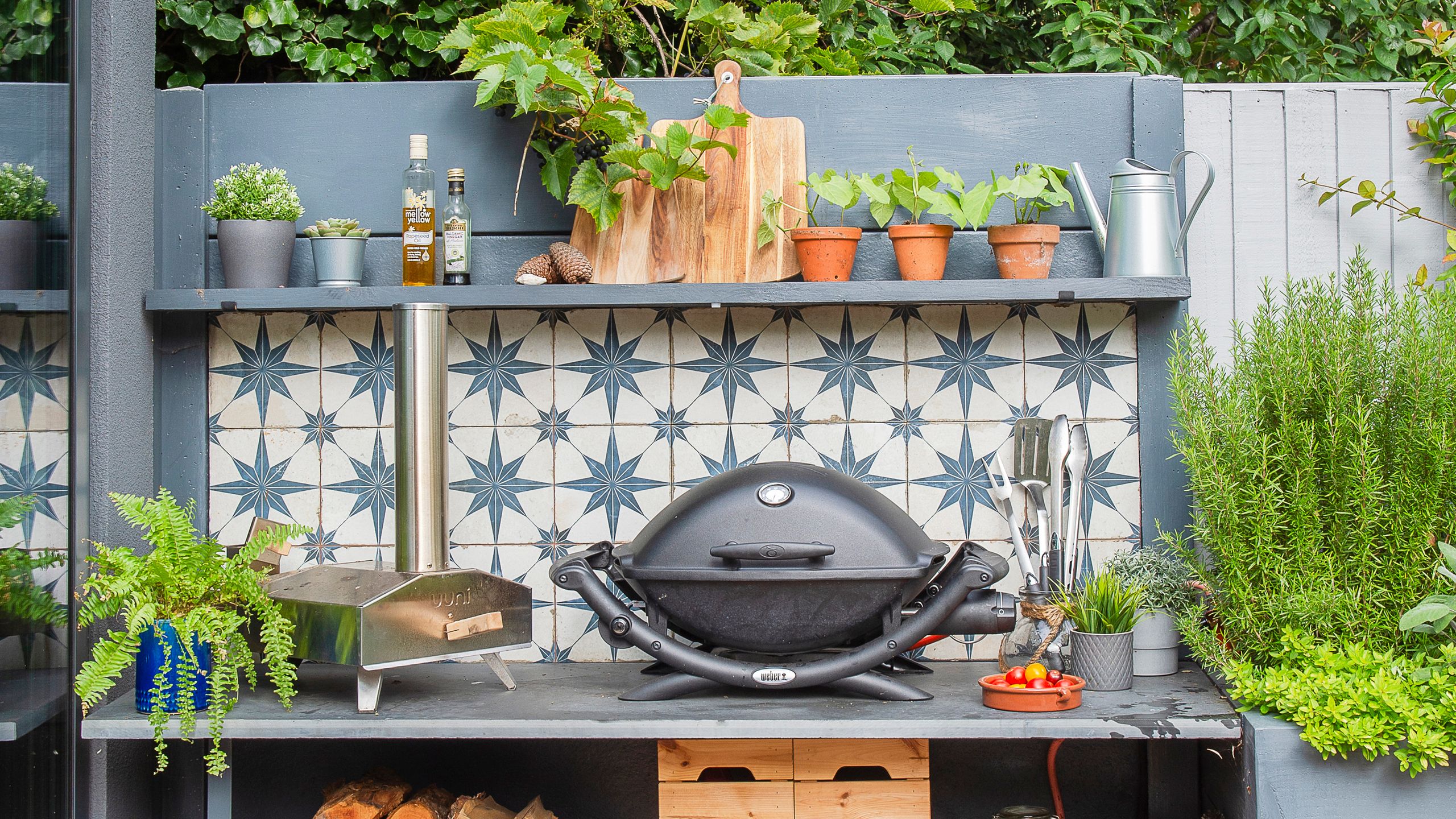
When designing the interiors of our homes, so much thought goes into ensuring a kitchen is as practical as possible. So as our outdoor cooking spaces get bigger and better every year, it’s only natural that we pay more attention to creating functional convenience zones alfresco.
In an outdoor kitchen, convenience is more important than anything else. Once you’ve spent an afternoon repeatedly trekking back indoors to collect crockery and cooking tools you’ve forgotten, you’ll know that an outdoor kitchen needs to have just as much practicality as your indoor cooking space.
Convenience kitchens take practicality one step further – by zoning the area for prep, socialising and decor, it means that your outdoor kitchen will include absolutely everything for any eventuality. These 3 expert-approved tips will help you achieve it.


1. Put cooking first
In an outdoor kitchen, practicality is absolutely key. BBQs and pizza ovens can be messy, so ensuring you have enough space in your cooking zone for the practical prep will keep your outdoor kitchen as tidy as possible.
‘The cooking zone is the hardest working area of any outdoor kitchen, so practicality has to come first. Allow generous space on either side of your BBQ or pizza oven for prep and serving, and don’t overlook ventilation, it’s easily forgotten at the planning stage but makes a real difference to how comfortable the space is to cook in and for guests too!’, explains Joanna Humphreys, fire and stove specialist at Direct Stoves.
If you don’t have much surface space, adding on another freestanding outdoor kitchen unit will allow you to build on the space over time, creating more prep room as your kitchen evolves.
Wayfair.co.uk
Beliani Outdoor Kitchen Island Brucoli Acacia Wood Brown
This outdoor kitchen unit is perfect for adding extra prep space to any size of garden.
Dunelm
Terazza Outdoor Kitchen Double Unit
If you have a smaller outdoor kitchen, this Dunelm two door unit is the perfect shape and size.
Cox & Cox
Malmo Outdoor Storage Cabinet – Two Doors
The warm wood of this kitchen cabinet from Cox & Cox makes for perfect kitchen storage.
2. Allow areas for decoration
While outdoor kitchens started as functional surfaces and cabinets for cooking, they’ve gradually evolved to look more like the cooking spaces we create inside our homes. This means including zones that operate as decorative areas, where you can create a bespoke look rather than focusing solely on the cooking elements.
‘To get the most out of your outdoor kitchen zones, it’s key to view it as another room in the home. Creating a space that seamlessly blends the indoors and out will provide a space that can be enjoyed throughout the summer. When considering the best cabinetry, layering is key,’ explains Al Bruce, kitchen expert and founder of Olive & Barr.
‘Pair wooden cabinets with stone or metal worktops for a tactile and grounding palette. Add open shelving for an area to add decorative touches, but also to house an array of potted herbs,’ he adds.
Garden Trading
St Mawes Drinks Trough 80cm – Galvanised Steel, Silver
This galvanised steel trough will mimic the look of plant beds, while providing the perfect space to store cold drinks.
Dunelm
Scalloped Edge Smooth Fibre Clay Plant Pot
Adding these terracotta plant pots around a garden will add colour and greenery to the space.
nkuku
Reclaimed Iron Kadai With Grill – Small
A fire pit is perfect for a Cotswold outdoor kitchen – this reclaimed iron style feels authentic and unpolished.
3. Use lights for zoning
No outdoor kitchen is complete without lighting. While illumination is key when cooking alfresco, lighting is also useful for subtly zoning different areas of your outdoor kitchen to highlight how each area will be used.
‘An outdoor kitchen should be enjoyed at all points of the day, so outdoor appropriate layered lighting across your zones is key. A fixed wall light gives the space reliable task lighting wherever you need it most, while a portable light lets you adapt the mood as the day shifts, no rewiring required,’ recommends Massimo Buster Minale, founder and creative director of Buster + Punch.
When planning your outdoor kitchen, think about which areas will be used for dining, versus areas that need brighter, more directional light for cooking. Adding pendant lights over a bar or seating area will create a living room atmosphere, whereas wall lights will make outdoor worktops more functional.
Cox & Cox
Aldan Outdoor Table Lamp
Outdoor table lamps are ideal for creating versatile lighting that can be moved around a space, depending on where it’s required.
Pooky Lighting
Cochrane Ip54 Mast Light
These outdoor wall lights make an alfresco space look so sophisticated, plus the brass will age well with time.
Lights4Fun
Warm White Connectable Fairy Lights
You can’t go wrong with fairy lights – drape over an outdoor kitchen wall or fence for twinkly ambience at night.
Read the full article here