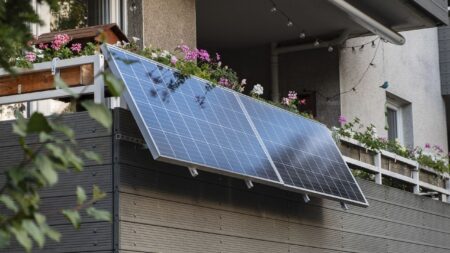
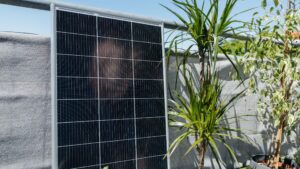


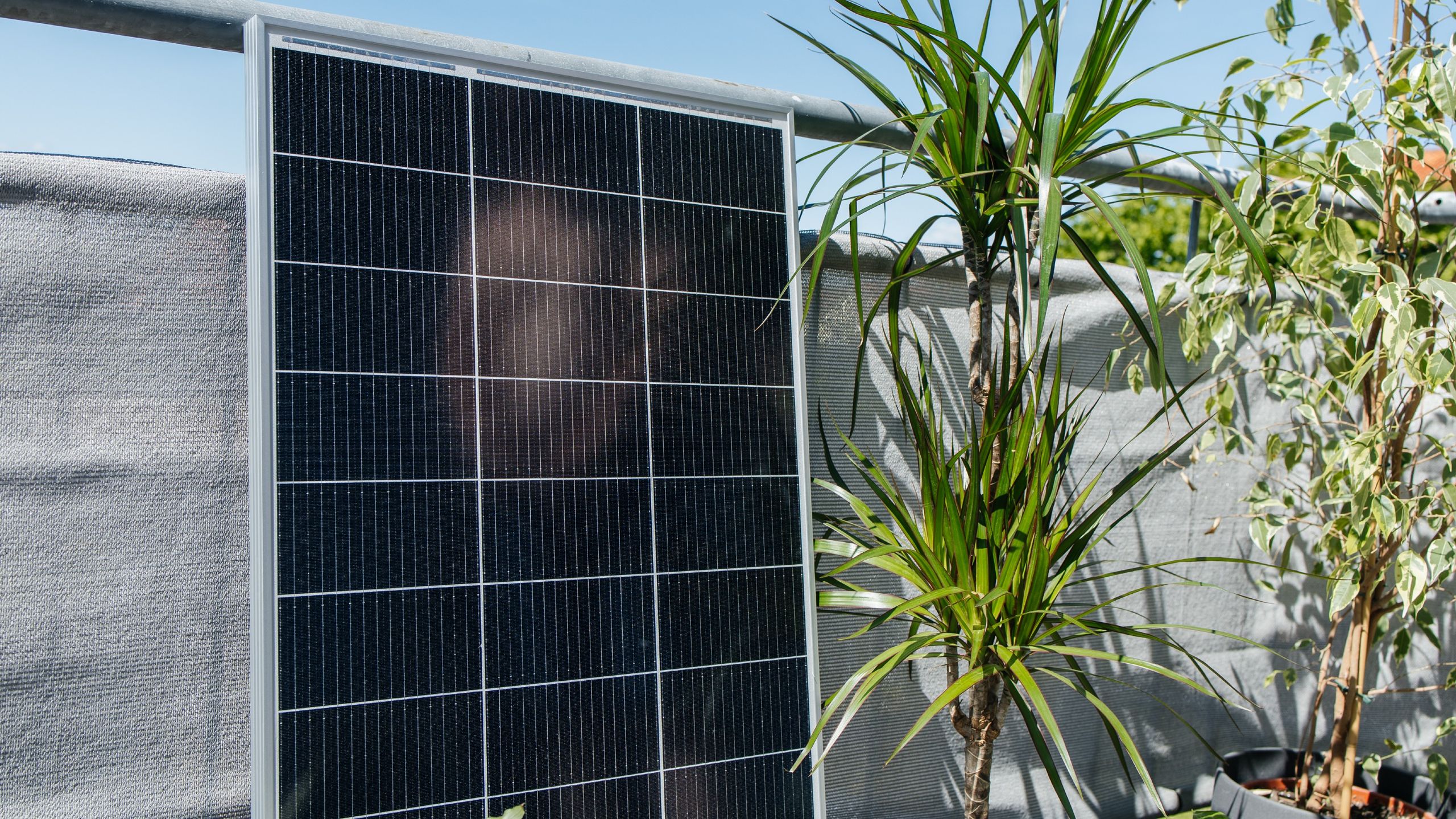
It’s all well and good if you want to start generating your own energy at home, but what if your neighbour objects to your plans for putting a plug-in solar panel on your fence?
Now that plug-in solar panels are available to buy in the UK, at home solar power generation is more accessible than ever before, but in order to get the most from these panels, you need to position them well to maximise the daylight they receive.
But what if you chosen spot sparks objection from your neighbour? I asked the experts about whether your neighbour has grounds to complain and what you should do about it.
Latest Videos FromIdeal Home
Can my neighbour object to a plug-in solar panel on a fence?
There are certain circumstances where your neighbour can legitimately object to you attaching your plug-in solar panels to a fence, including where they pose a fire risk, negatively impact your neighbour or flout planning rules.
‘There are two main considerations to this question: first, public and planning law and secondly, private nuisance,’ explains Paula Moses, Legal Director in the Commercial Dispute Resolution team at Blacks Solicitors LLP. ‘Where planning permission is required, such as in certain circumstances involving panels on the front of a property, neighbours may be notified as part of the planning process and given the opportunity to raise objections. Ultimately, however, the decision on whether the installation can proceed rests only with your local authority.
‘If your neighbour is disputing your solar panel installation, or you are considering taking action over a neighbour’s panels, simply finding them unsightly would not usually be enough to establish a legal claim.’
1. Fire safety
Your neighbour could object on the grounds of your chosen plug-in solar panel positioning or installation posing a fire hazard, and you’d be wise to heed their objection and choose an alternative position for your panels.
The London Fire Brigade has issued advice on how to use plug-in solar panels safely, including: ‘Keep any combustible materials away from your solar panels, batteries, inverters or electrical connections. Sparks, flames and heat from electrical faults can ignite nearby materials and allow fire to spread rapidly.’
Neighbours could also object on the grounds of you buying non-compliant panels, installing the panels incorrectly, or misusing them, which could also lead to a safety issue. Should the worst happen, you could also find that your house insurance is voided if you have used or installed your panels in the wrong way.
To avoid this, make sure you install your plug-in solar panels correctly, following the manufacturer’s instructions to the letter. Use only as intended, and if you need an outdoor plug adding, or your electrics checked, make sure you use a qualified electrician.
Shop compliant plug-in solar panels:
UKSOL
515w Pro Compact Plug in Solar Panel With Hybrid Mount Bundle
An affordable plug-in solar panel bundle currently available at Argos, that you can order now for delivery at the end of October.
Modular Solar
Plug-In Modular Solar Unit
Amazon also sells compliant plug-in solar panels that are easy to set up on a DIY basis.
PowerXpress
800W Bifacial Plug-In Solar Power Kit
If you want a two panel kit, this one from Screwfix, comes with two 460W panels and an 800W microinverter.
2. Planning rules
As planning rules have recently been updated, if your installation falls foul of the rules, your neighbour can object. And you might actually be glad they did, as it would give you time to reposition the panel(s) before you find yourself on the receiving end of an enforcement notice from the local council.
Under Part 14 of the The Town and Country Planning (General Permitted Development) (England) Order 2015, which covers the ‘installation or alteration etc of solar equipment on domestic premises’ new provisions have been added since plug-in solar panels because legal in the UK.
The changes say that the installation of plug-in solar panels ‘where any part of the plug-in solar would be installed on a wooden wall, balcony or enclosure or on any part of the exterior of a dwellinghouse where that part is clad in timber’ is not classed as permitted development. That means you would need to seek planning permission from your local authority, which can be a time-consuming and expensive task, with no guarantee of approval.
If you do plan on going down the route of obtaining planning permission, you should check who owns the fence, as if it’s your neighbour’s, your plans could be a moot point.
3. Nuisance issues
You’re neighbour could have a legitimate reason to object if your installation will negatively impact them in their home, or if it encroaches on a boundary.
‘To amount to a “nuisance” in the legal sense, the panels would need to interfere with your ability to use and enjoy your property,’ says Paula. ‘For example, if the solar panels reflected sunlight directly into a room and this significantly affected your ability to use it during the day, this could potentially amount to a nuisance. Equally, if a neighbour objects to your panels, it is important to understand that their objection alone does not necessarily mean the installation is actionable.’
Having open communication with your neighbour about your plans and preparing to compromise if necessary is key to avoiding any disputes.
‘Be considerate when choosing a location for plug-in panels and factor in how options could impact neighbours,’ says Brian Davenport, solar lighting expert and Co-Founder of The Solar Centre.‘Even though it isn’t a legal requirement, it could be worth talking to a neighbour about where you want to place it to avoid conflict.’
Fences aren’t ideal anyway
Beyond avoiding a potential fire risk or issues with the local planning authority, your neighbours objects to you putting a plug-in solar panel on a fence could also mean you get more out of your panels.
‘Fences are generally not suitable for plug-in solar panels for two reasons,’ explains John Collett, Director at Quantum Renewables. ‘First, most garden fences are not structurally designed to bear the additional load and wind forces that a panel creates, particularly over time. Second, a fence is rarely oriented optimally for solar generation.
‘Ground mounting in a clear, open garden space is often better than a constrained wall or fence position, provided the panel cannot be easily damaged or stolen.’
If you are set on the idea of position on the fence, then it might be worth considering an alternative like these Jaksun Solar Fence Panel from Jacksons Fencing.
Can you install plug-in solar panels on a shed roof instead?
Whether you can install plug-in solar panels on a shed roof is a bit of a point of contention. Sheds are not specifically mentioned in the updated planning rules, unlike fences and gates, but could come under the umbrella of ‘enclosures’ that are mentioned in the new planning rules.
‘While sheds can seem like a good location for plug-in panels, particularly if the roof gets plenty of direct sunlight, homeowners need to check the small print first,’ explains Sam Jenkinson, from garden building retailer Tiger. ‘The new rules include a specific condition for plug-in solar: it cannot be installed on a wooden wall, balcony or enclosure, or on a timber-clad part of the exterior of the dwellinghouse.
‘As the vast majority of UK garden sheds are timber-built, this could rule out a straightforward installation for many households, even where the roof and sunlight would otherwise be perfect.’
To ensure your installation is compliant, it’s worthwhile checking with your local authority before you buy to avoid any disappointment or unintentional rule breaking.
Where’s the best place to position a plug-in solar panel?
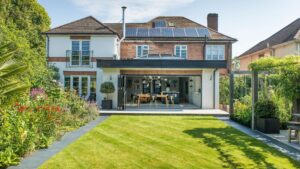
The ideal place to position your plug-in solar panel will depend on where gets the most sun, where the shade is, and how you plan on mounting it.
‘For best performance, you’re looking for an unshaded position with good sun exposure,’ says Kian Milroy, renewables electrical engineer at Heatable. ‘In the UK, south facing panels usually give the best annual generation but south-east and south-west are still very decent.’
John Collett agrees, saying: ‘The best position is south-facing at an angle of 30 to 40 degrees with no shading from trees, buildings or other roof features at any point during the day.’
But if you don’t have a south facing garden or balcony, all is not lost. ‘East or west-facing positions generate around 20 per cent less output but are still viable, explains John. ‘North-facing is the worst orientation and generally not worth the effort in the UK as the panel will rarely receive direct sunlight.’
According to Kian, you decision on the right placement should equally consider proximity to electrical connection, weather exposure and the mounting if you want to maximise the benefits.
If you enjoyed reading this, sign up for the Ideal Home newsletter for all the latest home decor trends and inspiration delivered straight to your inbox
Read the full article here