



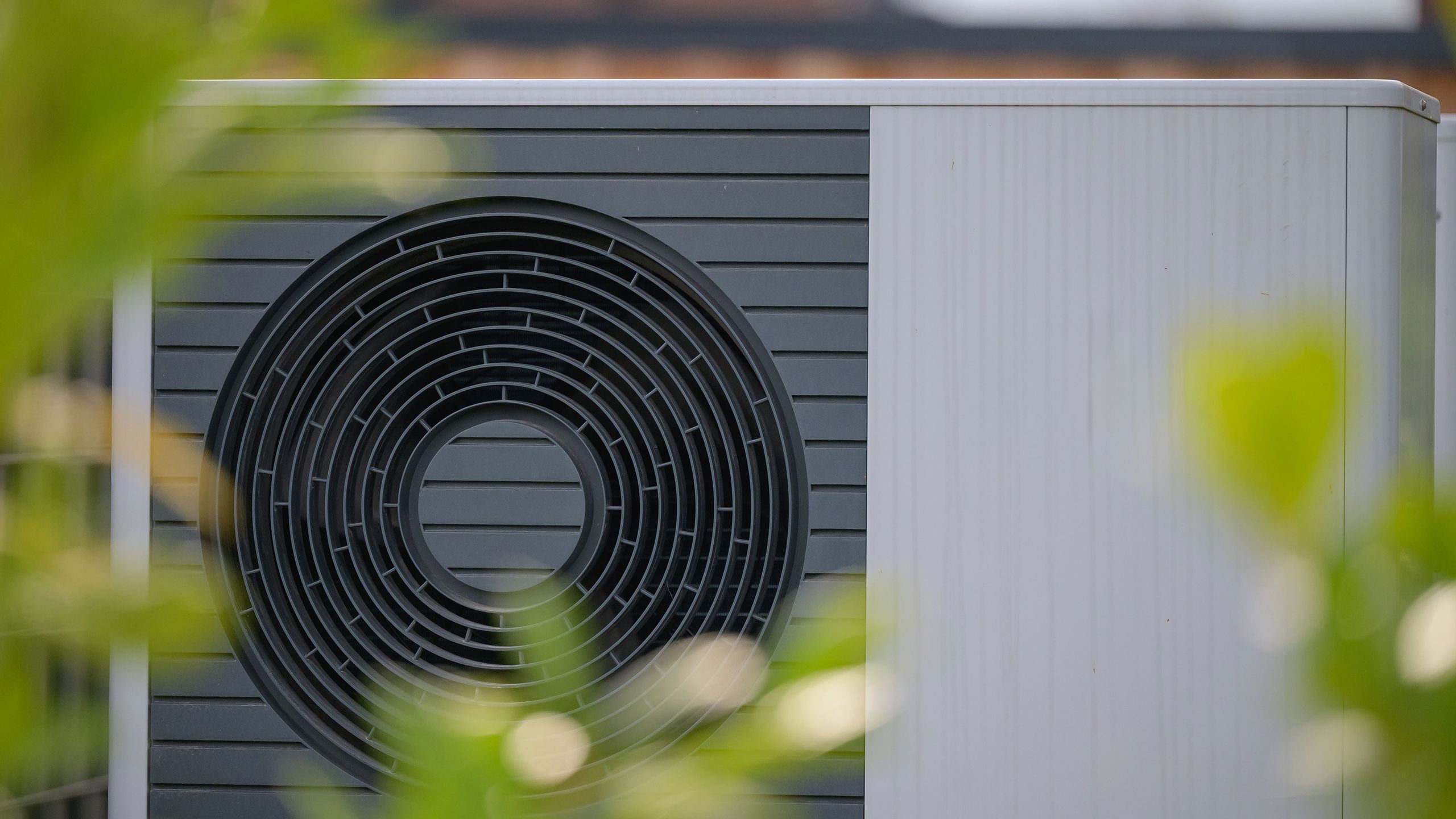
Heat pumps are growing in popularity and are more readily available than ever before. And as homeowners get more comfortable with what this home tech can offer in terms of efficiency, warmth and eco credentials, we could see more and more heat pumps added to homes around the country.
But what happens if you’re neighbour objects to your heat pump plans? Could they put a pause in your plans, or scupper them altogether? I spoke to the experts about the objections that may have merit, and what you can do to to resolve any issues so both you and your neighbour are happy.
Can my neighbour object to me installing a heat pump?
While your neighbour can’t object to you installing a heat pump just because they don’t want you to do it, there are a couple of instances where they could have a valid objection.
Latest Videos FromIdeal Home
1. Planning permission
In many cases, you can install a heat pump (either air source or ground source) under Permitted Development, which means you don’t need to submit a planning application. However, especially in the case of air source heat pumps, there are some exceptions, and if your planned installation lands among those exceptions, and you don’t secure planning permission, then your neighbour could rightly object.
These exceptions cover things like:
- Where you live
- How many external units you plan on installing
- How big they are
- Where on your property you plan on installing them.
For example, installing a heat pump is unlikely to fall under Permitted Development (PD) if you live in a Listed building or in a designated zone like an Area of Outstanding Natural Beauty or National Park. In these cases, your PD rights may have been limited or removed altogether, meaning you will need to apply for planning permission.
Whether your property is detached or not, will also play a part in the how many external units you can add under PD. If you live in a detached property, you can install a maximum of two. If the property is not detached, you can only install one.
To be classed as PD, the external unit fitted on a house cannot exceed 1.5m3 in volume (0.6m3 on a flat).
The Town and Country Planning (General Permitted Development) (England) Order 2015 also stipulates certain positions of your heat pump that would require planning permission, including installation on a pitched roof, or within 1m of the external edge of a flat roof.
‘Most heat pump installations can be carried out under permitted development rights, meaning planning permission is not usually required,’ explains James Fowler Marketing & Strategy Director at Vaillant UK. ‘However, there are specific criteria that must be met depending on whether the system is an air, ground or water source heat pump, as well as where the property is located in the UK. The rules differ between England, Wales, Northern Ireland and Scotland, and homeowners should always ensure their installation complies with local requirements. A neighbour could have a legitimate objection if the required permissions have not been obtained.’
While your neighbour may have the opportunity to voice their objections if you go down the planning permission route, ultimately, the decision rests with your local authority. Before you begin the installation process, make sure you check the planning guidance carefully and if you are in any doubt, speak to your local authority for specific advice in your area.
If you need planning permission and don’t secure it, you may be able to submit a retrospective planning application, but there is no guarantee that this will be approved, and you could end up having to remove your heat pump at your own cost.
2. Noise
Your neighbour might object on the ground that they are worried about how noisy the heat pump will be, but provided it’s installed properly and in line with planning rules, then you should be able to assuage their worries.
‘Noise is probably one of the biggest misconceptions around heat pumps,’ says Rick Clarke, Product Manager at NIBE UK. ‘Modern air source heat pumps are designed for residential environments and can operate at very low sound levels. Government research has found that noise complaints associated with air source heat pumps are uncommon, with the small number identified in its research linked to issues such as poor-quality installation, location and proximity.
‘There are also clear safeguards in place. For an air source heat pump installed under permitted development rights in England, the installation must comply with the MCS planning standard. This includes a sound assessment, with a permitted development noise limit of 37 dB(A) at the relevant assessment position.
‘For homeowners who are particularly conscious of sound, independent certification can provide further reassurance.’
Looking for heat pumps that have the Quiet Mark certification is a great starting point, for both you and your neighbour. Try the Quiet Mark Certified Heat Pumps Guide 2026.
‘Quiet Mark’s 2026 Heat Pump Survey by YouGov found that two-thirds of people say noise would influence their decision to install a heat pump and it would stop almost a quarter from getting one altogether,’ says Poppy Szkiler, CEO Founder of Quiet Mark. ‘Our acoustics team at Quiet Mark – the certification programme for the world’s quietest products – has whittled down a bewildering choice of more than 850 heat pumps on the market, where 60 per cent of all heat pumps fell short of our Quiet Mark criteria.
‘Over 15 years we have built market-wide databases and scrutinised manufacturers’ claims on sound levels using standardised tests, from which we certify the models that emit the lowest noise levels.’
But while you can work with your proposed installer to choose a quiet heat pump, other factors should be included in your decision. ‘As with any piece of equipment, specification and installation matter. Choosing a low-noise product, correctly sizing the system and thinking carefully about where the outdoor unit is positioned all contribute to keeping sound levels low,’ adds Rick. Make sure you choose a reputable installer who will be able to advise on the best placement that will work for both you and your neighbour.
3. Proximity to your boundary with your neighbour
Your neighbour may voice concerns over how close your heat pump will be to the boundary between your two properties. While this may have been a blocker 18 months ago. Fortunately it’s no longer the case. It used to be that planning rules stated a heat pump couldn’t be installed within 1m of a boundary, but that criteria was removed in May 2025, in order to accelerate the take up of heat pumps.
However, if it is going to be close to a boundary, you will need to ensure that your neighbour doesn’t have anything on their side that could block the air circulation around your heat pump that will impact how effectively it works.
Having clear, friendly and early communication with both your neighbour, and taking into account any concerns they may have about positioning, which you can then discuss with your installer, will help keep everyone happy.
4. Nuisance
If you stay on the right side of the rules above, then there shouldn’t be much for your neighbour left to object to. However, if your installation impacts them negatively in their home, it could be a different story.
They can’t just say it negatively impacts them, they would have to provide evidence. ‘If you wish to take action against your neighbour yourself, you will need to provide evidence that installation of the pump has caused a ‘nuisance’ in the legal sense,’ explains Paula Moses, Legal Director in the Commercial Dispute Resolution team at Blacks Solicitors LLP. ‘This means that it impinges on the use and enjoyment of your property if, for example, it makes a loud noise or releases emissions.
‘However, it is also important to establish evidence of a legitimate nuisance before pursuing a claim, particularly where maintaining a positive relationship with your neighbours is important.’
Again, if you have had good communication with your neighbour throughout your heat pump installation process, should they have any issues once it’s in place, they are more likely to come to you so you in a similar manner so issues can be resolve amicably and without legal intervention.
What’s the best way to avoid objections from neighbours when installing a heat pump?
If you are worried about potential conflict with neighbours over your heat pump plans, the good news is that there is a lot within your control to help quiet those objections, leaving both you and your neighbour happy.
‘The best starting point is a good-quality installation, say NIBE UK’s Rick. ‘The installer should select the right system for the property, assess where the outdoor unit should go and consider the surrounding environment as part of the design.
‘If the unit is going to be positioned particularly close to a neighbouring property, there is also no harm in having a conversation beforehand. Sometimes simply explaining what is being installed and addressing any misconceptions about how much sound a modern heat pump actually makes can provide reassurance.
‘Ultimately, concerns about neighbours shouldn’t put homeowners off considering a heat pump. With the right product, thoughtful siting and a quality installation, a heat pump can provide low-carbon heating without causing disruption to the people living around you.’
If you enjoyed reading this, sign up for the Ideal Home newsletter for all the latest home decor trends and inspiration delivered straight to your inbox
Read the full article here