





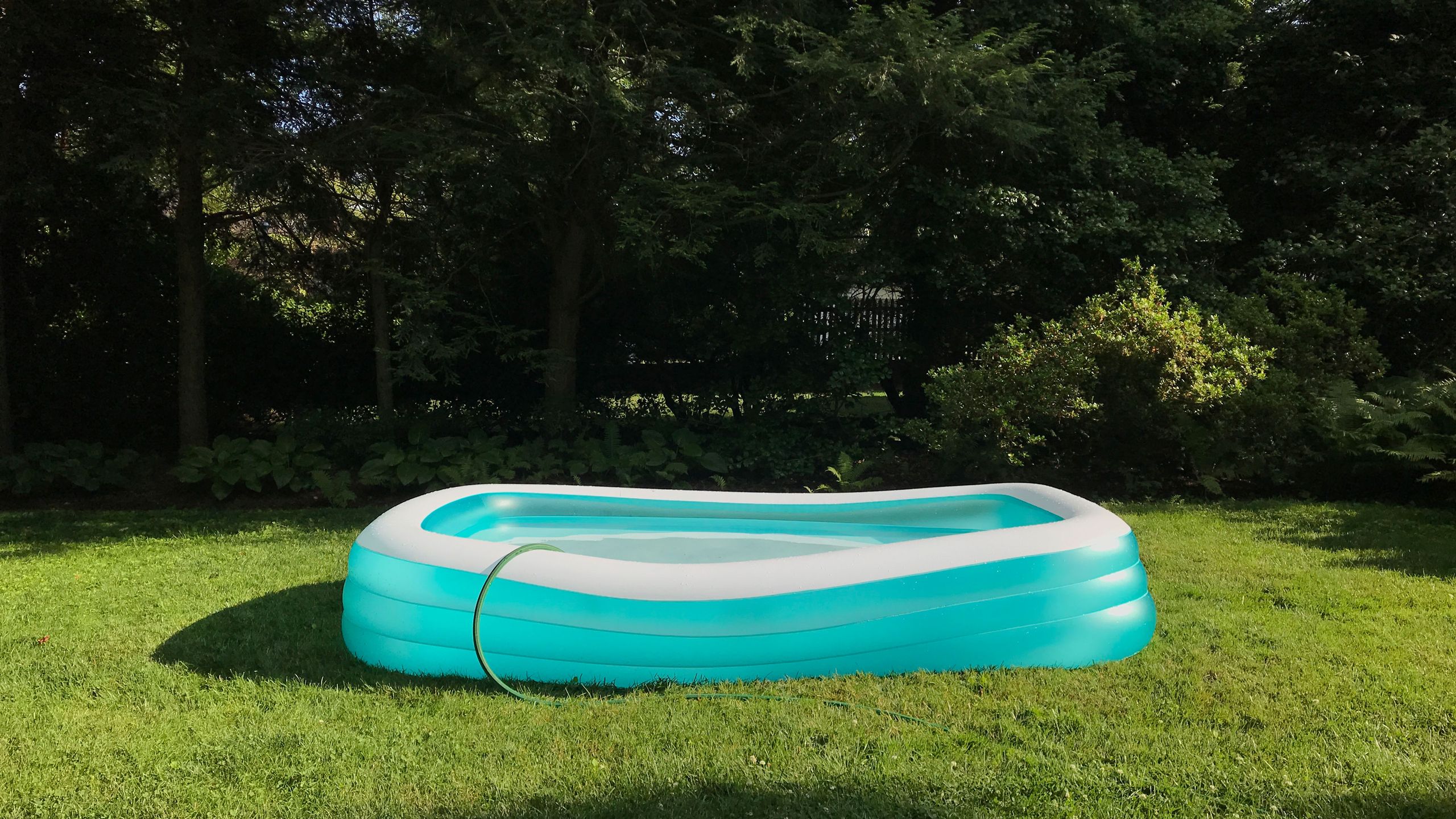
Our big paddling pool only comes out a handful of times each summer, but whenever it does, the ending is always the same. Once the girls have finished splashing around, we usually cover it for a while, but because we don’t treat it with chemicals, we then need to empty it after a couple of days, which usually ends up as one giant puddle on our grass.
I’d never actually questioned it before, but after another spell of hot, dry weather and the constant threat of hosepipe bans, it made me think of how much perfectly usable water I was wasting, as well as the fact that I was wrecking my lawn in the process, which is why I was struggling to revive it all the time.
It turns out that as long as the water is clean and hasn’t been treated with chlorine and other chemicals, gardening experts say there are plenty of ways to reuse paddling pool water around the garden instead of letting it drain away. So before I empty ours again, these are the tips I’ll be stealing.


1. Give your borders a long drink
Instead of sending all that water across one patch of grass, the experts I spoke to say it’s far better to spread it around the garden, particularly on established planting.
‘People don’t always realise how much water is sitting in a paddling pool, so it makes sense to use it elsewhere in the garden rather than just emptying it away,’ says Jo McGarry, luxury garden design expert at Caragh Nurseries. ‘If it’s only been used for paddling and doesn’t contain lots of chemicals, it’s ideal for watering trees, shrubs and flower beds.’
Richard Barker, horticultural expert at LBS Horticulture, also recommends using it on ornamental plants and lawns, explaining that established plants have much stronger root systems than young plants.
Lucie Bradley, gardening expert at Easy Garden Irrigation, agrees that established plants are the safest bet. ‘I wouldn’t recommend it for watering fruits and vegetables as it is likely to contain traces of soaps, sunscreens, sweat and oil,’ she explains. ‘But I would highly recommend it for keeping established perennials, shrubs, trees and lawns hydrated.’
She also advises watering deeply at the base of plants rather than over the leaves to encourage healthier roots.
Padding pool watering essentials
Gardena
2-In-1 Clear/dirty Water Submersible Pump
A submersible pump will help extract the water with a hose so you can water straight from the pool or collect it in a watering can or bucket.
Fyearfly
Portable Electric Sprayer, USB Rechargeable Long Rod Sprayer
If you’ve collected the water into a receptacle like a bucket or container you can then use this electric sprayer to water your plants.
SideKing
Knapsack Sprayer 12l, Electric Garden Sprayer
Along with a submersible pump, you can decant the paddling pool water into this handy backpack to easily water the garden with the attached electric sprayer.
2. Rescue your patio pots
Container plants are often the first to suffer during a hot spell because they dry out much faster than borders, making them an ideal place to use leftover pool water.
‘Patio pots and hanging baskets are another great place to use it because they dry out much more quickly than plants growing in the ground,’ says Jo. ‘A really good soak with leftover pool water can help keep them looking their best during a hot spell.’
Jo also recommends pouring any remaining water onto your compost heap if it’s becoming dry. ‘Compost needs moisture to break down properly, so it’s an easy way to put every last drop to good use.’
If you regularly fill a large paddling pool over summer like us, Jo suggests investing in a small submersible pump like Gardena’s submersible pump, £59.99 at Amazon. ‘It makes moving the water around the garden much easier than carrying watering cans back and forth, especially if you’ve got a larger garden.’
3. Store it in a water butt
If you’ve still got water left after watering the garden, why not save it for another day?
‘The water from a paddling pool can be siphoned into existing water butts to ensure you have a good reserve during dry weather or for use during a hosepipe ban,’ says Richard.
He advises only storing clean water that’s free from chlorine, soaps and dirt, adding that it’s worth filtering it through a sieve first to catch grass and other debris before pouring it into the butt. If you’re using a submersible water pump, like this Amazon pick, to drain your pool, you could add this pump filter, £7.99 at Amazon, to strain it all out.
Lucie adds that this is especially worthwhile considering many family paddling pools hold several hundred litres of water, meaning there’s often far more than you can immediately use around the garden.
Shop water butts
Garden Trading
Classic Water Butt 100l – Galvanised Steel, Silver
AMOS
210 Litre Water Butt With Tap Includes Stand and Filler Kit for Garden & Outdoor, Black
276 Litre Grey Wall Tank With Rain Trap Downpipe Connector
4. Help wildlife through hot weather
Clean paddling pool water can also be put to good use, helping wildlife stay hydrated. Richard says it’s suitable for topping up bird baths, provided it’s free from dirt, sunscreen, soap and chemicals. ‘If the water appears dirty or has an oily film, this should not be used as it can ruin birds’ feathers and make them more vulnerable to predators.’
Lucie also recommends using it to create shallow drinking stations for bees, butterflies and other beneficial insects, adding that involving children in transferring the water is a brilliant way to teach them about both wildlife and saving water.
Shop wildlife hydration essentials
Crocus Stake Bird Bath – Putty Grey
Bee Blossoms Ceramic Flowers
Wooden bird and wildlife bowl
5. Use it for cleaning jobs around the garden
Your plants aren’t the only things that can benefit. Instead of reaching for the hose, Richards suggests using leftover paddling pool water to clean garden furniture, decking, wheelie bins and even wash the car using a bucket.
Lucie points out that hosepipes and pressure washers can use around 1000 litres of water an hour when cleaning patios or cars, so reusing water you’ve already paid for is a much more efficient option.
Where not to reuse paddling pool water
All three of the experts agree that you should avoid paddling pool water on fruit, vegetables or young plants if there’s any chance it contains sunscreen, soaps or other contaminants.
If the pool has been treated with chlorine, Richard recommends leaving the water uncovered in the sun for around 24 hours before using it so the chlorine has time to dissipate.
So the next time I drag the paddling pool out (i.e. this weekend), I’ll probably still end up with a soggy lawn where the kids are splashing around, but after speaking to the experts, I certainly won’t be pulling the plug quite so quickly.
With hosepipe bans becoming an increasingly familiar part of summer, it feels like an easy way to water your garden during one!
If you enjoyed reading this, sign up for the Ideal Home newsletter for all the latest home decor trends and inspiration delivered straight to your inbox
Read the full article here


