







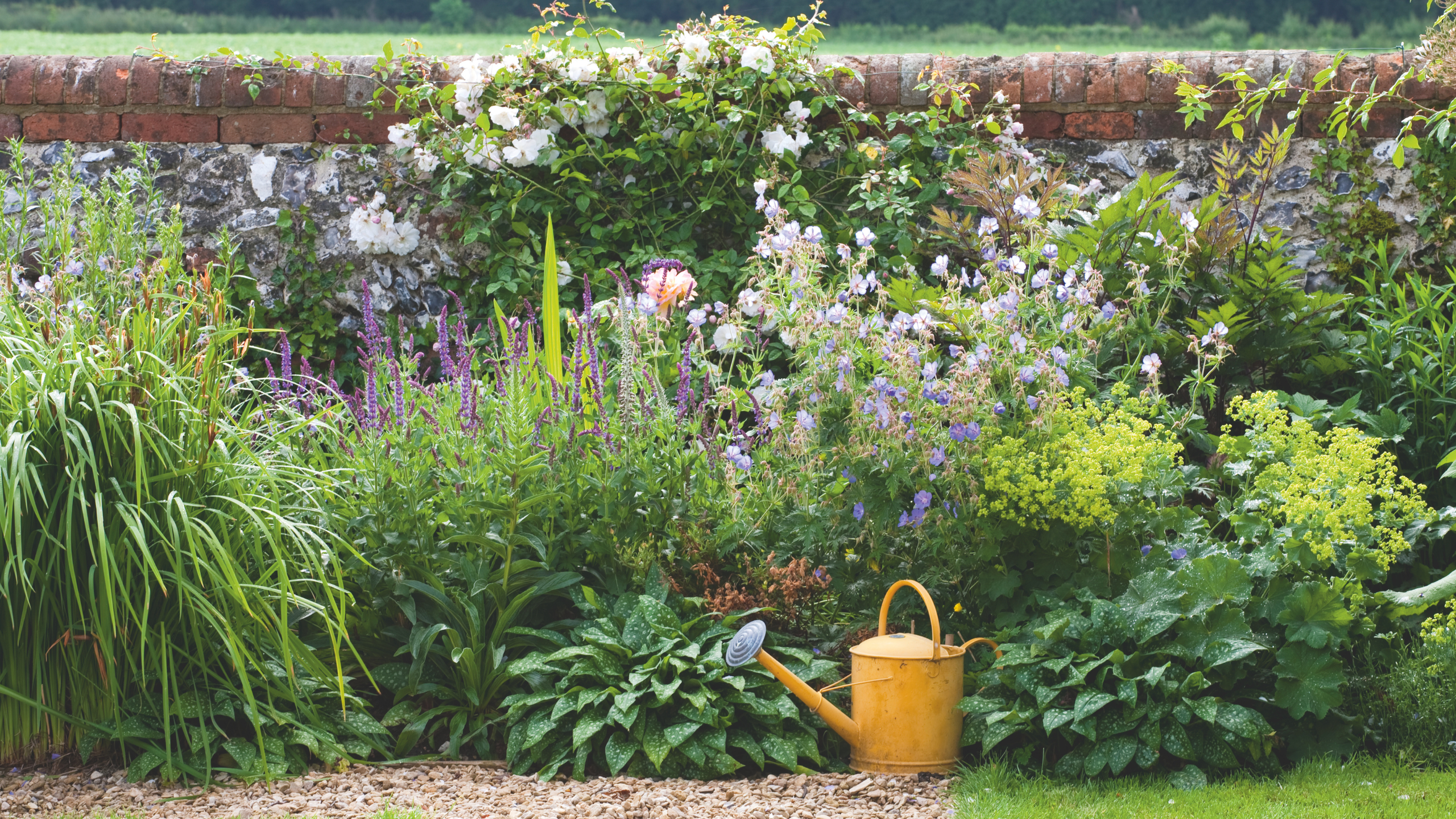
Companion planting is the practice of planting different plants in proximity to each other to help them grow and thrive. In light of this year’s heatwaves and the likelihood that future summers will be even hotter, shade companion planting is the clever method gardeners are turning to to ensure their plants stay protected from the hot sun.
When you think of companion planting ideas, you’re likely thinking of combinations that stop pests from destroying your garden. But with shade companion planting, these combinations consist of using hardier, taller plants to provide shade for delicate, smaller plants – and it’s one of the best ways to help heat-proof your garden.
‘One of the simplest ways to create a more resilient garden is to think about plants as a community rather than as individuals. In nature, taller trees and shrubs naturally create sheltered microclimates beneath their canopies, protecting smaller plants from the hottest afternoon sun, reducing water loss and helping the soil retain moisture. We can borrow the same principle in our own gardens,’ explains Andrew Jackson, award-winning garden writer, designer and creator of The New Build Manifesto.


Here are five combinations you can put to practice in your garden.
1. Verbena bonariensis, geraniums and heucheras
If you love cottage gardens, Andrew recommends using this planting scheme to achieve a whimsical, romantic border that remains resilient in hotter gardens. Use plants like verbena bonariensis, bronze fennel and ornamental grasses at the back, pot astrantia, hardy geraniums and foxgloves in the middle and have heucheras, alchemilla and epimedium in the front, he advises.
‘The tall, airy plants filter sunlight rather than blocking it completely, reducing heat stress while allowing enough light through for flowering plants beneath. The layered planting also helps keep the soil cooler and slows evaporation, meaning plants need less watering during dry spells,’ says Andrew.
Where to buy verbena bonariensis, geraniums and heucheras
2. Culver’s root and lily turf
Another beautiful combination you should consider is Culver’s root and lily turf. This striking combination of one of the best plants for clay soil and one of the best ornamental grasses for shade makes a resilient yet colourful display.
‘Culver’s Root is the ideal architectural plant for sunny garden borders, as these low-maintenance, hardy herbaceous perennials thrive in sunny borders, growing in dense clumps up to two metres high and with a spread of around one metre. To take advantage of the shade that this perennial provides, growing Lilyturf at its base will provide this small, grass-like evergreen,’ says Lucie Bradley, gardens and greenhouse expert at Easy Gardens Irrigation.
‘The partial shade-attracting ground cover protects from direct sunlight that this sun-sensitive plant prefers to protect its foliage from being bleached by strong sun rays. With both Culver’s Root and Lilyturf enjoying the same consistently moist, well-draining soil, they can be grown easily together. These two plants also complement each other in other ways, including the timing of their blooms, with the tall ‘candelabra’ style spikes of the Culver’s root appearing in mid to late summer, closely followed by the vibrant, smaller spikes of dense, bead- like flowers which appear from late summer into autumn.’
Where to buy Culver’s root and lily turf
3. Olive trees, lavender, creeping thyme
Climate-resistant planting schemes will inevitably embrace Mediterranean garden ideas. Mediterranean plants are well equipped to deal with hot, dry, poor conditions, making this one of the easiest planting combinations you can follow.
Andrew recommends planting a multi-stem olive tree or Amelanchier lamarckii at the back of your border, with either salvias, nepeta or lavender in the middle and creeping thyme, oregano or low-growing sedums.
‘Although Mediterranean plants enjoy sunshine, even they benefit from cooler root conditions. The light canopy of a small tree creates welcome shade during the hottest part of the day, while aromatic groundcover plants act as a living mulch, reducing soil temperatures and locking in moisture,’ he says.
Where to buy olive trees, lavender, creeping thyme
4. Foxgloves and aquilegia
Foxgloves are tall and low-maintenance, making them a great choice as a shade companion plant. Plus, with grandma gardens making a comeback this summer, they’re perfectly on-trend, too.
‘Foxgloves are not only popular to include in your garden as they provide striking vertical height, with tall spires of tubular bell-shaped blooms which are magnets to beneficial pollinators whilst also being low maintenance and pest resilient, but their height also makes them ideal companion plants for other plants which are more sensitive to the sun,’ says Lucie.
‘When in full flower, from May to July, their vertical height can be used to naturally shade plants such as Aquilegia, which prefer dappled shade and usually stand between 60 to 90cm in height. With flowers appearing from mid-May until June, their blooms will overlap and make for a perfect, long-lasting display in a cottage garden. Whilst the shallow roots of the foxglove won’t compete for space with the deep taproots of aquilegia, ensuring they both can access moisture without competing, and they both prefer moist, humus-rich soil, making them ideal companion plants.’
Where to buy foxgloves and aquilegia
5. Birch trees, hydrangeas and tiarella
If you thought you had to say goodbye to hydrangeas because of the heat, think again. This planting scheme is perfect for creating a woodland edge in your garden, helping it stay cooler.
Andrew says to plant birch trees or serviceberry trees at the edge of your border. Then, you can plant hydrangeas, ferns and Japanese anemones in the middle, followed by hostas, tiarella or pulmonaria at the front – simply choose a combo you like!
‘These plants naturally grow along woodland edges where they receive morning sun and afternoon shade. The open canopy of birch or amelanchier provides dappled light without creating heavy shade, allowing moisture-loving plants to thrive while protecting them from scorching temperatures,’ adds Andrew.
Where to buy birch trees, hydrangeas and tiarella
‘As our summers become warmer, gardening is becoming less about finding plants that tolerate full sun and more about designing gardens that create their own favourable conditions. Layering plants by height to provide gentle shade is an easy technique that improves plant health, reduces watering and produces borders that feel softer, more natural and more resilient over time,’ Andrew concludes.
With so many combinations to try, shade companion planting is like a shortcut to a stunning yet climate-resilient garden.
Read the full article here


