







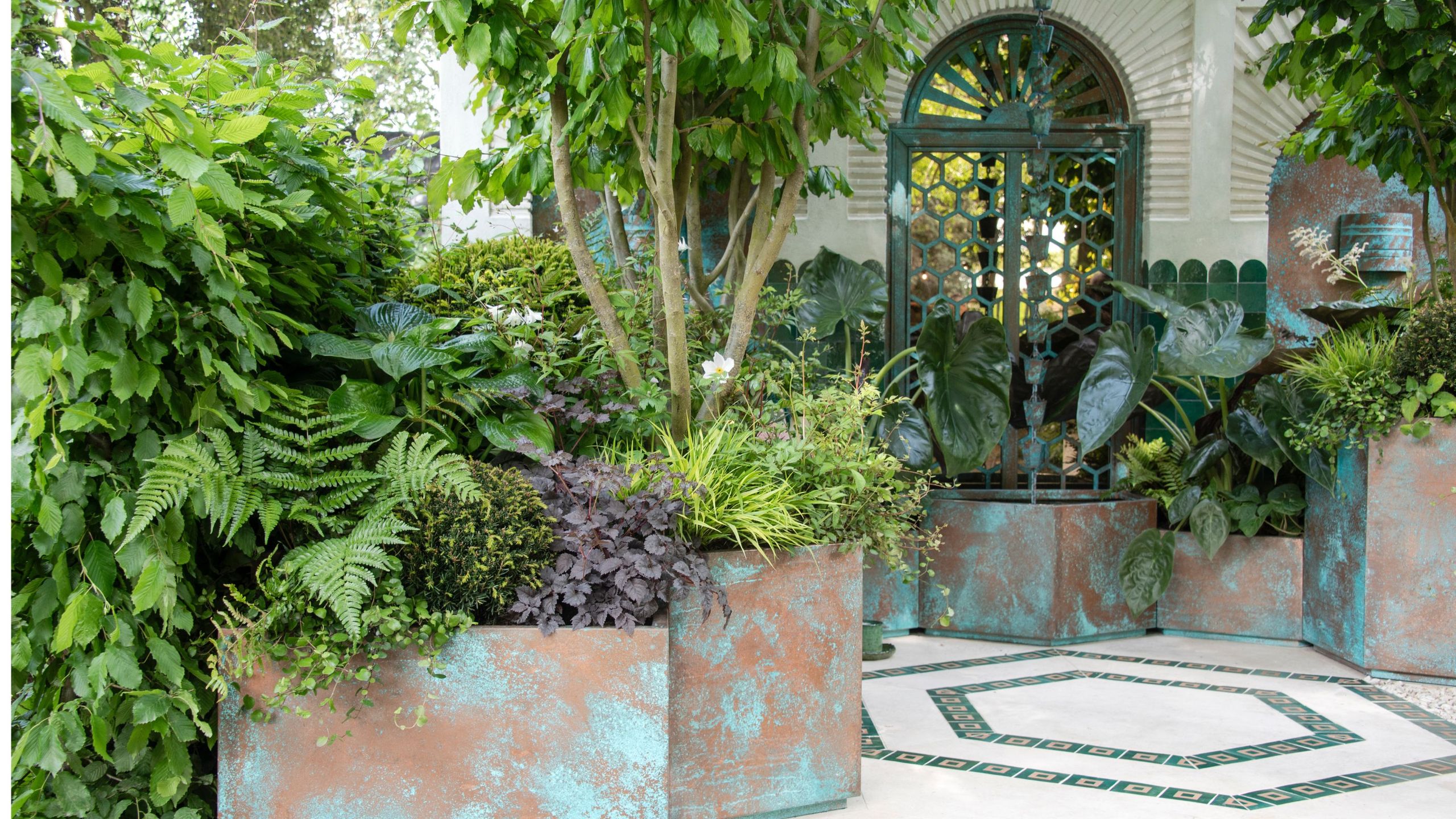
The UK’s weather has been nothing but unpredictable over the past couple of weeks – I never thought I’d see a tennis match between hail and sunshine in May – and experts are warning that our gardens are more at risk of flooding than ever before.
Floodproofing our gardens has never been more important. New research by Flood Re, which is exhibiting its Flood Re: Contain the Rain Garden at the 2026 RHS Chelsea Flower Show, has found that surface water flooding is one of the fastest-growing flood risks in the UK – and the way we design our gardens is making the problem worse.
That’s why experts are urging us to use permeable surfaces, water storage features and floodproof planting to keep our gardens as well-drained as possible. Plants are the solution that caught my attention – specifically, plants that help prevent flooding…


1. Astilbes
Astilbes are used in the Flood Re: Contain the Rain Garden, and designer John Howlett says they’re excellent during heavy rain. They’re also shade-loving perennials that thrive in gloomier spots in the garden.
Known commonly as false goat’s beard, astilbes produce colourful plumes that add texture to garden borders and containers. Astilbe ‘Deutschland’, which produces white blooms, and Astilbe ‘Dark Side of the Moon’ (which you can order from Crocus for chocolate-purple foliage) are used in this year’s Flood Re garden.
‘Plants play an essential function in reducing both standing levels of surface water and in absorbing the water trapped beneath the ground through their roots,’ explain John and Kelly Ostler-Coyle, director of corporate affairs at Flood Re.
2. Ferns
Ferns are another example of plants that help prevent flooding, and another prominent feature of the Flood Re: Contain the Rain Garden. There are lots of low-maintenance ferns that thrive in shade, too, so they’re ideal for a broad range of gardens.
‘Using the correct plants can also help better prepare a garden for heavy rain,’ explain John and Kelly. ‘A garden with slightly damp topsoil and an array of plants can retain water at a much greater rate in comparison to dried or paved gardens, which have high levels of surface runoff.’
This Fantastic Fern Collection from Gardening Express is a brilliant starter pack.
3. Irises
Irises were a popular feature of the Gardens at last year’s RHS Chelsea Flower Show, and they appear in this year’s Flood Re garden, too. John has used Iris sibeirica, which you can order from Thompson & Morgan.
They’re also a recommendation of gardening and greenhouse expert Lucie Bradley’s from Easy Garden Irrigation, who explained the science behind choosing plants that help prevent flooding.
‘When your garden suffers from heavy rain or flooding regularly, this can often lead to soil erosion, with heavy runoff which can wash away topsoil, strip nutrients from the ground and expose the roots of plants,’ she explains.
‘To help prevent this, it’s good to include plants whose root systems are so extensive that they will hold wet soil together, preventing soil erosion. Yellow flag iris is a native, marginal perennial which can do this whilst at the same add a splash of colour to your garden from late spring to mid summer.’
Lucie goes on to explain that yellow flag irises thrive in waterlogged soils and continue growing even when their crowns are submerged in water.
‘Their extensive roots act like ‘sponges’, soaking up large amounts of excess water and nutrients,’ she adds.
You can order yellow flag irises in 9cm pots from Crocus.
Other plants that help prevent flooding
Gardening Express
Rodgersia aesculifolia ‘Alba’
Rodgersia is another plant John used in the Flood Re Contain the Rain Garden.
Crocus
Lysimachia Nummularia ‘aurea’
Creeping jenny is a recommendation of Lucie’s for sponge-like absorption.
Crocus
Cornus Alba ‘sibirica’
Lucie also suggests dogwood, which binds waterlogged soil together to combat soil erosion.
Thoughtful planting can make a world of difference in the battle against garden flooding.
TOPICS
Read the full article here


