
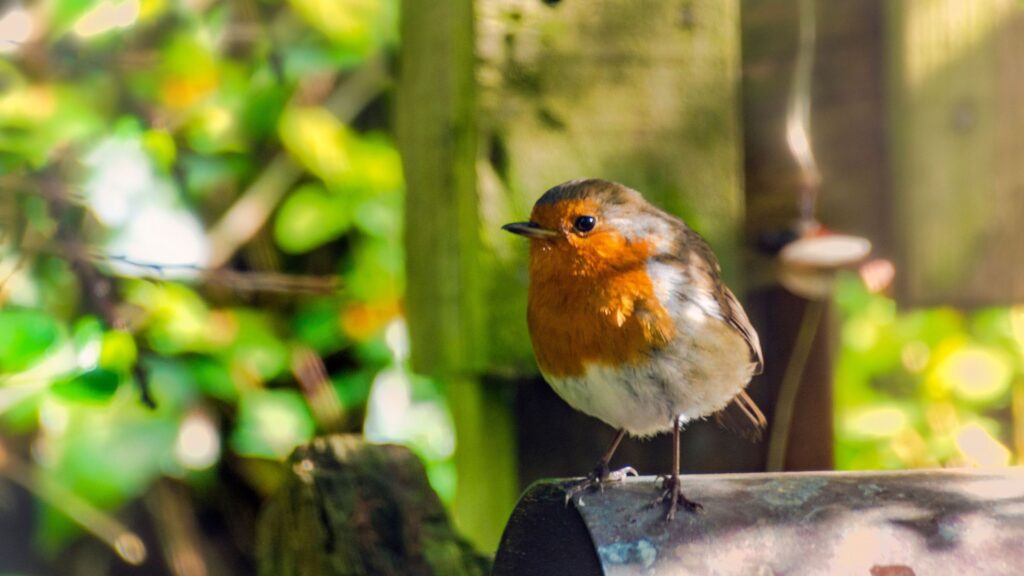
Robins may be the UK’s favourite bird, famous for their cheerful, red-breasted demeanour. But don’t let their good looks fool you. These little birds have a reputation for being territorial around resources, and if you’re having trouble ensuring all songbirds are getting access to resources in your wildlife garden this autumn and winter, experts are here to help.
Many gardeners love attracting robins to their gardens. Robins are not only instantly recognisable, but they are confident and chirpy and, of course, carry a lot of symbolism. But if you’re looking to attract all songbirds to your garden, you may have spotted that robins can get a little aggressive with each other and with other birds.
So, I asked wildlife experts what we need to do to ensure all birds get a fair shot at the food and water you provide during winter. And this is what they said.
Latest Videos FromIdeal Home
Why do robins get territorial?
‘Robins are naturally very territorial birds; it’s in their nature and driven by survival needs. Even their red breast serves as a visual attack trigger. A garden can provide everything they need to defend, including food, shelter and potential nesting sites. Regardless of sex, robins hold territories and aggressively defend their patches against trespassers – even other robins,’ explains James Ewens, bird specialist at Green Feathers.
‘They’re especially protective of their garden if it has plenty of insects, worms, berries and suitable cover. It’s valuable, and we can compare it to having a house full of valuables that we don’t want to share. It’s totally normal and in their nature to have territorial behaviour, and leaving robins to it is one of the best things you can do.’
If you’re wondering how to check whether robins in your garden are acting in a territorial way, there are a few tell-tale signs to look out for.
‘Robins use their loud songs as a warning to notify other birds and tell them to stay away. If singing doesn’t work, robins can physically chase away other small birds that have a similar diet, such as dunnocks. They may bully these birds at feeding areas to keep resources for themselves,’ says Lucy Taylor, a wildlife expert from Vine House Farm.
‘Robins can mistake anything that is bright red, including reflections, for a rival robin and will attack it. Robins use their bright red breasts to warn other birds, and will attack competing species that cross into their territory.’
What can you do to stop this?
As much as it’s lovely to provide a robin’s favourite food and tend to them in your garden, if you want to ensure other songbirds get a look in, all you need to do is ensure you are providing different feeding stations.
‘Robins aren’t generally trying to prevent every other bird from using the garden; many birds can feed in the same area if they use different foods, feeding heights and different areas of the habitat. If a robin has claimed a feeding spot, that’s theirs, though, and you better remember it!’ says James.
‘It’s important not to interfere too much with nature; it’s very normal for them to have territorial behaviour, but you can reduce the need to be territorial by providing a range of food and several feeding stations in different parts of the garden. Like separating enemies, you don’t want them in the same place. Give smaller birds places to retreat from a robin seeing red by planting dense shrubs, hedges and low vegetation to give them all some space.
‘It’s worth remembering that a robin defending a territory isn’t necessarily preventing other birds from using the whole garden. Removing a robin won’t help – we still love them as fiercely as they can be. Instead of interrupting nature, simply provide more food and shelter spots to reduce competition.’
And if you want all birds to enjoy your garden space, it’s important to make it as bird-friendly as possible, such as bird-feeding plants and rewilding parts of the garden.
‘Plant berry-bearing shrubs in your garden to provide birds with food through autumn and winter, as well as planting seed-bearing flowers for seed-eating birds,’ recommends Lucy.
‘If you install nest boxes in your garden, ensure that you have hole-nesting boxes for blue tits, open-fronted boxes for robins and multi-layered or specialised boxes for other bird species.
Set up bird baths or water features in a safe, shaded spot of your garden so birds can drink and bathe. These should be refilled with fresh water daily and cleaned regularly to stop the spread of disease.’
3-Pack Metal Bird Feeder Seed Feeders
Multiple feeders reduces the risk of robins fighting over just one source of food.
Dipsacus Fullonum Teasel 9cm Pot Perennial Wildflower Plant
Teasel is a great plant for feeding a multitude of different birds during autumn and winter – they love the seeds.
Bird Bath Ceramic Round (petrol Blue)
If you’re attracting birds to your garden, ensure you’re also providing a fresh source of water.
As James says, it’s best not to interfere with nature too much. But by offering multiple feeding spots as and access to multiple resources, you stand a better chance at keeping all your visiting birds happy.
Read the full article here