

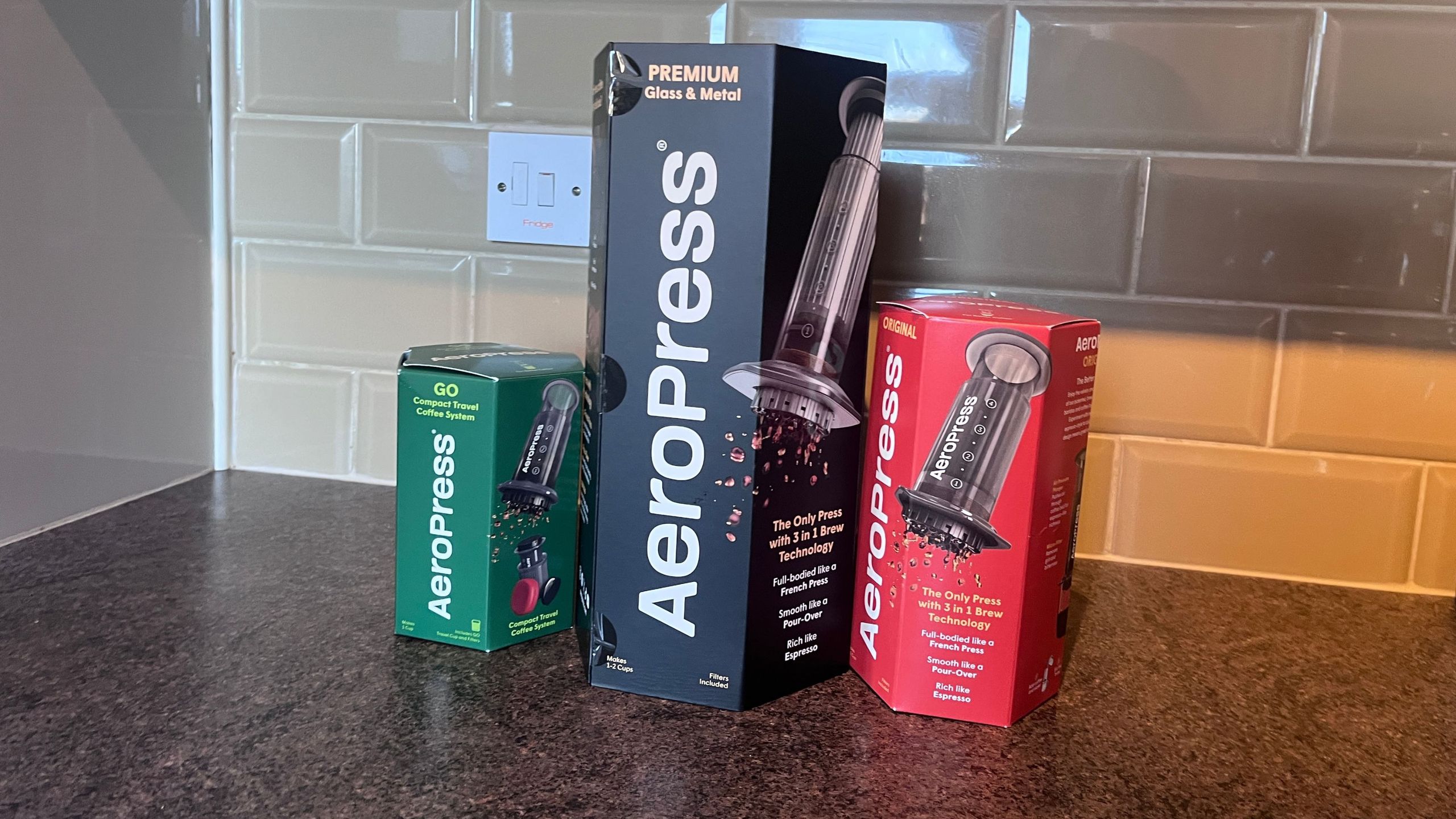
Aeropress coffee is a cafe classic. For nearly two decades, these clever contraptions have made strong, smooth coffee for a fraction of the price and hassle of espresso machines, moka pots, and other coffee machines.
But if you aren’t a coffee obsessive it can be tricky to work out which model is best for a Christmas gift. It’s not clear from the marketing if there’s much of a difference between the Original and the Premium models, nor if there’s any anything particularly special about the travel version.
The quick list
The Aeropress Original is one of the best coffee makers I’ve ever tried, and definitely the best for the price. It makes a perfect gift under £40 for any coffee lover.
Read more below
This Aeropress is a great gift for campers, though some hikers might find that the Original is just as portable.
Read more below
The Aeropress Premium looks incredible, and it makes a lavish gift, but for the price, there’s no real difference between it and the Aeropress Original.
Read more below
What is an Aeropress?
Invented in the early 2000s, an Aeropress offers a unique style of coffee. You quickly brew coffee in its chamber, then use a plunger and air pressure to force hot water and air through the coffee grounds.
It combines the steeping process of filter, pour-over or French press coffee with some of the pressurisation of a moka pot and espresso.
The idea is that this makes fast, rich coffee. It lacks the bitterness or sourness of some espressos, but it’s not as watery as coffee from one of the best filter machines.
Which Aeropress should I buy?
1. Aeropress Original coffee maker
Image 1 of 3
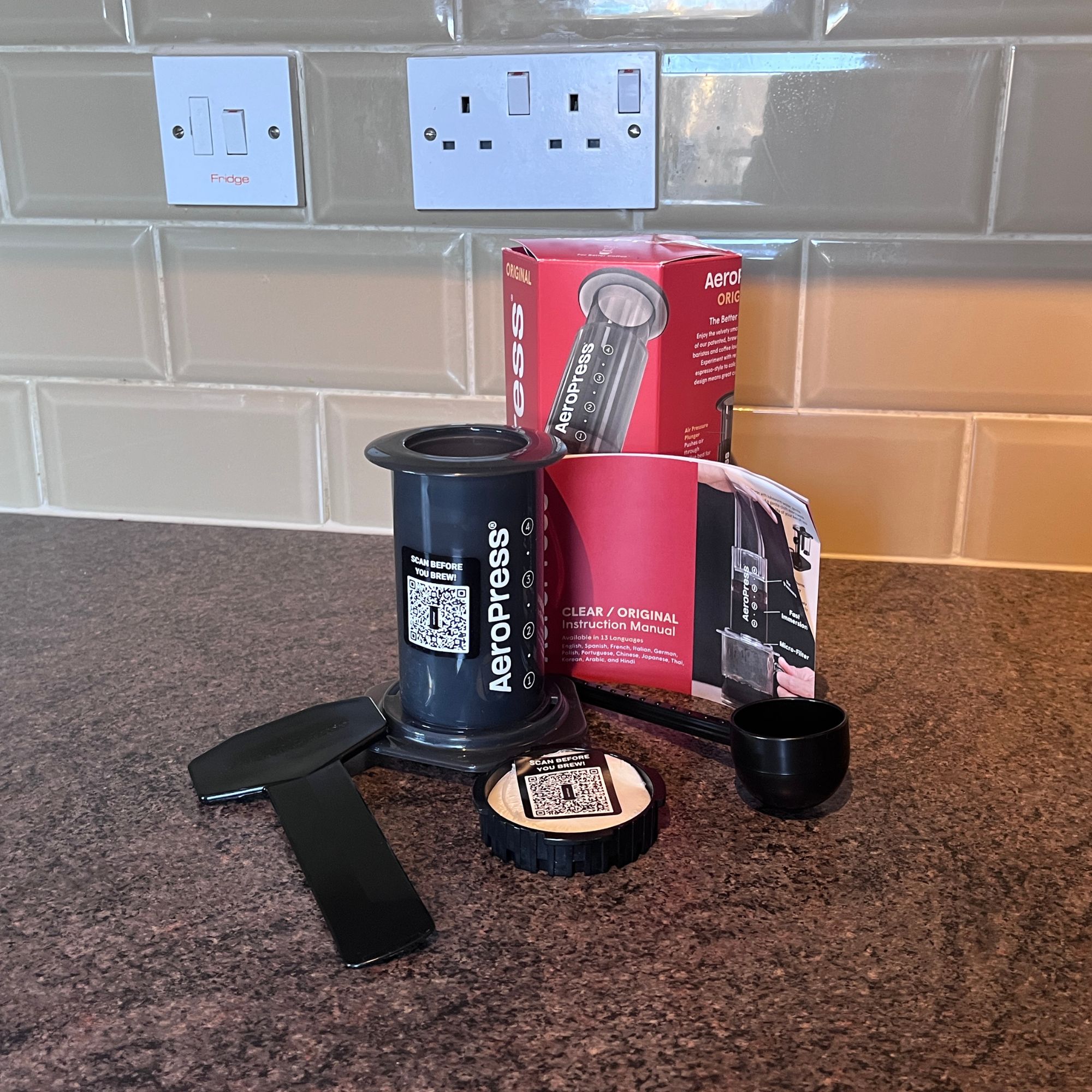
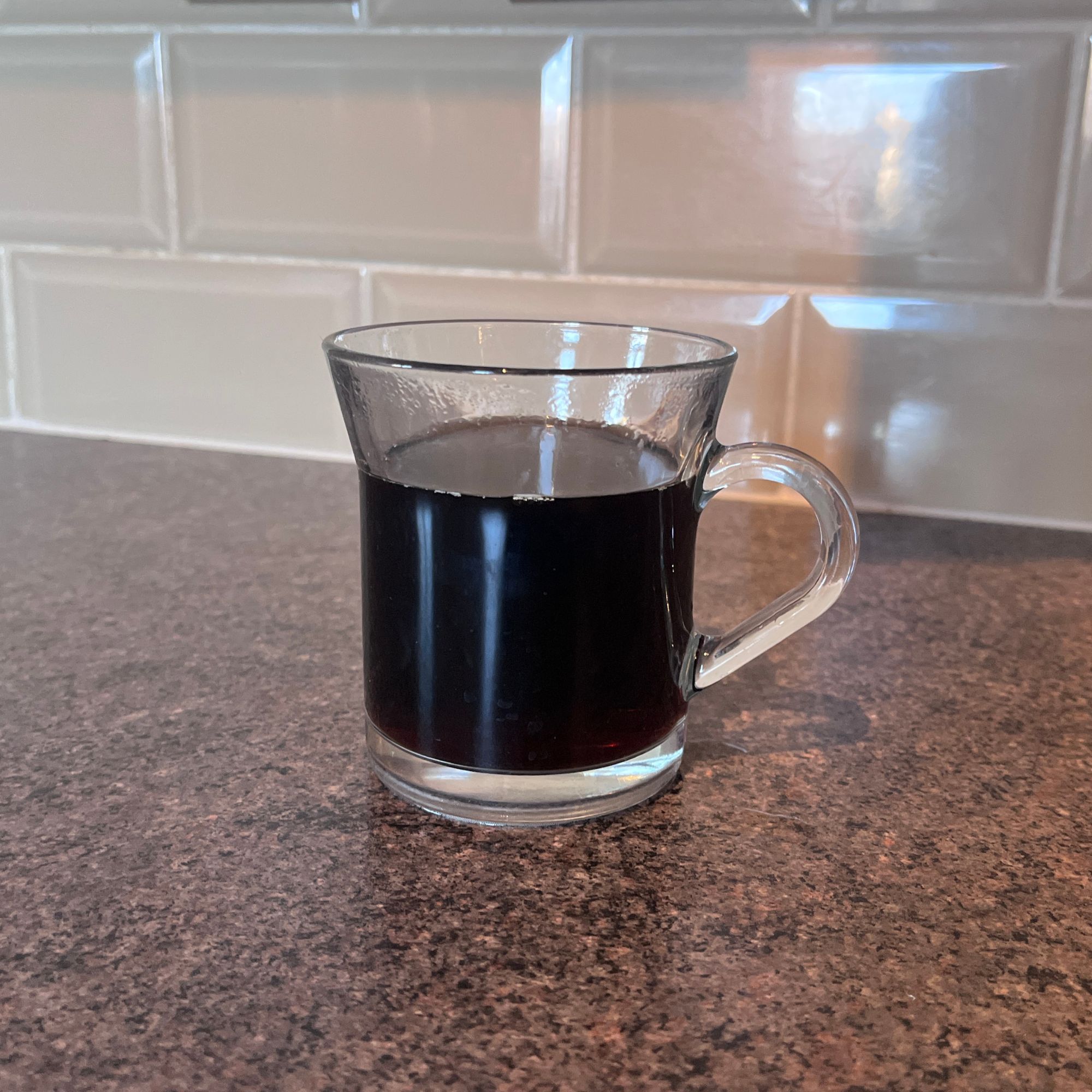
This Aeropress makes laughably good coffee for the price. The marketing copy on the box says it’s ‘Full bodied like a French press, Smooth like a Pour-Over, Rich like Espresso’, which I was very skeptical about but it’s sort of true.
It’s probably closest to pour over or filter but it doesn’t have the watery weakness of these coffees. Instead, it brings a strong, rich flavour. Unlike most coffee steeped in hot water there were no grounds or grittiness either.
The coffee is exceptional for the price. It’s one one of the few coffee makers I’ve reviewed where I made another coffee simply for the taste, not to test. Steeping the coffee for a minute longer than Aereopress recommend made a much stronger, richer coffee, which I liked even more.
A great thing about the Aeropress is its simplicity. Put a filter paper in the filter cap, lock the filter cap into the chamber, put that over the mug, add water, stir, wait, then press down. It’s simple, fast, and no louder than boiling a kettle, so you can make one of these without waking the whole house.
The inversion method is even easier – just flip it upside down to add the coffee and the water, which skips the faff of quickly stirring and adding the plunger to create the seal.
It’s really simple to clean, too. When you’re done, push the plunger through the chamber and pop all the coffee out into the bin, then rinse everything under the tap.
A very minor issue is that this obviously has no way to steam milk, so cappuccinos are out of the question. It also won’t work if the person you’re giving this to someone who loves espresso, because the coffee isn’t true espresso. It’s nothing like espresso or or moka pot coffee, so don’t buy it expecting to pull perfect espresso shots. The paper filters will be an ongoing expense too, though the company sells metal filters at Aeropress.co.uk.
Another issue is that it only makes one cup at a time. This is perfect for me, because my partner doesn’t drink coffee, but anyone wanting to show off their coffee skills may find it a little frustrating.
The best news – this is the best option for most people. I tried the Aeropress Premium below and liked it, but there is no difference between the coffee quality. You can buy a present that makes excellent coffee for £40 instead. So if you know a coffee obsessive that doesn’t have an Aeropress already, this is an excellent gift.
2. Aeropress Go coffee maker
Image 1 of 3
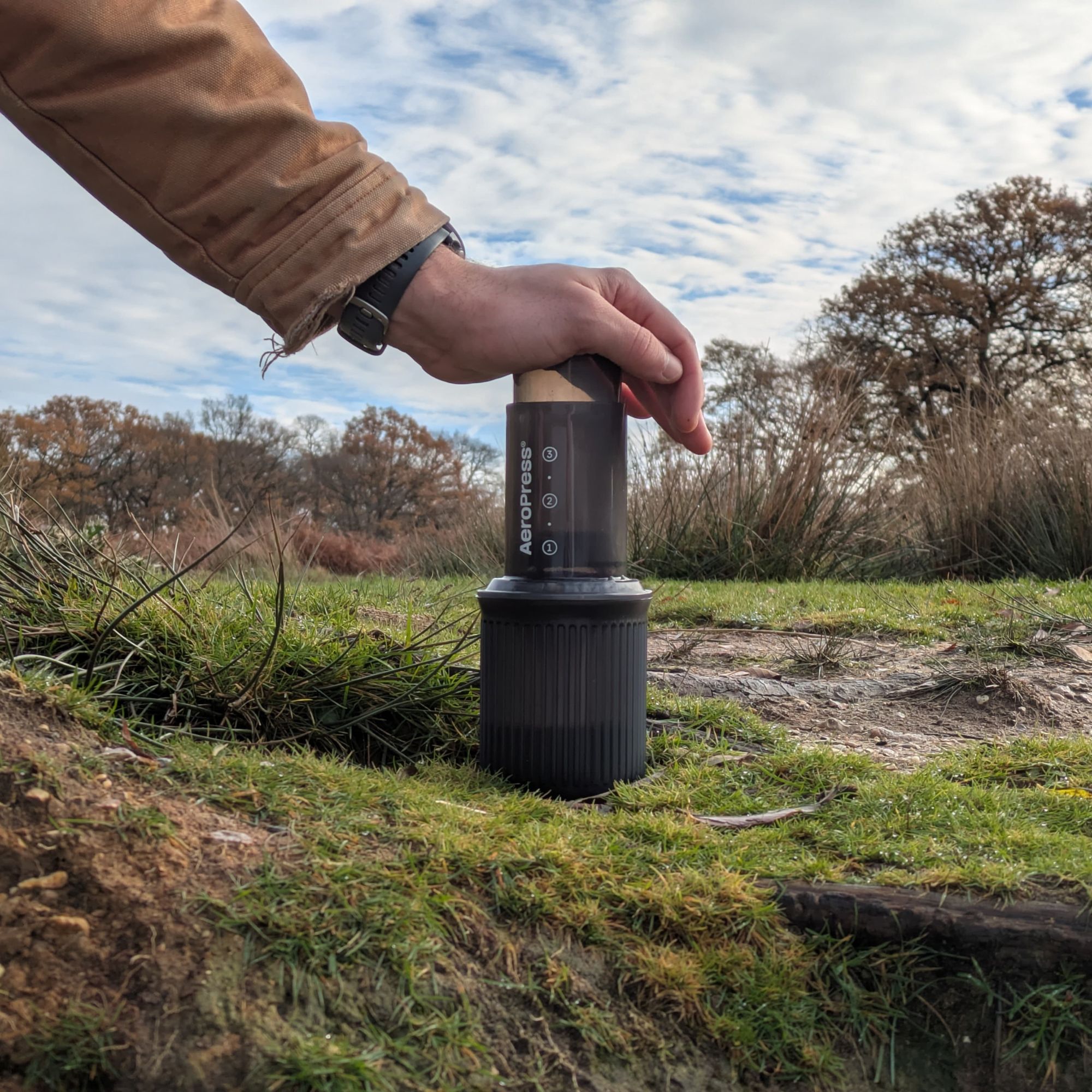
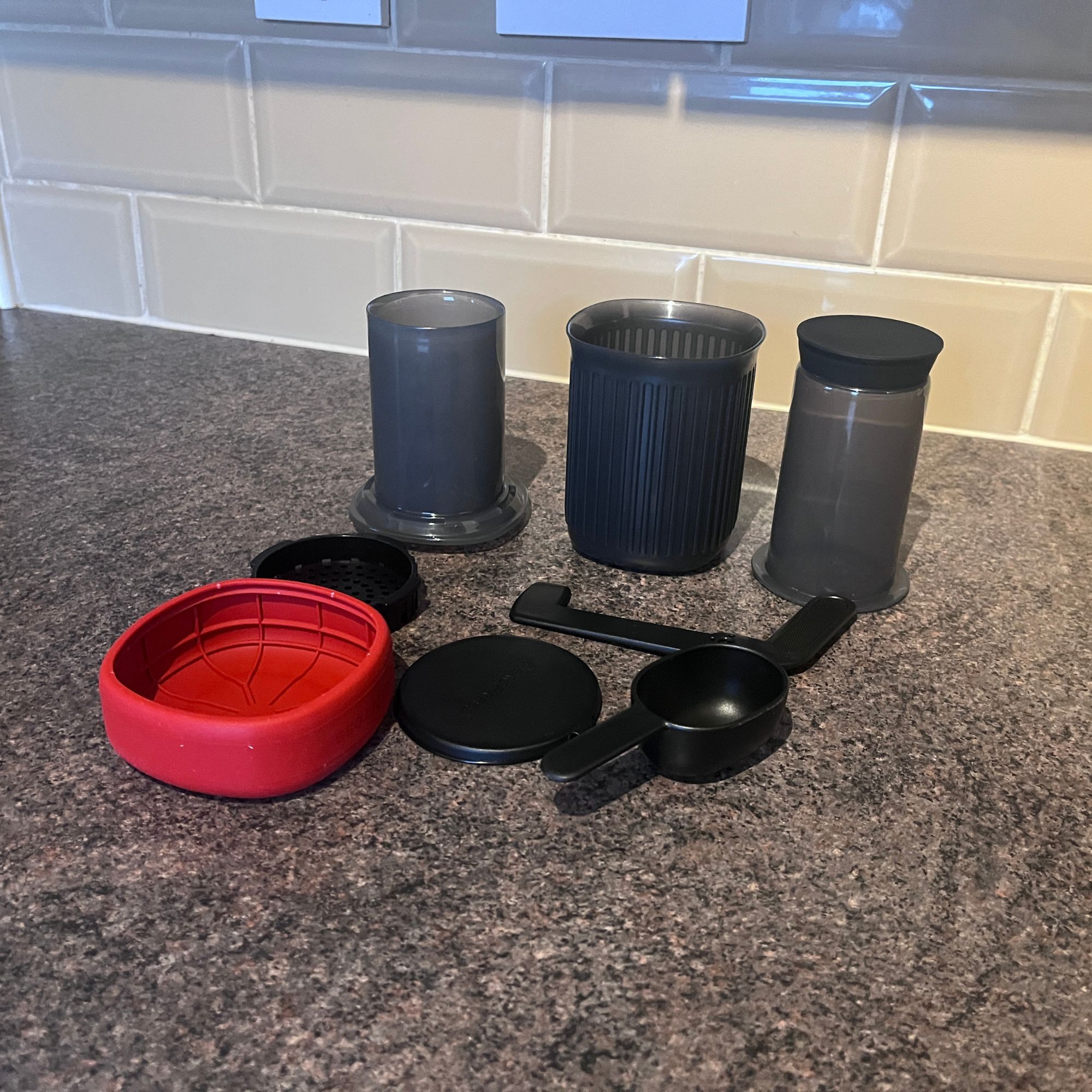
The Aeropress Go, unsurprisingly, is designed for travel. 100ml smaller than the Original and Premium models, it cleverly packs a folding stirrer and coffee scoop into its chamber. It also includes a handy snap case for paper filters, and it comes with a lid.
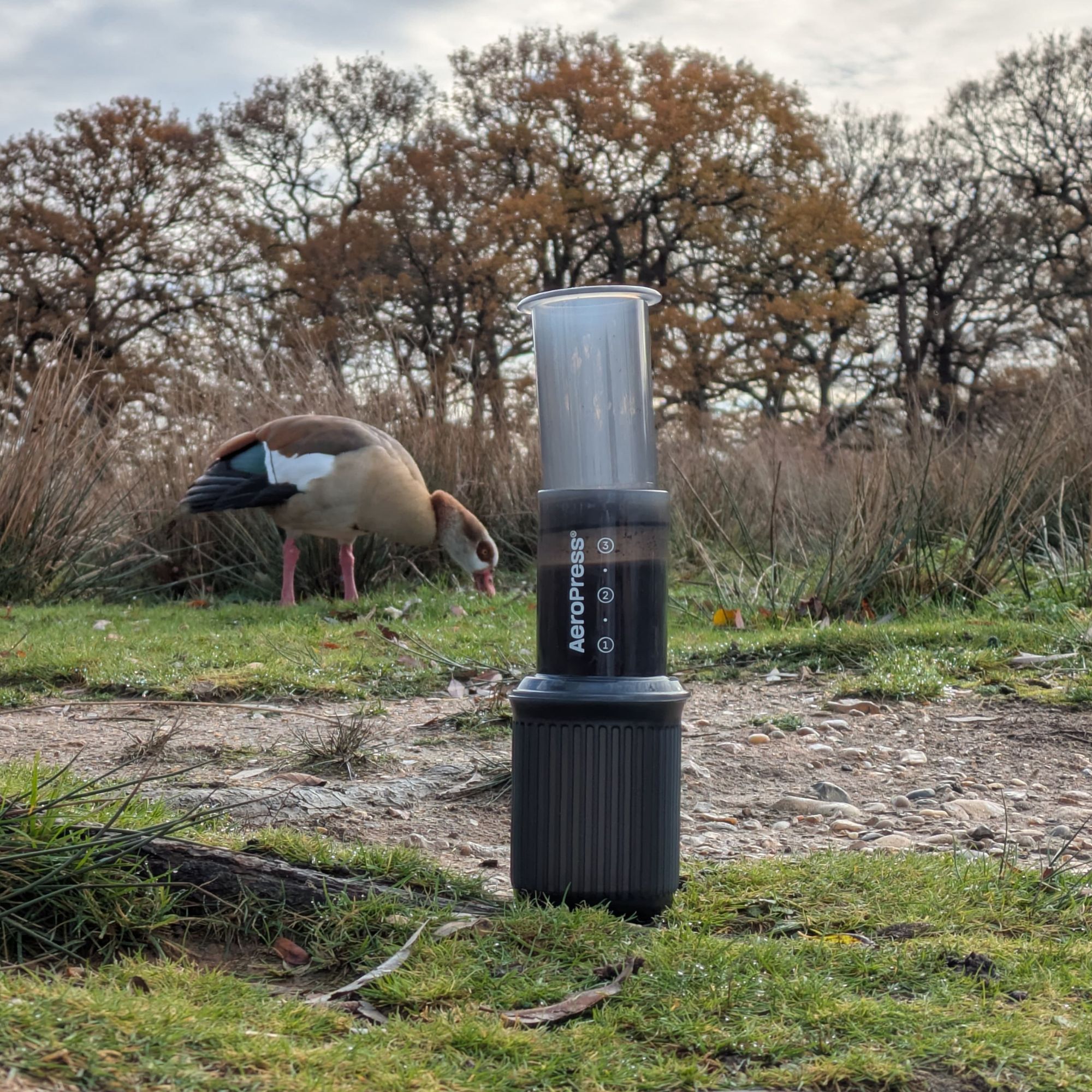
To test it out, I took it on a 20k walk around Richmond Park to se if it was easy to use on the go. In the wild you’d probably use a camp stove to boil water for the chamber but I just took some boiling water in a travel flask.
I was really impressed. The scoop is just the right size for the chamber, so it’s easy to add coffee, and the folding stirrer was also effective. I could put the scoop and stirrer into the lid to keep them from getting muddy on the ground, and it was just as simple to add the water and press down.
The coffee was great, almost as good as the original, and it was great to sit for a minute by a pond and enjoy some freshly brewed coffee. There was a slight flavour difference from the Original and Premium models, but I’m almost certain this was because the boiling water in the flask was cooler than the water I’d been using from my kitchen kettle. The friend I was walking with loved the coffee; he called it a ‘rich’ and ‘clean’ coffee flavour without any grittiness or sourness.
Of course, it’s a little gimmicky. If you’re taking coffee on a walk it’s much simpler to make it before and keep it in a travel flask. But it could be great for taking camping; it’s lighter and takes up less room than a French press or moka pot, which you can also use on the go.
However, the cup included in this Aeropress means that it’s actually heavier than the original Aeropress, so some ultralight campers might prefer to stick to the Aeropress Original and take their favourite travel mug with them to save on the weight. I think this is a great option for taking on hikes or camping, but if you want an Aeropress to take with you on work trips, it’s just as easy to pack an original Aeropress, which is usually cheaper. This makes a great gift for anyone who loves to camp, but in most cases the Original is a better option.
3. Aeropress Premium
Image 1 of 3
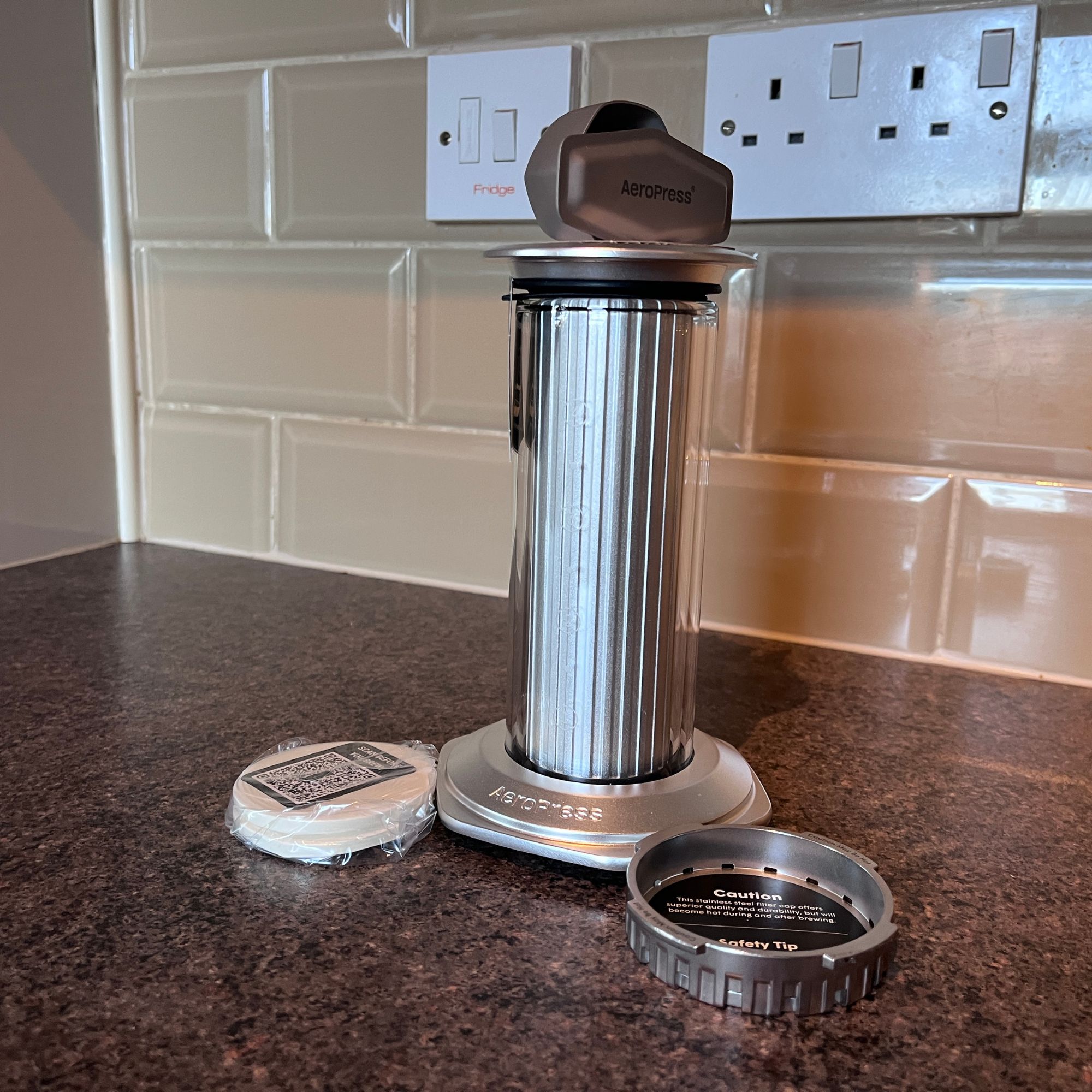
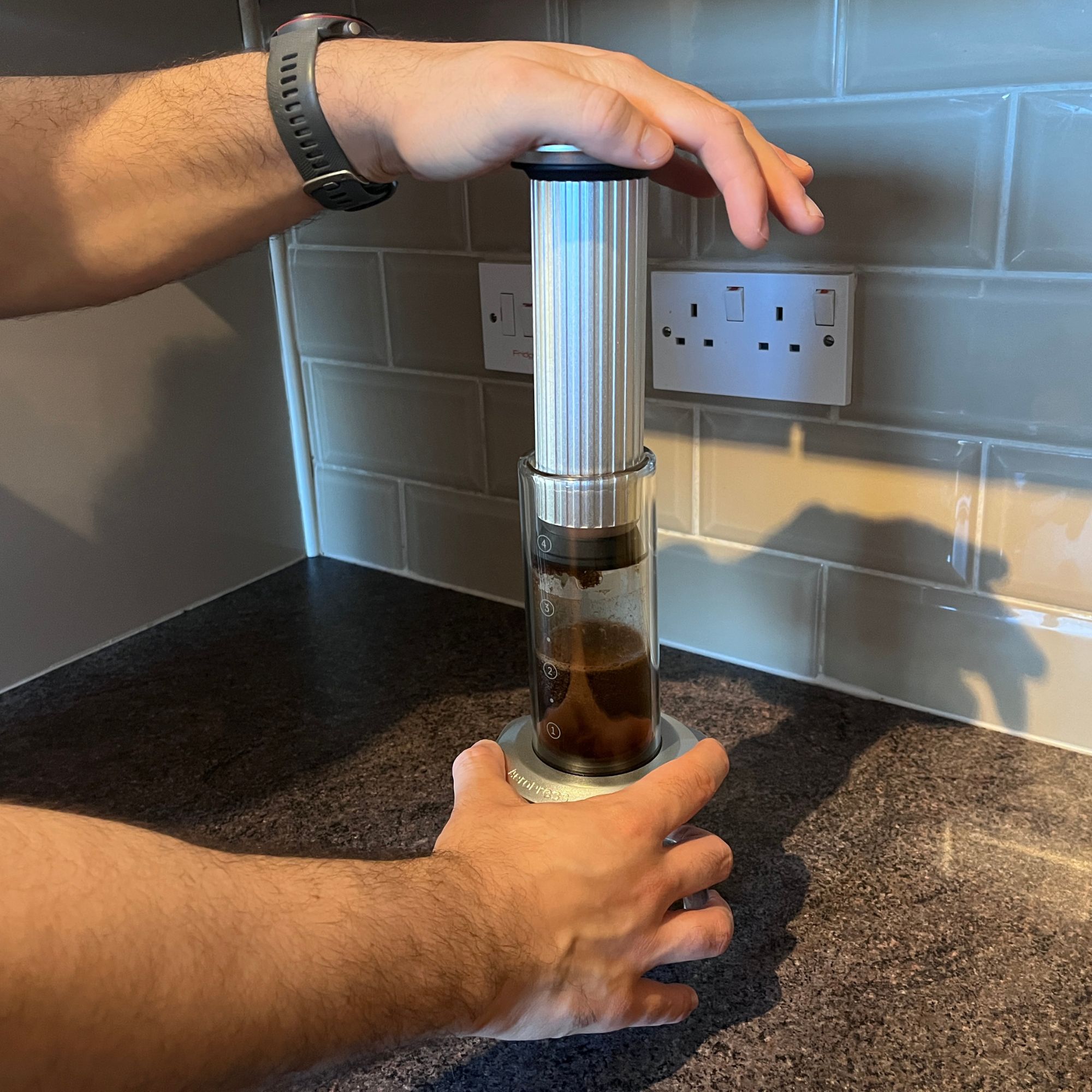
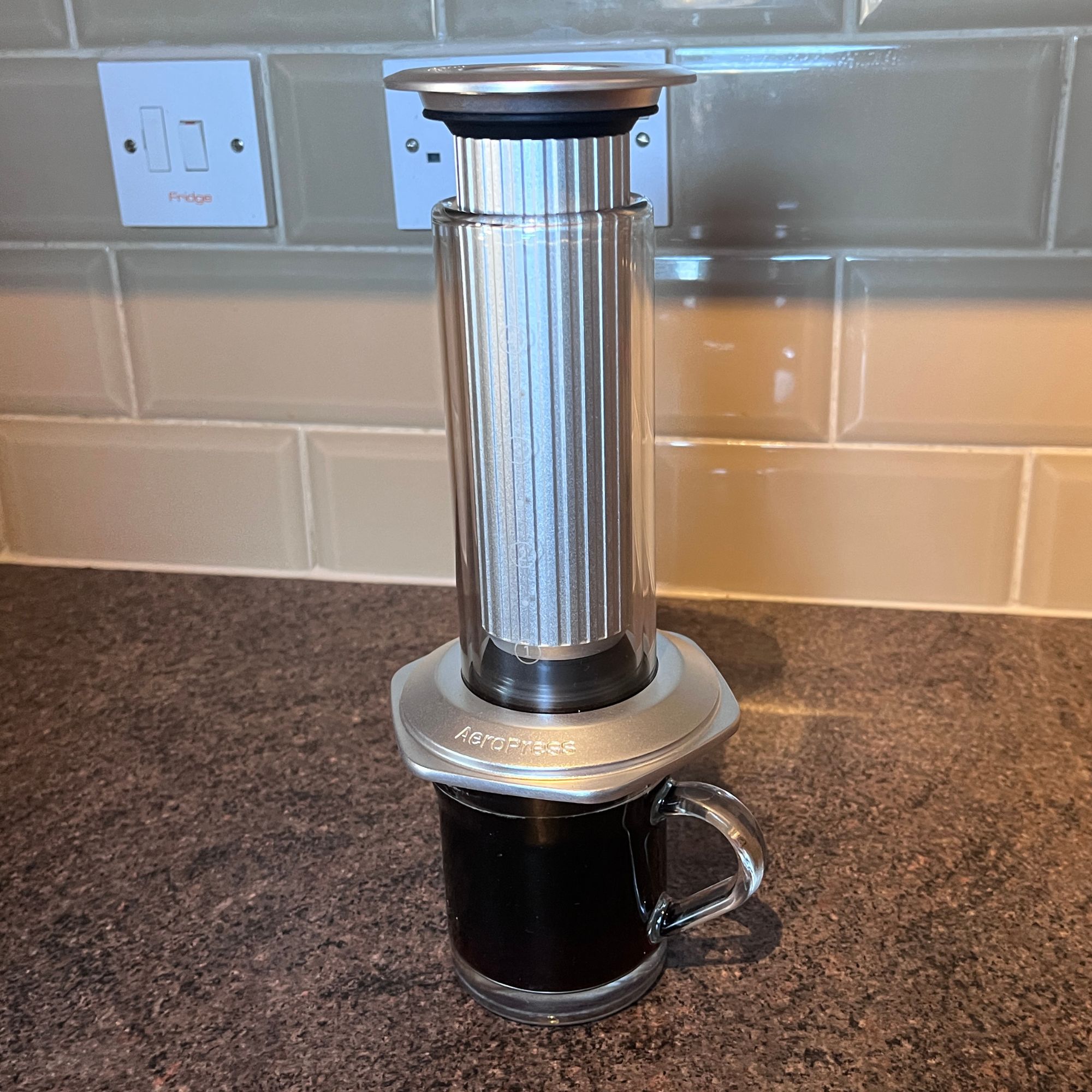
No prizes for guessing the point of the Aeropress Premium. This model swaps out the polypropylene plastic of the original for stainless steel, aluminium, and a dual wall glass chamber. Everything about it steps up the design of the original. Even the packaging is fancier than the regular Aeropress, filled with foam to stop the glass from breaking, and the box even has a magnetic opening.
The material swap makes for a much chunkier product than the Original. The original weighs in at 255g, and this weighs 891g. At nearly a kilo, it feels a lot more substantial than the original.
However, it makes identical coffee to the original. I thought the sleeker materials might make a difference, but they don’t. It costs £130 more, but that price only covers slightly better looking materials. At first glance you might think that it’s non-toxic, because it doesn’t contain plastic, but the plunger end is rubber, so it’s not truly plastic-free.
The materials look great, but they come with a few drawbacks. The metal filter conducts heat, so you have to be careful not to burn yourself when cleaning up after a cup. While it’s interesting to watch the coffee steep through the glass, this picks up fingerprints, and it’s not as easy to clean as the plastic Original, even if only by a matter of seconds.
On top of that, one of the joys of the Original is that it’s light and small. You can throw it in a drawer or chuck it in a bag to take with you on trips, which isn’t very practical with the Premium.
I think this is a great gift if you know someone who already loves Aeropress and fancies something that looks a little nicer. This is a great present for anyone who might find the plasticky Aeropress Original out of keeping with their kitchen design. It makes just as good coffee as the original, but it’s probably not worth the £130 price jump from the classic Aeropress above.
With my thoughts after trying and testing these picks, hopefully lining up a present for the coffee obsessed in your life just got a little bit easier.
Read the full article here