







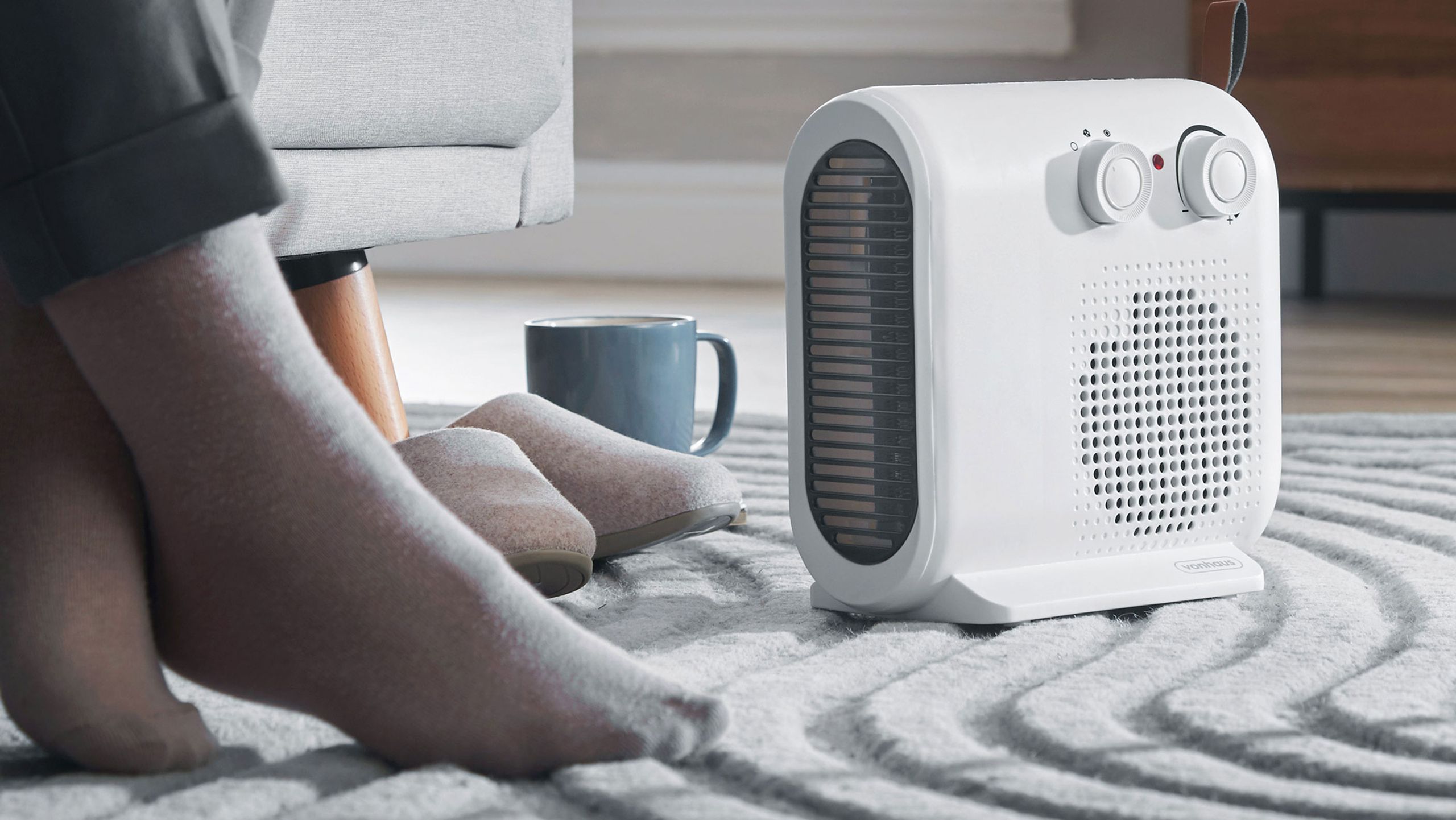
Electric heaters can be a great way to give a room a blast of heat quickly and efficiently and are beloved of many homeowners who work from home and really feel the chill in winter (myself included).
That said, even the best electric heaters need to be positioned correctly if you want to get the very most out of them – they obviously use electricity to run and will therefore be adding to your energy bills so you want to make sure you are using them most efficiently and aren’t wasting any of the heat they emit.
To help ensure you know the very best spots around the house and in a room to place your electric heater, I reached out to the experts for their advice – here’s what they had to say.
Where is the best place to put an electric heater for most effective heat distribution?
There are lots of different types of electric heater, from simple and compact fan heaters to those that are designed to be mounted on the wall. But where is the best place for them for an effective spread of heat?
‘Ideally you want to put your electric heater somewhere it can deal with cold air before it spreads out and where warm air can move freely around the room,’ advises Kevin Hayes, managing director at Centreline Fires. ‘In most homes that means on or at least near an external wall or under a window, as that’s where heat loss is greatest. If you’re using a fixed electric radiator or panel heater, that positioning helps balance the room temperature properly.’
‘The best place for most heaters is under your window, attacking the cold where it enters the room,’ adds Sam Carter, radiator expert and eCommerce product trader at Appliances Direct. ‘This creates rising air that blocks cold drafts and circulates the warm air into the centre of the room.’
‘With portable heaters its more about the airflow,’ continues Kevin. ‘They need to be out in the open, not shoved behind furniture or tucked into a corner. If the warm air can’t circulate you’ll end up with a hot spot near the heater and a cold room everywhere else.’
Does the size of your electric heater matter?
In addition to its positioning, an electric heater needs to be correctly sized to the room – just as with radiators, there is no point just looking for the cheapest electric heater to run then specifying one that is too big or small for the room, or that offers a heat output that will be all wrong for your space.
‘A small fan heater will never really properly heat a large living room no matter where you put it, and an oversized heater in a small room can be uncomfortable and inefficient,’ points out Kevin Hayes. ‘Matching the heater’s output to the room and placing it sensibly is just as important as the heater itself.’
‘The appliance must be matched to the space,’ explains Christine Matthews, heating appliance expert at Gr8Fires. ‘A small fan heater is a tactical solution for personal warmth but lacks the output or distribution for a whole room. For sustained, ambient heat in a living area, you need a fixed solution with sufficient kilowatt (kW) output for the room’s volume. This is where properly specified electric fires or stoves beat portable heaters as they’re sized for the space and placed for optimal, permanent performance, not temporary convenience.’
Shop electric fan heaters
Dreo Electric Heater, 1500W
This stylish little electric fan heater not only has good-looks but can also be remote controlled. It circulates heat really effectively and allows you to set heats from 5-35°C. And, finally, it is surprisingly quiet to run.
Fine Elements 2000W Flat Fan Heater
If you are after an affordable electric fan heater that is also compact yet effective then this model is well worth a look. Despite its dainty, slimline proportions, it still manages to kick out an impressive amount of heat.
Dimplex Studio G DXSTG25 2.5kW Ceramic Tower Heater
This super smart tower fan has a handy oscillating function allowing for a really broad spread of heat, plus it can be thermostatically controlled and even features a handy timer.
Can you put an electric heater on carpet?
Safety should be paramount when using any kind of electrical appliance, but in the case of those that produce heat, it is more important than ever.
‘I wouldn’t recommend putting an electric heater on carpet,’ warns Kevin Hayes. ‘Most electric heaters need a firm and level surface. Carpet can make them unstable and can restrict airflow underneath which can cause it to just overheat. There’s also the very obvious fire risk if the heater gets too hot and is in direct contact with carpet. If you are using a portable heater, it should always be on a solid, non-flammable surface with plenty of space round it.’
‘Some heaters are safe on carpeted areas as the base is designed not to get hot enough to ignite fabric,’ points out Sam Carter. ‘However, fan heaters are a different story – always place them on hard floors.’
Should you put an electric heater in the bathroom?
It is quite understandable why homeowners might want a quick blast of heat in the bathroom – after all, you spend much of the time in this room in a state of undress. However, is an electric heater a safe option or are you better off choosing a radiator for the bathroom instead?
‘There is a big difference between heaters made for bathrooms vs a portable one you would use in a bedroom or lounge and the two shouldn’t be confused,’ says Kevin Hayes. ‘Portable heaters should never be used in a bathroom – full stop. The risk from water and moisture is just too high.
‘Bathrooms can have electric heating but it needs to be purpose designed and properly installed,’ continues Kevin. ‘Fixed electric towel rails and bathroom-rated heaters are made specifically for that environment and must meet the correct safety ratings and be installed in the right position by a qualified electrician.’
‘For guaranteed safety you should choose a heater marked ‘bathroom safe’ with an IP24 water-resistance rating,’ adds Sam Carter.
Mill WiFi Max Portable Heater 1500W
This heater is packed with safety features for peace of mind – plus, it can be used in the bathroom. It is IPX4 bathroom approved and has a child lock – check out our full Mill Wifi Max 1500w heater review for all its pros and cons.
FAQs
Should a fan heater be placed in the centre of the room?
It makes sense to place your electric fan heater somewhere where the heat it is producing can be evenly distributed. However, is popping it slap bang in the middle of the room really a good idea?
‘For a permanent fixture such as an electric stove, we always recommend a wall in a central location,’ says Christine Matthews. ‘Avoid tucking it into a tight alcove, if possible, as this can restrict airflow and create a ‘hot spot’ while leaving the rest of the room cold.
‘For a freestanding electric heater or stove, you have more flexibility,’ continues Christine. ‘In a large room, such as an open plan kitchen, you might centre it or put it at an angle in the corner.’
If you have chosen an oil-filled heater to help warm up your home, make sure you understand how to use an oil-filled radiator more efficiently before just plugging it in and walking away – you’ll be glad you did once your energy bills arrive.
Read the full article here


