


This summer, I’ve been absolutely charmed by one plant that’s woven itself around my mum’s garden: a delicate, creeping sedum.
I’ve always been an advocate for learning how to grow sedums, because they’re climate-resilient plants and a hit with pollinators, but I was stunned by the volume of sedum in my mum’s garden – and how it all started from one plant.
As it turns out, some sedums are self-seeding, which means they’ll expand your collection for you – and my mum has very cleverly divided parts of the plant up and scattered it in her borders, planters and even gravel for a wild, naturalistic look. Here’s why I’ll be taking a leaf (a succulent one) out of her book.
Latest Videos FromIdeal Home
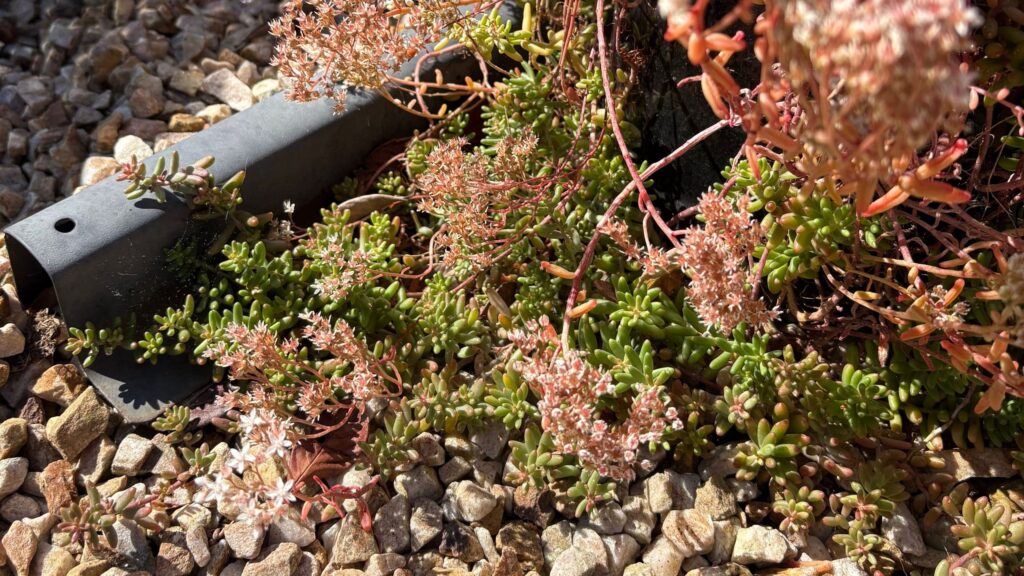
White stonecrop (Sedum album) is the drought-tolerant plant my mum began her sedum collection with. It produces masses of tiny white flowers during the summer, and the succulent leaves are beautiful in their own right – bean-shaped, green, pink and purple. The closest I’ve found on the internet are these Sedum album plants from Etsy.
I first spotted white stonecrop growing in a small pot on the gravel area of my mum’s garden, spilling over the edges as a beautiful trailing plant. Then, I noticed that the succulent foliage was continuing onto the gravel itself, sewing itself between the stones. It sort of reminded me of Cath Kidston’s patio garden, in which Erigeron grows between the cracks and gaps in the pavers. My mum said the white stonecrop has been popping up everywhere, self-seeding itself all over the gravel.
‘For smaller spaces or gravel gardens, white stonecrop (Sedum album) is excellent,’ says Andrew Jackson, award-winning garden writer, designer and creator of The New Build Manifesto. ‘It self-seeds readily into gaps between paving and walls, creating a living carpet that’s both drought-tolerant and attractive to pollinators.’
Then, my mum pointed me in the direction of her garden border, where a fizz of the same delicate flowers was lining the area by her bug house. The sedum was growing happily there, too, from a section of the original plant that my mum had divided.
There was also a small white stonecrop plant growing in a wooden crate, which looked right at home beneath her iconic succulent planter. My mum truly is the queen of succulent-growing – even inside, her alpine arrangements are thriving – and she’s mastered the art of growing succulents outdoors, too.
White stonecrop is the variety my mum grows, but there are a few other self-seeding sedums that will spread in a similar way.
‘Biting stonecrop (Sedum acre) is another tough native species that happily colonises sunny, free-draining spots, producing bright yellow flowers that are loved by bees,’ suggests Andrew. You can order a Sedum acre plant from Thompson & Morgan.
‘The real benefit of self-seeding sedums is that they soften hard edges and gradually knit a garden together without becoming invasive,’ Andrew adds.
Other sedums can be easily divided and planted up around the garden.
‘Sedum ‘Autumn Joy’ is a favourite because it brings colour later in the year when lots of other flowers are starting to fade,’ says Jo McGarry, luxury garden design expert from Caragh Nurseries. ‘While it doesn’t self-seed quite as freely as some of the smaller stonecrops, it forms larger clumps that are easy to divide and spread around the garden.’
Get the look
MAISONICA
Medium 24cm Black Heritage Cylinder Garden Ceramic Planter Plant Flower Pot – Frost Proof
My mum is growing her potted sedum in this Heritage Garden Pottery pot.
Mellow Cotswold Decorative Stones
Honey-toned gravel complements white stonecrop beautifully.
Wickerfield
Wickerfield Shallow Wooden Storage Crate
Upcycle a wooden storage crate for your sedums, like my mum.
Self-seeding sedums like white stonecrop are a fantastic way to achieve naturalistic planting without lifting a finger. Plus, they’re brilliant for pollinating insects and summer colour.
TOPICS
Read the full article here