







While the wet weather has meant we’ve seen slightly milder temperatures, it’s definitely not time to pack away your portable heater just yet.
Frosty mornings and sub-zero evenings might have been few and far between this winter, but it’s definitely not warm enough to go without the central heating. And for those who find themselves at home in the day, you might still find yourself a little chilly between your heating’s scheduled on and off times. That’s where one of the best electric heaters can be incredibly handy, giving you a targeted burst of heat, just in the room you need it when you start to feel chilly.
How long should an electric heater be on for?
There’s no hard and fast rule for how long you can use an electric heater for, but generally, these appliances are designed for occasional rather than constant use.
That means if you want to take the edge off a cold room in between periods when your central heating’s on, a 20-30 minute blast of your electric heater a few of times a day may be all you need. On particularly chilly days, then having your heater on for a 2-3 hours in the room you are in can be a relatively efficient way to use your electric heater, especially if it’s a model that reduced it’s power consumption when the desired temperature is reached.
However, this timeframe largely depends on how powerful your heater is, how well insulated your home is, and how big the room is that you are trying to heat. If you have a suitably sized electric heater for the size of room, and you’re using it in a well-insulated space with doors and windows closed to prevent the heat your generating from escaping, you’ll may find you are plenty warm enough after about 15 minutes of your heater running.
On the other hand, if you feel like you need the heater on constantly and you’re still cold, then it’s worth assessing your set up to check whether it’s best suiting your needs. It may be that your electric heater isn’t powerful enough to adequately heat the room you are in, and it’s struggling and using more energy that it needs to as it tries.
It’s worth also checking that you’ve not got any obvious draughts that mean cold air is coming in from outside, and the lovely warmth from your heater is just escaping straight out of your home.
If you’ve checked for and resolved any draughts and your heater is appropriate for the size of room, and you’re finding you need your heater on for long periods of time (and it’s not as a result of any health concerns you may have), then it may be a sign that your wall or roof insulation is failing and it needs assessing by a professional.
Need to upgrade your electric heater?
If you have an old inefficient heater, or yours is unsuitable for the space you want to heat, upgrading means you’ll get more effective heat output and potentially some eco-friendly features too.
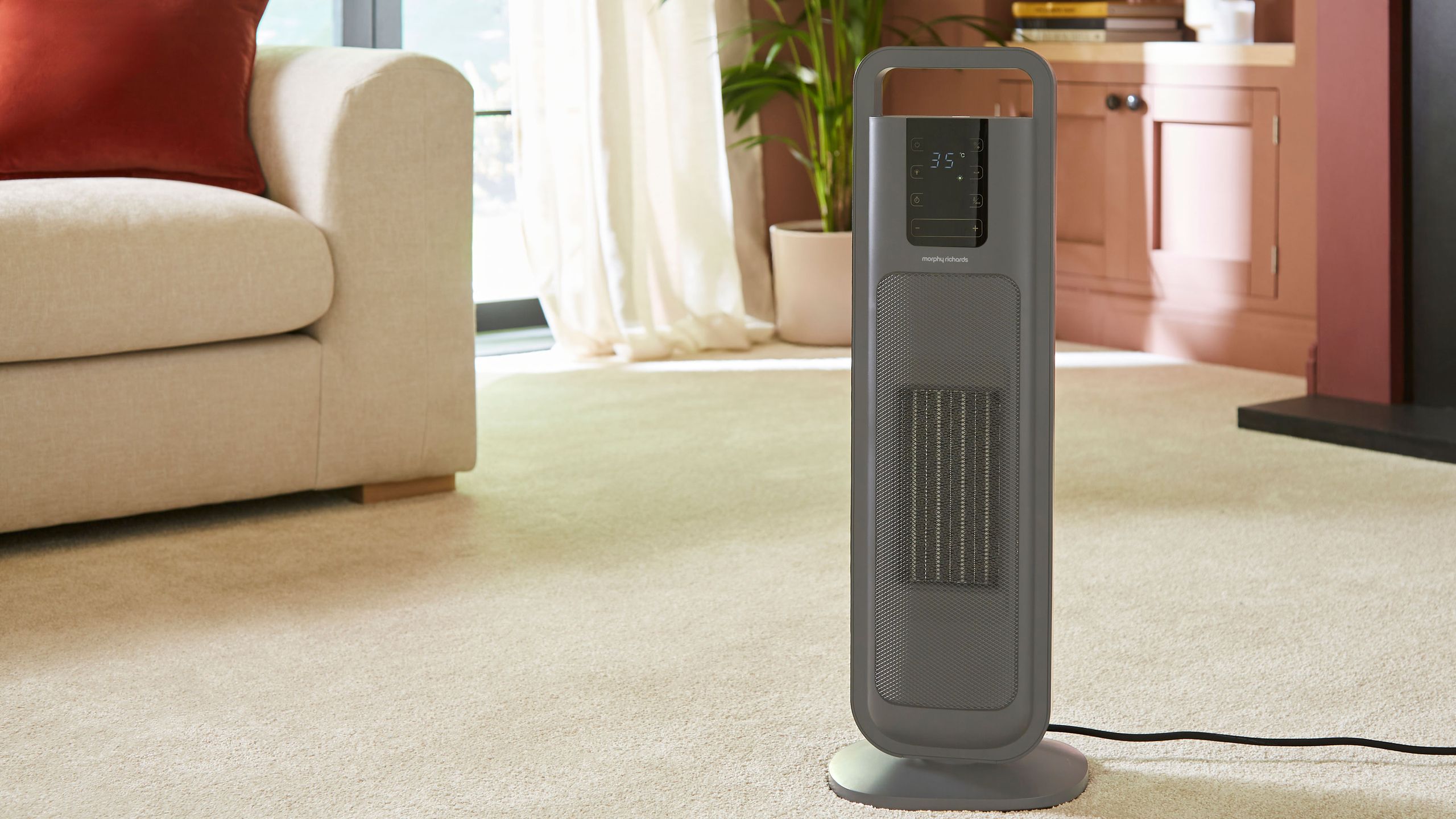
Morphy Richards HeatFlux Ultra Thin 2kW Ceramic Tower Fan Heater
This Morphy Richards heater was given 4.5 out of 5 stars by our reviewer who loved it’s sleek, space-saving design, effective heat distribution (even in an open plan space) and eco modes.
Mill WiFi Max 1.5kW portable heater
This smart electric heater can be controlled by your phone, where you can also monitor its energy usage and set timers to ensure it’s not left running longer than it needs to be. Check out my Mill WiFi Max 1.5kW portable heater review for more information.
Dreo Atom 316 electric heater
We’ve been testing this Dreo heater for a few weeks now (keep your eyes peeled for the full review coming soon), and are impressed by how powerful it is. It makes quick work of heating rooms up to 30m2, is easy to use and reasonably priced.
How long is too long to have your portable electric heater on for?
If you are finding you want to use your portable electric heater for hours on end, every day during the winter, then that’s definitely not the best way to use it.
If you notice your heater making any strange noises, emitting any strange smells or struggling to maintain a steady temperature, then that can be a sign it’s time to switch it off for a bit. If it happens consistently, then an upgrade may be necessary.
Needing to use the appliance for that long usually means that your property is struggling to hold on to heat, and that’s definitely not ideal from an energy efficiency perspective. There may also be safety issues around overheating, which is just one of the reasons it’s not advisable to use an electric heater overnight.
Plus, this is a very expensive way to use an electric heater. Based on the January 2026 energy price cap, portable electric heaters, which tend to have wattages between 1000 and 2500W, will cost between 28 and 69p per hour to run. So they’re not cheap, especially when used for long periods. That’s why they are best used as an occasional complement to a gas central heating system, rather than as a primary source of heat.
Even if you only use yours occasionally, there are still steps you can take to make them more cost effective. ‘Using built-in thermostat, timer or eco settings can further reduce running costs,’ explains Stuart Middleton, Consumer Energy Expert at So Energy. ‘Setting the heater to the lowest comfortable temperature rather than running it at full power continuously, and programming it to switch off automatically, can prevent unnecessary usage.’
FAQs
What’s the safest way to use your electric heater?
While many modern electric heaters come with auto-shut-off functionality when the unit overheats or tips over, it’s safest to only use your electric heater while you are there to supervise and avoid leaving it unattended for extended periods of time.
That means it’s also not advisable to leave them running overnight while you’re sleeping. If you find that you’re cold overnight and an extra blanket or cosy bedding isn’t cutting it, then it might be worth investing in a higher tog duvet or an electric blanket instead.
If you enjoyed reading this, sign up for the Ideal Home newsletter for all the latest home decor trends and inspiration delivered straight to your inbox
Read the full article here


