







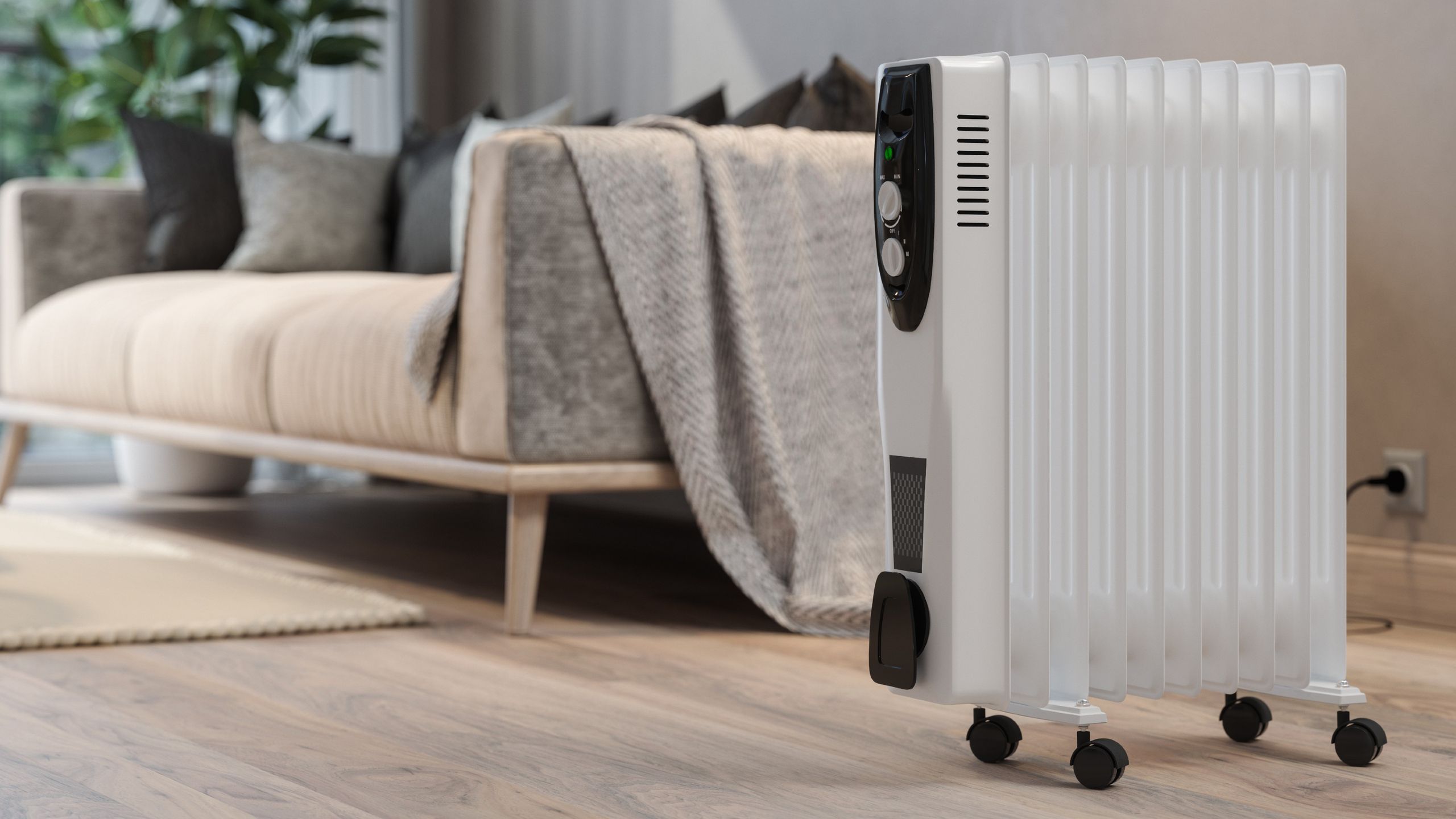
Not everyone wants to keep their central heating running all day long – let’s face it, energy bills can skyrocket during these winter months. That said, sitting with your teeth chattering under layers of blankets isn’t always too appealing either – which is where other forms of heater can come in handy.
If you are able to get your hands on one of the best oil-filled radiators out there you can expect many benefits. They are a great way to heat just a single room, are easy to transport around the house when needed and have come on in leaps in bounds both in terms of their appearance as well as their efficiency.
How do oil-filled radiators work?
First things first, lets take a look at how oil-filled radiators work – thankfully, it is actually pretty simple.
They run off electricity and are made up of a collection of fins, the number of which can vary – generally, the bigger the unit and the more fins there are, the greater the heat output although with some more modern models this won’t always be the case.
Oil-filled radiators, as the name suggests, are filled with a thermal oil that gets heated up by an internal element. This is a little different to standard radiators that are part of a central heating system as these are filled with water that has been heated up outside of the unit by a boiler.
They are a form of convection heater, meaning they transfer heat to the air, rather than to an object or person (as is the case with infrared heaters).
Shop oil-filled radiators
VonHaus Oil Filled Radiator 11 Fin
Not only does this oil-filled radiator have a choice of three heat outputs, its 11 fin design gives it an increased surface area for optimum effectiveness. It can be set on a timer to ensure you waste no energy plus it has a number of reassuring safety features.
Bush 2kW Oil Filled Radiator
If you want an oil-filled radiator that won’t take up too much space, still kicks out an impressive heat (2kW in fact) and won’t be too hard on your bank balance, this is it. It can be used in rooms up to 20m2 and has three heat settings too.
De’Longhi Dragon 4 TRD40820T Oil Filled Radiator
With its 2kW heat output and three heat settings, this smart offering from De’Longhi also manages to out-do many other oil-filled radiators in the looks department. Even better, it comes with a reassuring 10-year warranty.
How long does it take an oil-filled radiator to heat up a room?
For many people, the speed at which a heater can heat up a room is really important – after all, you hardly want it to sit there using your electricity and feel no benefits for ages. But while oil-filled radiators may not deliver instant results, their heat retention is impressive.
‘An oil-filled radiator doesn’t heat a room instantly, as the internal oil needs time to heat up before it can effectively start transferring heat into the room,’ explains Olivia Marshall, product manager at online heating, bathroom and kitchen specialist Plumbworld. ‘It can take around 10-15 minutes to heat up and you’ll start to notice the room gradually warming up from as little as 20 minutes, depending on the size of the area. Other factors that could impact heating time include the heater wattage, whether the room is well insulated, air circulation and the starting temperature inside.
‘Using a fan heater is great for a quick burst of heat in a room, however they often have a very limited reach and don’t heat up the whole room evenly when compared to an oil-filled radiator,’ points out Olivia.
How long do oil-filled radiators stay warm for after you turn them off?
Standard radiators don’t go cold as soon as the heating goes off – and neither do oil-filled radiators immediately feel cold to the touch when switched off.
‘An oil-filled radiator will stay warm for between 1.5 and 2.5 hours after it’s been turned off, thanks to the heat-retaining oil,’ reveals Liz Hunter, commercial director at MoneyExpert – but how does this compare to the best electric heaters out there?
‘A fan or electric heater provides instant heat by blowing out hot air, but doesn’t tend to retain it and will usually cool down almost instantly after it’s switched off,’ explains Liz. ‘This means it’s better for heating a smaller area, such as a bathroom or home office.’
‘Although oil-filled radiators do take longer to heat up than fan heaters, they provide a more consistent heat and retain warmth long after they are turned off,’ adds Olivia Marshall. ‘This means you’ll be able to turn it off completely and continue to feel the warmth, without paying for any more electricity.’
FAQs
Do oil-filled radiators use a lot of electricity?
One of the main things people ask about this type of heater is whether electric heaters are cheaper to run than central heating – or will they see household bills soar?
‘The cost of using an oil-filled radiator ultimately depends on its wattage, your electricity rate, room size, insulation, and how often you use it,’ picks up Liz Hunter. ‘Larger spaces or poorly insulated rooms, for example, need more energy to heat and maintain a comfortable temperature. However, they’re generally more energy-efficient than most options. Their efficiency comes from using thermal oil to slowly retain and radiate heat, making them good for consistent, long-term warmth rather than quick bursts.’
‘It’s important to choose an oil-filled radiator that is suitable for the room you want to heat,’ adds Olivia Marshall. ‘A large room will likely need a radiator with 1500W or more, compared with a small room that may only need 500W.
‘A 500W oil-filled radiator used for 3 hours could cost around 42p in electricity, or £12.63 per month,’ continues Olivia. ‘A more powerful 1500W radiator could cost £1.25 per day and £37.90 per month. The higher the wattage, the more you will pay more in electricity, so it’s important to find an oil-filled radiator that’s most efficient and effective when heating a room.’
Can you buy wall-mounted oil-filled radiators?
While the most recognisable form of oil-filled radiators tend to be those on castors, ready to be wheeled around the house as and when required, they do come in other forms – and these modern oil-filled radiators tend to look far more stylish than the models of old.
Not only do modern offerings offer all kinds of smart heating features, such as being WiFi enabled in order for homeowners to control them from outside the house using a smart device, but they can also be wall-mounted, just like a standard radiator.
These wall-mounted models come in all shapes, sizes and colours too meaning it will be easy to find one to suit your particular needs.
Whether you are renovating, extending or simply updating a house, it really is a good idea to familiarise yourself with all the different types of heating system on offer. You could find you are paying more than you need or that your current system isn’t the most effective for your home and needs.
If you enjoyed reading this, sign up for the Ideal Home newsletter for all the latest home decor trends and inspiration delivered straight to your inbox
Read the full article here


