







26/11: The Black Friday electric heater deals in this article have been checked and are still available.
When the temperature drops and nights draw in, we can all face eye-watering heating bills thanks to using the central heating more. But if, like me, you want to heating the room you are in, rather than the whole house, an electric heater is a good solution. They’ll heat up quickly, and are portable so they can move around your house with you.
But with different types of electric heaters to choose from — fan heaters, convector heaters, the best oil-filled radiators and so on — it can be utterly overwhelming to find the right one for your home.
Fortunately, along with a band of in-house testers here at Ideal Home, I have broken down the best electric heaters you can buy, based on our testers’ real life experience, and highlighted those that are discounted for Black Friday so that you can snap up a bargain while they are available.
Black Friday deals on the best electric heaters
Black Friday deals are here, ahead of the big day itself.
To help you find the real deals that are worth your money, I’ve been hunting out and highlighting the best prices on our picks of the best electric heaters you can buy to save you the hassle of doom-scrolling through multiple retailers.
The quick list
Short on time? This quick list is a brief overview of the very best electric heaters according to our testing process. Keep scrolling for more in-depth information on each.
1. AENO Premium Eco Smart Panel Heater
Best electric heater overall
This panel heater uses a mixture of convection/infrared technology to efficiently (and cheaply) heat a home. It offers a sleek and slimline design, and smart functionality, which means you can control everything from the timer to the heat output from your smartphone. It’s also completely silent when in use, and can be either wall-mounted or freestanding. It really does have everything.
Read more below
Best fan heater
The Dreo fan heater is quick to heat a room, oscillates for good heat distribution, has three fan speed settings, and can maintain a temperature of between 5-35°C. It’s also relatively affordable, compact, and easy to move around the home. Overall, we think it’s a great buy if you’re looking for a quick blast of heat to take off the chill in a small, medium, or larger room.
Read more below
3. Dyson Purifier Hot+Cool HP1 Purifying Fan Heater
Best multifunctional
It’s an investment, but the Dyson Purifier Hot+Cool HP1 offers year-round climate control with a 3-in-1 heater, fan and air purification functionality. The bladeless design is powerful and quiet, and the intelligent sensors mean you can simply set your desired temperature and leave it to manage your home’s air quality for hassle-free operation. This item is temporarily out of stock at most retailers. It is due to be back in stock in early December.
Read more below
4. Duux Edge 1000 Smart Convector Heater
Best convector heater
A convector heater is slower to emit warmth than a fan heater, but, its operation is silent, and its steady heat can be more economical if you have it running for long periods, or if you have a large room to heat. The Duux Edge 1000 Smart Convector Heater is a cut above the usual electric convector, offering a stylish design and great functionality.
Read more below
5. Dreo Smart Whole Room Heater 714s
Best value for money
While not the cheapest electric heater on the list, this Dreo model offers impressive features with a price tag under £100. When we tested it, we loved how powerful it was, despite it’s compact size, as well as how easy to use it was thanks to onboard controls, a remote control and app.
Read more below
6. Russell Hobbs 700W Ceramic Plug In Heater
Best for small spaces
This compact fan heater simply plugs into a wall socket, making it super portable, easy to store, and great for small rooms that are short on floor space. An affordable price tag of under £25, plus low energy usage – and therefore low running costs – makes this plug-in heater our best budget buy if you only have a small area that you want to heat.
Read more below
Best electric heaters 2025
Best electric heater overall
Image 1 of 7


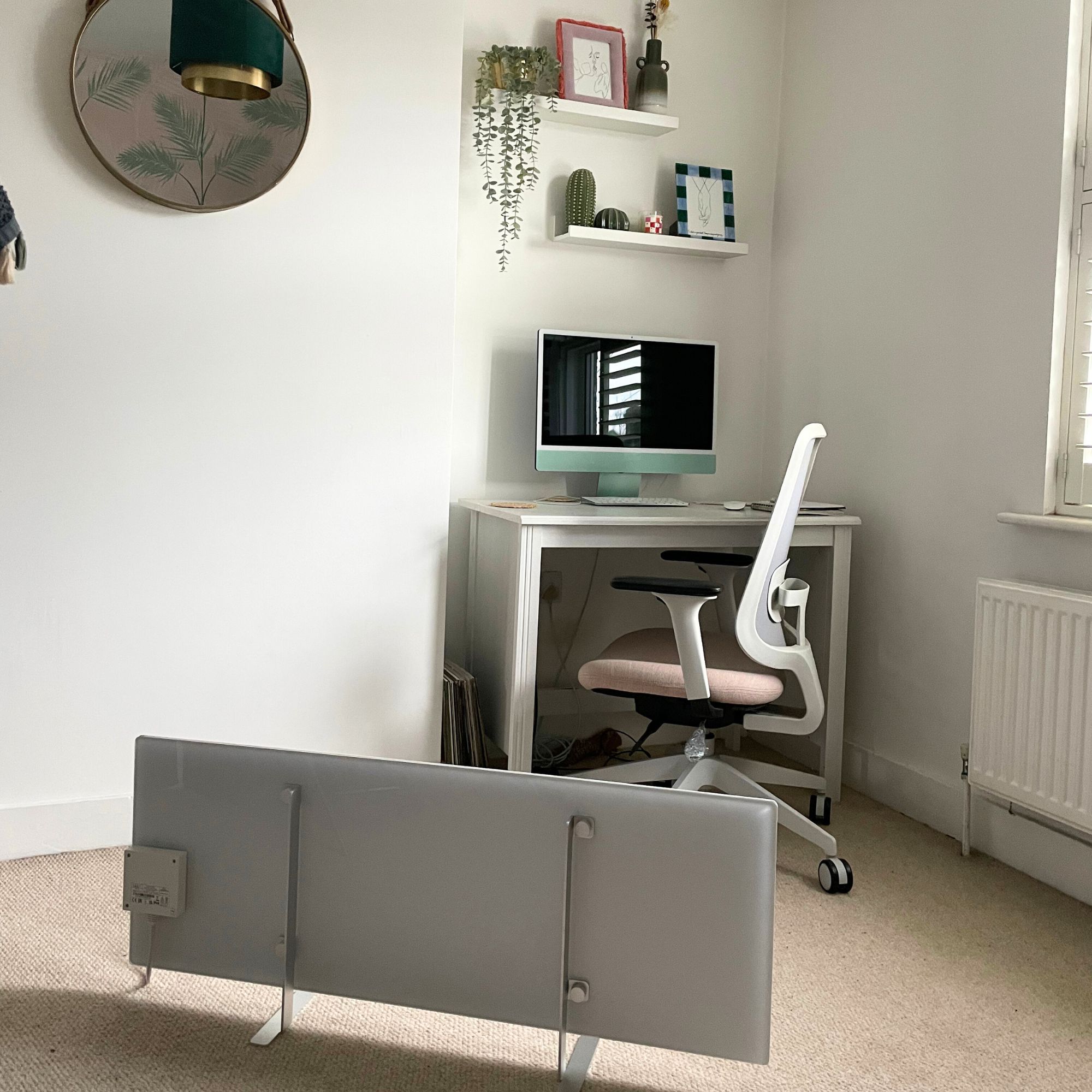
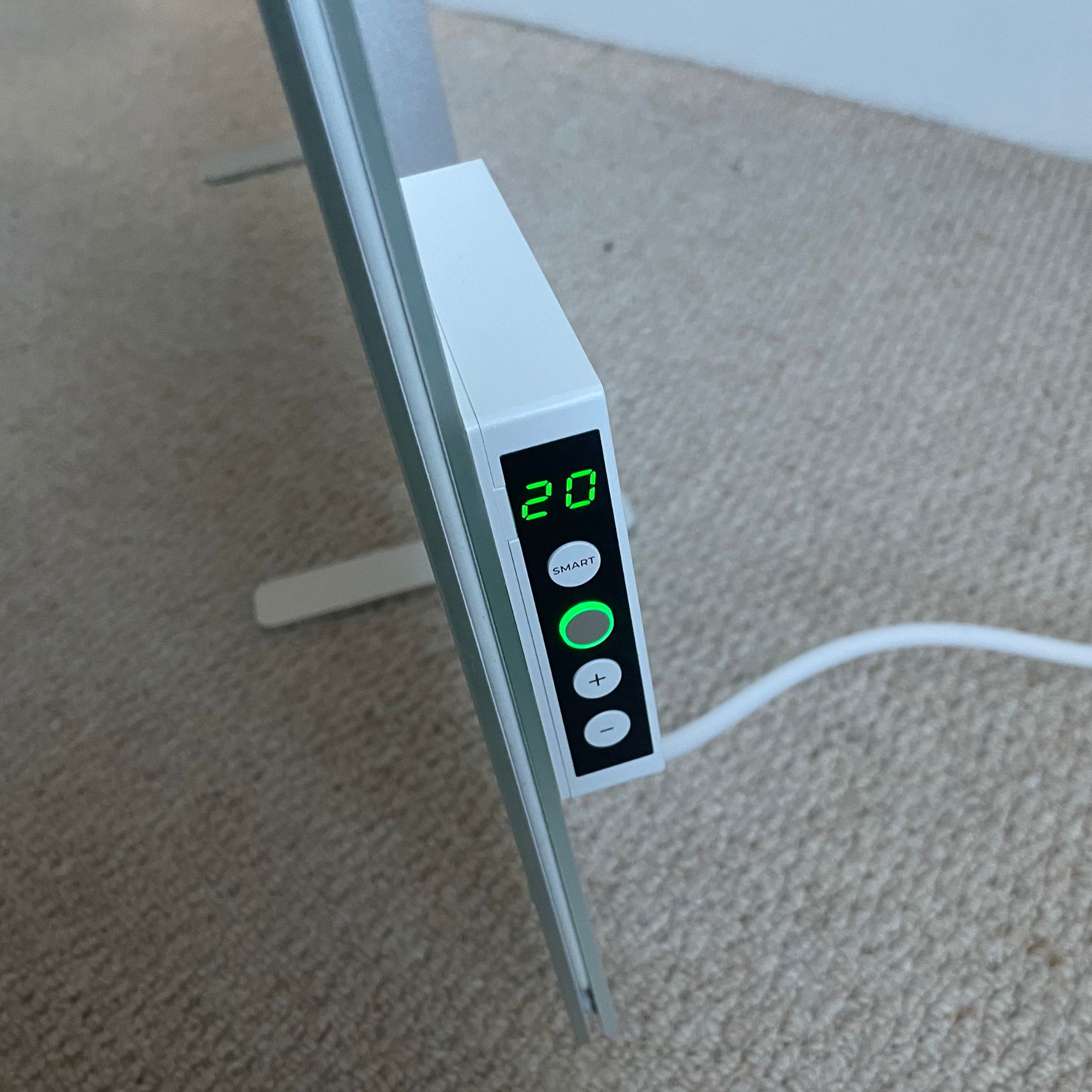

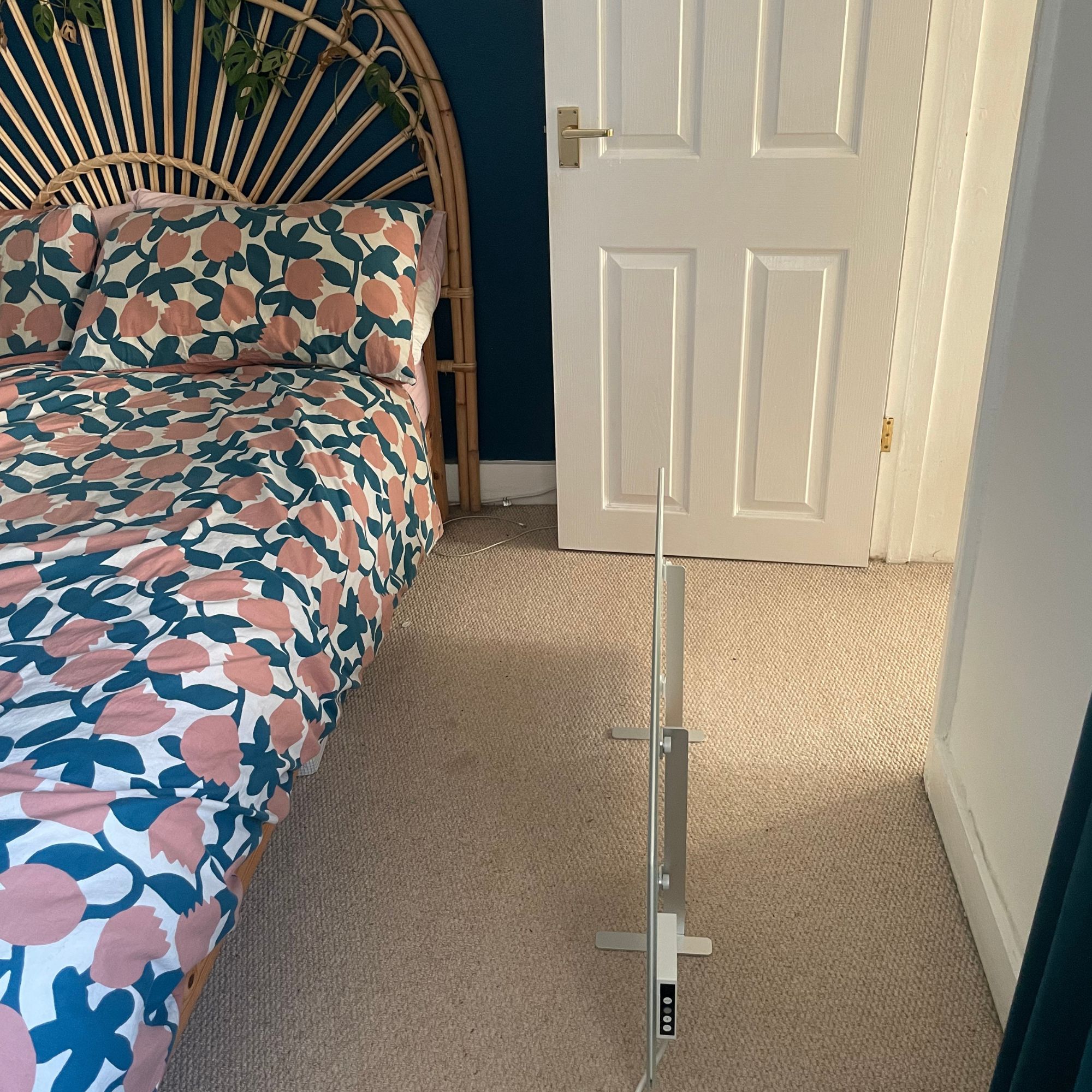
Design As far as electric heaters go, the AENO Premium Eco Smart Heater is arguably one of the most sleek and stylish ones out there. And while it’s undoubtedly on the bigger side, what I loved most about this model is that it can either be mounted on the wall or left freestanding. Featuring a tempered 11mm glass panel, silver legs (if used), and an almost-invisible side control panel, it looks more like your average radiator than a bulky or ugly electric heater.
Ease of use While it takes a little while to download the AENO app and link up this smart panel heater, it couldn’t be easier to use when it’s all set up. Everything you need to control this electric heater is found on the app, and from there you can choose whether you want the ‘constant heating’ option or use the in-built thermostat to heat your room to a particular temperature. The app also offers a timer, the ability to create a heating schedule, Alexa or Google Assistant connection, and energy use statistics. However, you can also use the control panel on the side of the heater if you don’t want to use the app.
Performance The AENO Premium Eco Smart Panel Heater heats up incredibly quickly, retains heat well when you turn it off, and offers an impressive heat output no matter which setting you choose. To test this power, I turned off the radiators in my home office and let the room drop down to 12°C overnight, and it took just 1 hour to raise the temperature from 12°C to 21°C. Without oscillation power, you do get to feel more heat when sitting or standing directly in front of it, but the combination of infrared and convection means that it heats both the room and the people in the room.
Noise levels One of the (many) things I loved most about this electric heater is that it was completely silent. It didn’t make a single noise throughout testing – not when heating up, while in use, or when cooling down.
Energy use The AENO Premium Eco Smart Panel Heater is marketed as an efficient, cheap, and eco-friendly electric heater. At 700W, it costs around 18p per hour to run based on the current energy price cap. This is extremely cheap for such a large and powerful electric heater.
Read our full AENO Premium Eco Smart Panel Heater review for more details.
Best fan heater
Design Looking more like a smart speaker, this sleek grey and black fan heater does away with the white chunky lines of the traditional space heater entirely. Touch controls on the top and an LED display add to its premium feel. It’s portable thanks to an integral handle at the back and can be set to rotate through 70° to help spread the heat around your space. Plus, it’s pretty compact, so shouldn’t take up too much space on a table or the floor.
Ease of use The Dreo space heater is ready to go as soon as it is unboxed, with fairly straightforward instructions explaining the different modes. The heating mode is split into three levels, which need to be toggled with the plus and minus buttons, and there’s an Eco mode that uses sensors to select the ideal heating mode depending on the desired room temperature you’ve set. This heater also comes with a remote control, the only niggle being it needs to be pointed directly at the heater for it to work – even small objects seem to block the signal.
Performance Fan heaters can often create hot spots in a room, but this is where the oscillation of the Dreo Space Heater comes into its own. Our tester, Rachel, found it brilliant at heating her office room from cold, with the warmth spreading throughout quickly. Another plus was the range of heat on offer – its thermostat meant she could set a temperature between 5-35°C, so there was never any risk of getting too hot and then having to open a window to cool the room down again. In terms of heating flexibility at an affordable price, it felt superior to the other fan heaters she tested.
Noise levels The Dreo Space Heater has a noise level of just 37.5dB (the oscillation raises this to 40dB). Rachel found it to be equivalent to the level of noise of the Beldray fan heater she tested – quiet enough to talk over but still noticeable. One other thoughtful feature is being able to switch off its electronic beeps.
Energy use Using its highest heat setting means the Dreo Space Heater uses 1500W of electricity. That means an hour’s constant use of the Dreo Space Heater, at a rate of 26.35p per kWh, would cost just under 40p. However, its lower settings are less costly, with medium heat (1000W) costing 26.35p an hour and low (900W) 23.7p an hour.
Best multifunctional
This model has been selling like hot cakes in the Black Friday sale, and so you may find it’s sold out. We are checking stock levels daily and will update this message when it is available to buy again.
Design One thing Dyson always nails is the design, and the Dyson Purifier Hot+Cool HP1 is sleek, stylish, and comes in a neutral white and silver colourway. The bladeless design is easily recognisable as a Dyson heater (and the best air purifiers), and it was a lot smaller than I expected. This was a nice bonus as the smaller size makes it easy to move around the house – and easy to tuck in the corner when it’s not in use.
Ease of use There are two ways to control the Dyson Purifier HP1: via the MyDyson app or through the remote control. The app connectivity is arguably the better option of the two, as it allows you to set up timers and schedules, adjust the airflow and temperature, and explore the air quality graphs. Everyday operation of the heater is really simple, as you just toggle up and down to set your desired room temperature, and the Dyson’s intelligent sensors will automatically turn the heater on if temperatures dip under your target setting, and off when the target temperature is reached to save on energy.
Performance The Hot+Cool HP1 has the widest temperature range of any electric heater we’ve tested, allowing you to set a target temperature of between 1-37°C. Dyson’s powerful air multiplier technology also projects up to 290 L of heated air per second, which means it can heat whole rooms in just minutes. The added bonus of 350 ̊ oscillation also means that you can either target specific areas or heat a wider space.
Noise levels At 63 Decibels, this Dyson fan heater is one of the loudest electric heaters in this list – especially when it’s on full power. At its quietest, it’s still not as silent as we’d like, but it shouldn’t be an issue for those who don’t mind a bit of background white noise. The bladeless design also means there are no whirring fans, so the noise isn’t jarring or unnerving. Instead, it simply sounds like gushes of air.
Energy use Dyson has not supplied information on the wattage of the Dyson Purifier HP1, but Dyson heaters generally cost more than the average electric heater to run when they’re at full power. However, the intelligent sensor does mean you’ll never use more energy than is needed to keep your home at your preferred temperature, as it will automatically switch to standby once your target temperature is reached, which can make it more economical in practice than super cheap models, which are either on or off.
Read our full Dyson Purifier Hot+Cool HP1 Purifying Fan Heater review for more details.
Best convector heater
Design Duux’s Edge 1000 Smart Convector Heater does a great job of overhauling the usual outdated convector heater design. It’s slim, glossy, beautifully designed and a world away from the basic looks of more affordable models, such as the Challenge convector heater further down this list. You can use it freestanding, but, ingeniously, you can also wall-mount this heater if you want to free up floor space. However it is worth noting that this heater isn’t very portable – there’s no carry handle so it’s awkward to pick up, and it weighs in at a hefty 7.55kg.
Ease of use On delivery you need to attach the feet to this heater with a screwdriver, which – a little annoyingly – isn’t included. Once that’s done, you’ll also need to connect the Duux Edge 1000 to your WiFi and download the Duux App to a smart device to access the full range of functionality. Whilst you can use the manual controls placed discretely on the side of the heater, they’re not the most intuitive, especially for setting a schedule, so you’ll need the instruction manual. Setting schedules and using the other functionality (such as preset modes) is a lot easier using the Duux App. Set aside a good half an hour to get this heater unpacked and set up.
Performance Besides good looks, the biggest plus point of this convector heater is the size of space it can comfortably heat – up to 20sq m – and that it has an IP24 rating meaning that you can use it in damp spaces. The fact you can also choose to wall-mount it via the included wall kit is another bonus. It also comes with ‘open window detection’ functionality (meaning it turns off if a sudden drop of 5°C in temperature within 10 minutes is detected, to save on wasted energy), a timer, and night mode, meaning you can leave it on a low heat to keep a bedroom toasty whilst the display dims so it doesn’t keep you awake.
Our tester Rachel found the heat the Duux Edge provided was instant but gentle and could be felt about a metre above from being turned on. As it’s a convector heater, it did take a while for the heat to diffuse throughout the space as there’s no fan to push the warmth instantly into the room, but the upside is that this heater throws out warmth for a good length of time even after it’s turned off. She also liked the fact that the Edge enabled her to set my desired temperature down to the exact degree.
Noise levels As this is a convector heater rather than a fan heater, operation is far quieter in comparison. The Duux Edge didn’t make any noise other than an occasional click when turning the thermostat on and off.
Energy use While the costs may vary depending on which mode you’re using it in (for example, there’s an eco mode only accessible through the App) the Duux Edge 1000 is fairly thrifty at its highest wattage use of 1000W, which currently costs about 26.35p an hour. That means that whilst it’s more of an investment upfront than the Challenge convector heater, the Duux Edge convector heater is more energy efficient and costs less to run.
Best value for money
Design Thanks to its compact dimensions, the Dreo 714S won’t feel cumbersome when being used. As well as being lightweight, it looks sleek, with modern and stylish onboard controls, and our tester was truck by how high quality and expensive it felt despite a sub-£100 price tag. It also has a handy carry handle on the back which makes it easy to move around.
Ease of use Ready to plug in and use straight out of the box, the Dreo Smart Whole Room Heater 714S is really easy to use. In fact you have three operating options to choose from; the onboard display, the remote control or an app. It’s simple to customise the settings to suit your lifestyle. You can choose heating or cooling mode, control the fan speed, adjust the oscillation (both vertically and horizontally), schedule on off times and even set up voice controls so you can operate it with a smart assistant.
Performance Despite its small size, there’s no doubt the Dreo Smart Whole Room Heater 714S is effective. It warms your space quickly, in seconds in its most powerful mode, minutes in its lowest. Beyond heating, it’ll also double as a fan in the summer, increasing how often you’ll use it, and reducing the cost per use.
Noise levels Compared to other fan heaters, which can be quite noisy, the Dreo Smart Whole Room Heater 714S can be whisper quiet, especially in its lowest setting, while still being effective at warming you up. Our tests showed a level of 36dB on this setting, which is about the same as a soft whisper. Not too shabby if you are trying to work from home or watch the telly while it keeps you warm. On it’s highest setting, we recorded a sound level of 57dB, which is the equivalent of normal conversation, so you may want to save this setting for when you aren’t trying to concentrate elsewhere.
Energy use With a wattage of 2000W, the Dreo Smart Whole Room Heater 714S will cost around 54p an hour to run (based on the current energy price cap being 26.35p per kWh of electricity. Although when used in ECO mode, you can expect a 40% reduction in energy usage which will bring costs down.
Read the full Dreo Smart Whole Room Heater 714S review.
Best fan heater for small spaces
Design One of the most appealing aspects of the Russell Hobbs Plug-In Heater is that it’s super compact. This design simply plugs directly into an electrical socket which means it requires no floor or table space, making it perfect for a small room, plus there are no unsightly cables to navigate. It feels robust, and whilst it’s not quite as sleek in design as the Dreo and Duux fan heaters we’ve tested, we love that it’s so compact, which also made storage a dream.
Ease of use There’s no assembly required with the Russell Hobbs 700W Ceramic Plug-In Heater – just plug it in. However, getting the ideal positioning can prove tricky. The heater needs enough clearance space to operate, which means positioning it 30cm above floor level and leaving 50cm between the heater and any side walls. In case you don’t have enough clearance below a wall socket, you can rotate the heater section through 90°, however, this does locate the controls on the righthand side making them a little more difficult to access.
The controls themselves consist of an on-off switch and three buttons; a plus and minus button for raising and lowering the desired temperature (within a 15-30°C range), and a Mode button for changing the fan speed, alongside an LED display. We found the controls a little difficult to navigate as they aren’t marked very clearly, and the operating instructions left a lot to be desired, with the instructional manual not always describing the functionality accurately.
Performance At first, we found the reach of the Russell Hobbs 700W Ceramic Plug-In Heater to be limited – we found we got about a three-metre range of direct heat after the heater had been running 10 minutes or so. However, when left running for about half an hour, the heat diffused around a metre further, warming the whole 15 sqm room after about 45 minutes. Considering this compact heater is far smaller and less powerful than all the other heaters we tested, we were impressed by its performance.
Noise levels There’s no stated dB for this heater but it’s not noisy when running. The high fan speed has more of a whine, so if you find it obtrusive, the lower speed may be more suitable.
Energy use The compact Russell Hobbs 700W Ceramic Plug-In Heater is fairly inexpensive to run compared to larger heaters. Its highest setting uses 700W, which means it costs around 18.5p an hour to run at a rate of 26.35p per kWh. That makes it one of the cheapest electric heaters to run out of all that we’ve tested.
Best for WFH
Image 1 of 5
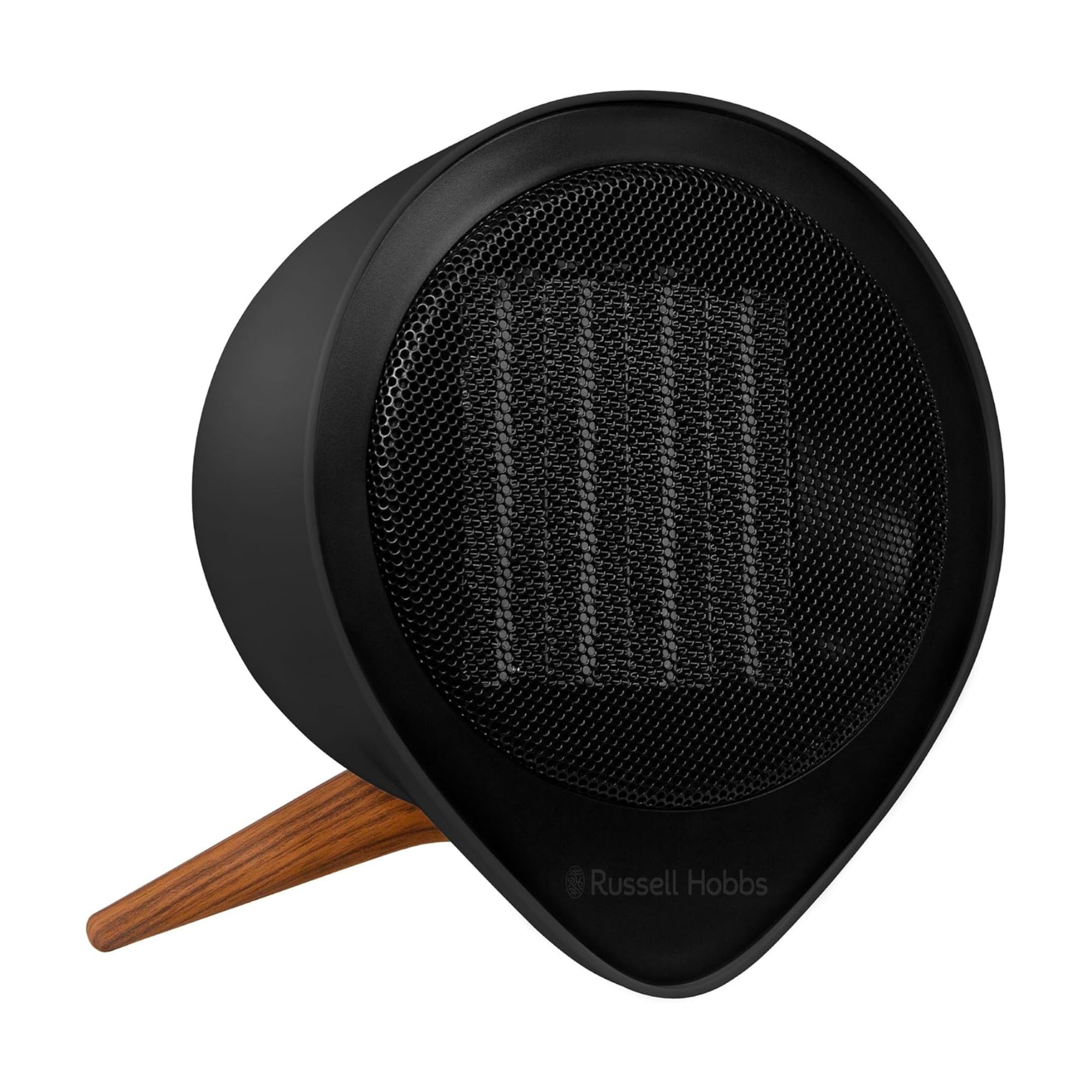
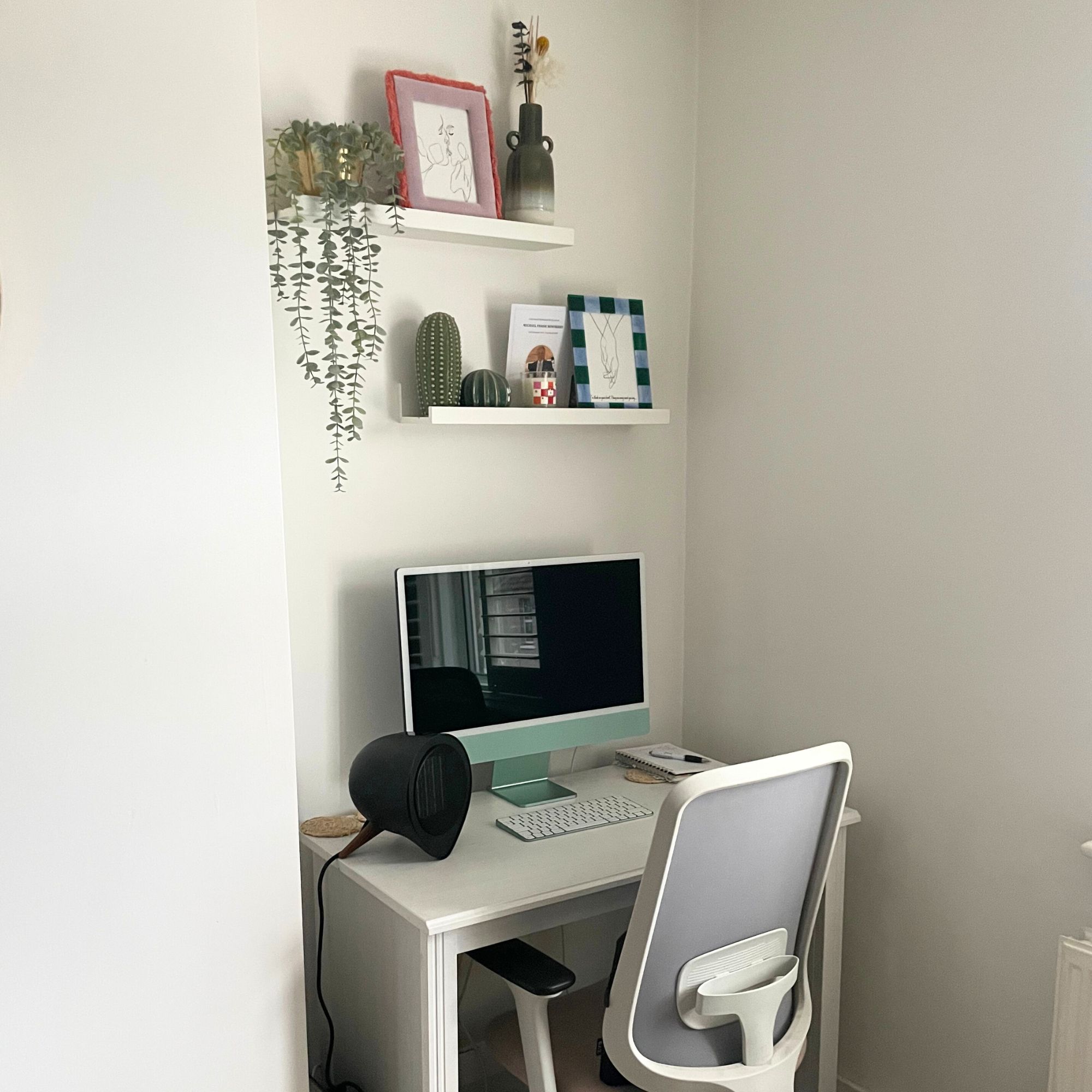
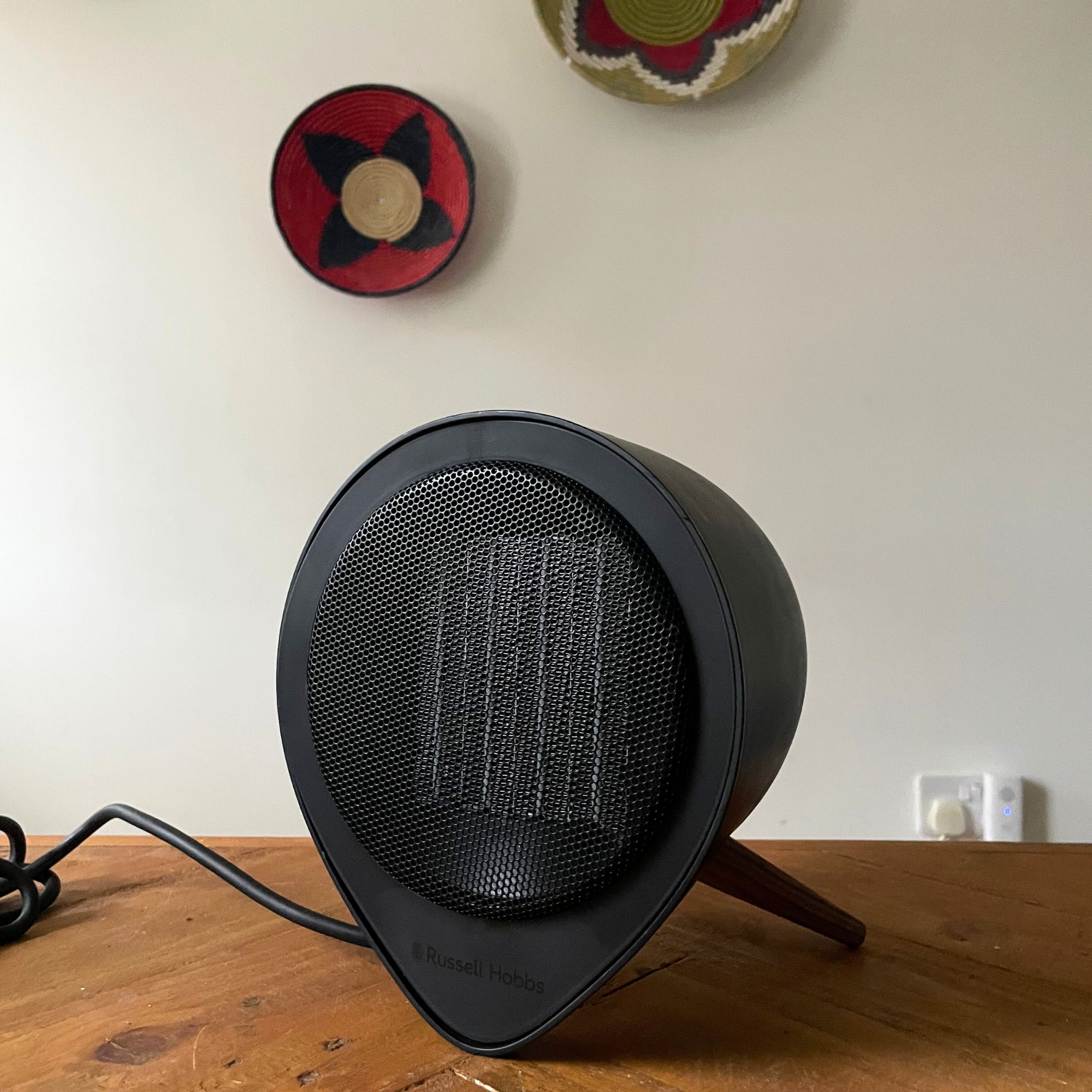
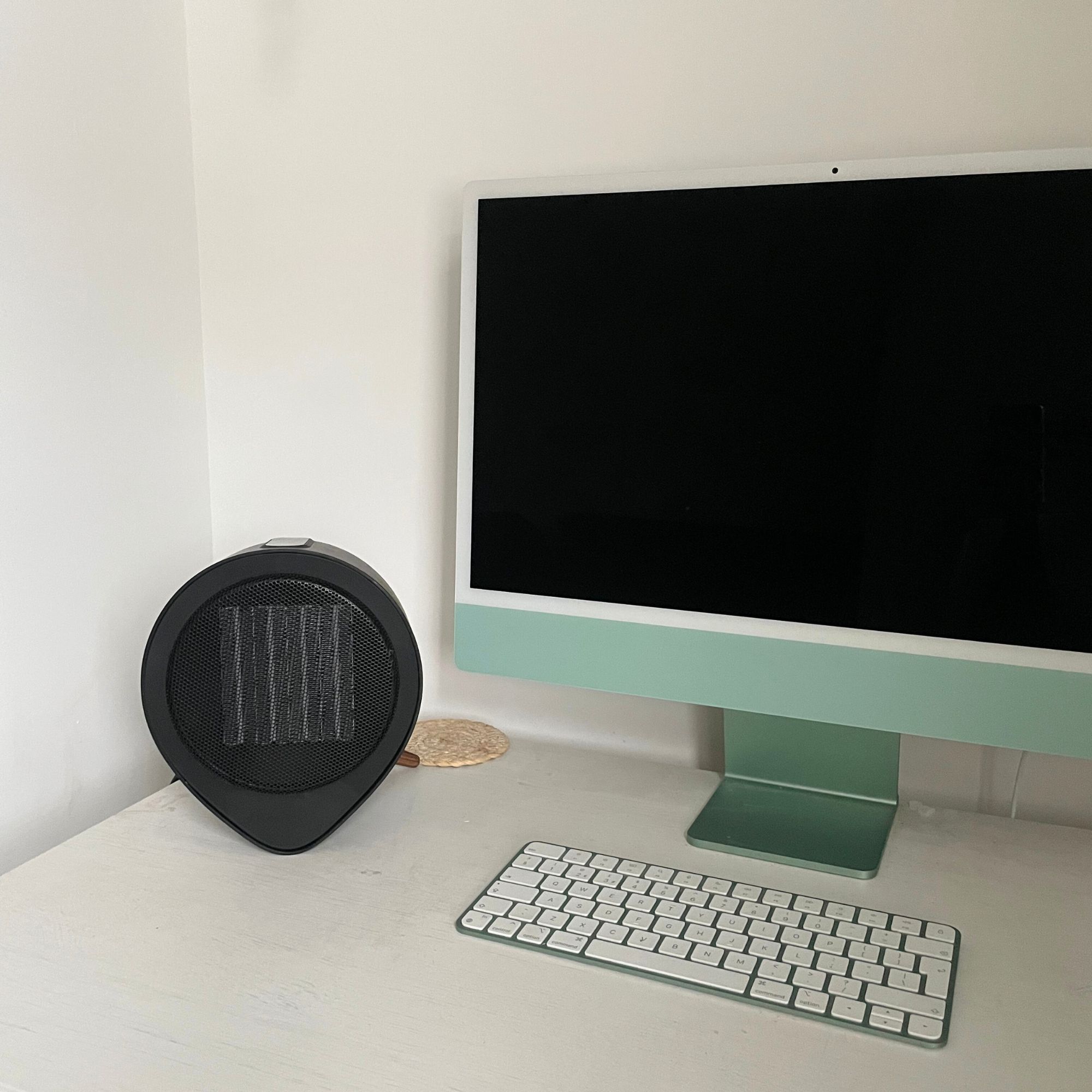
Design As the name suggests, this electric heater offers a retro design I found to be incredibly stylish. And while it’s small enough to sit on a desk, it is quite deep – so that’s something you should consider if you’re looking to pop it on a narrow shelf. You can also buy it in a white colourway if you’d prefer, but both options come with the sleek wooden legs.
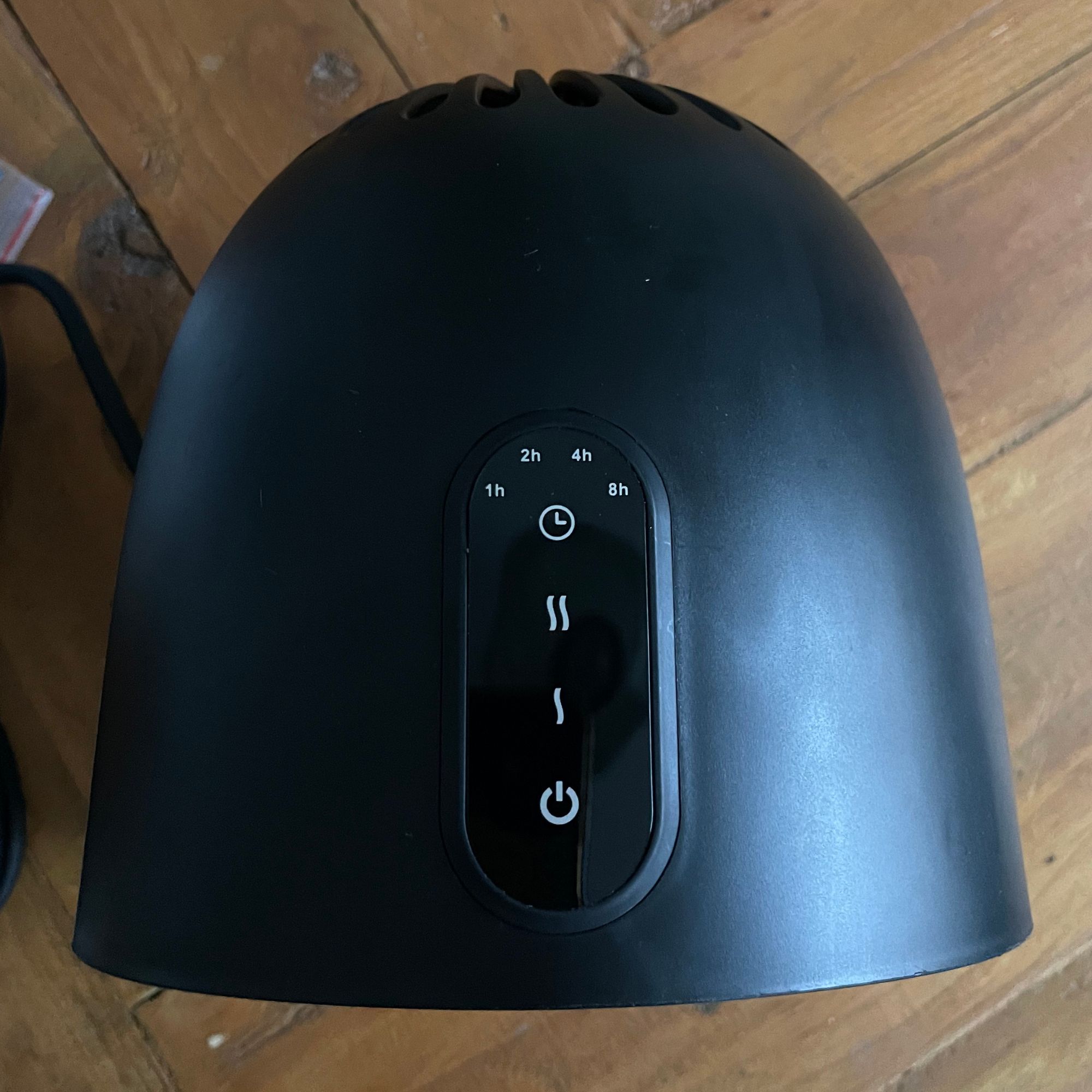
Ease of use This electric heater couldn’t really be any easier to use if it tried. All of the controls can be found on the top of the heater, from the on/off button to the heat mode and the timer function. That’s all there is to it!
Performance I wasn’t expecting a huge amount of power from this desktop electric heater, but I was pleasantly surprised when I was not only able to heat myself while working from home, but also the whole room. Like all ceramic fan heaters, it did cool down incredibly quickly when turned off, but it heated up in seconds and provided a constant power that was obvious from right in front of the heater and on the other side of the room. You can also choose from two heat options, depending on your preference.
Noise levels One thing about ceramic heaters is that they can be loud, and this was also the case for this Russell Hobbs offering. When I had music on in the background, it did become white noise that didn’t interrupt my workflow at all. But if I didn’t have music on, it was quite irritating.
Energy use This electric heater is fairly efficient, and I found that an hour’s use cost me 25p an hour on its lowest setting and 41p on its higher setting. Of course, there are cheaper options on the market, but these might not have the same impressive power.
Read our full Russell Hobbs 1500W Retro Tripod Mini Ceramic Heater review for more details.
Most stylish
Design Whilst cheaper fan heaters focus purely on function, the Duux Threesixty 2 Smart Fan Heater adds style to the mix. It’s by far the most stylish electric heater we’ve come across, with a minimalist cylindrical design and modern matt finish in white or grey. Compared to most of its competitors at this price point, this indoor heater is definitely the most design-led.
Ease of use Just like its overall design, the Threesixty’s controls are also minimal. On the heater itself, there’s simply a single rocker-style button that turns it on and off, as well as raises the fan speed. On either side of the rocker button, LED lights indicate whether you have the heater running in boost mode (speeds medium and high) or eco mode (low speed), as well as if it’s connected to the WiFi. And you do need WiFi connection to make the most of this heater.
In order to access the heater’s full functionality, you need to download the Duux App onto a smart device – like a phone or tablet – so you can control the heater remotely. Via the App you can set timer schedules, turn the heater on and off, raise the power and set the ideal temperature using the thermostat. Without the App, you lose some of this functionality, which is a bit of a shame; you’ll only be able to change the heat/speed and turn it on and off manually.
Performance Named for its 360-degree heat distribution, the Threesixty 2 Smart Fan Heater definitely lives up to its moniker. Duux says that ‘In boost mode, the Threesixty can heat up a room of 30m2 twice as fast as conventional heaters, thanks to its efficient PTC heating element. The air outlet makes sure the heat is evenly distributed in 360 degrees’. Thanks to the App, our tester Rachel was able to monitor how quickly the room heated up as it showed the current room temperature as well as what she had set it to reach. On most days, the heat made it to the other side of the unheated room in about 10 minutes. While it was always much toastier close to the Threesixty 2, it was never an uncomfortable blast of warmth around her legs like older fan heater models can produce. The other plus was that it directed the heat upwards and outwards rather than just in one direction.
Noise levels The Threesixty 2 Smart Fan Heater can be quite noisy on the high setting, but is far less obtrusive on low, which is more like a background murmur. Its stated noise level is 56dB which is pretty high compared to many heaters we’ve tested. Rachel found it to be noisier than the Russell Hobbs Plug-In Heater and Dreo Fan Space Heater, but not excessively so.
Energy use Run on its lowest setting (800W), the Threesixty 2 Smart Fan Heater shouldn’t use too much power, costing just over 21p an hour. However, prices creep up on the medium (1200W) and high settings (1800W), costing just under 32p and just over 47p an hour respectively at a rate of 26.35p per kWh. Depending on how you use it, it could be one of the cheapest or priciest electric heaters to power in our round-up.
Electric heater comparison at a glance
Best of the rest
How we test the best electric heaters
At Ideal Home, we take how we test very seriously. We only want to recommend products that we have hands-on experience with, which is why we follow a strict testing protocol to understand the ins and outs of every product that comes into our hands. To compile this guide, we made sure to test the electric heaters in real homes so we could understand how they’d fare in your home too.
In addition to assessing the design of the electric heater, we also measure how quickly they heat up, how effectively they heated a space, how much they cost to run, and how noisy they are. We also take into account ease of use and any bonus safety or smart features.
With all of this information to hand, we are well placed to compare the best electric heaters on the market with each other to help you find the right one for your home, budget and lifestyle.
With all that taken into account, I’ve been able to assign each electric heater a dedicated Ideal Home star rating. They are as follows:
- 5 stars – an impressive electric heater that does exactly what you expect and cannot be faulted in any way.
- 4.5 stars – a high-quality and hard-working electric heater, but it leaves us wanting a bit more, so it doesn’t quite hit the 5-star mark.
- 4 stars – an amazing electric heater that is worth your money but may need some fine-tuning before it suits every customer and every home.
- 3 stars – a good electric heater that works well but doesn’t blow us away with its specs or price tag. In some cases, it may not heat a room as effectively as competitors.
- 2 stars – an affordable electric heater that will suit all budgets but is under-specced and lacks key heating features.
- 1 star – we would not recommend this electric heater, as it is underwhelming and does not work as intended.
How to choose an electric heater
There are many things you should know before buying an electric heater in order to make the right choice for your home. They can come in all shapes and sizes, with a range of additional features, so it’s important to know what to look out for to avoid any electric heater buying mistakes.
This is what you should consider before you buy:
- The type of heater. There are three main types of electric heaters — fan heaters (which use a fan to push warm air out into a room), convector heaters (which look more like a traditional radiator and uses convection to warm up the air surrounding them) and halogen heaters (which use incandescent light bulbs that creates infrared heat).
- It’s size and weight. The physical dimensions of the electric heater should always be considered, not just in terms of how easily you can move it around your home, but also where you can store it when it’s not in use.
- How big a space you want to heat. It’s important to think about how large a space you want your electric heater to warm, as this will impact the wattage of heater you need to look out for. The higher the wattage, the more powerful, but it will also cost more to run.
- How noisy the heater might be. Some electric heaters are quieter than others, so if you live with any one (or any pets) that are sensitive to sounds, then you’ll want to opt for something quieter. While oil-filled radiators and convector heaters can often make clicking and whirring noises, they’re typically on the quieter end of the spectrum. However, a fan heater can be noisy, especially when running at higher speeds.
- How well it retains heat. While some electric heaters cool quickly once switched off, others will cool slowly, and continue releasing heat as they cool. Typically, fan and halogen heater tends to cool down shortly after it’s been turned off. On the other hand convector heaters, while generally slower to warm up, are slower to cool down, which means that they retain heat for longer.
- Any extra features it may have. This might include control features like a programmable timer, thermostat or WiFi compatibility, or safety aspects like cool touch surfaces or automatic shut off if it gets too hot or is knocked over.
FAQs
How much should you spend on an electric heater?
How much you should spend on an electric heater will largely be dictated by your budget, but it’s worth factoring in a couple of different points into your decision making. After all, prices for electric heaters can range from tens to hundreds of pounds.
If you want an electric heater as an emergency back up should your boiler stop working, then you can get a reasonably powerful model for less than £100.
However, if you plan on using an electric heater more regularly throughout the winter as a cheaper alternative to your central heating, then paying a bit more for one that is more powerful, more efficient, or has additional features you might find beneficial can be a good investment.
What is the most efficient electric heater?
If you’re looking for fast distribution of warmth, a fan heater can’t be beaten. They’re ideal for chasing the cold away instantly, and, if you choose one with a ceramic element rather than metal, it’ll heat up faster, requiring less energy initially to get hot.
However, if it’s energy efficiency over long periods that you’re looking for, a convector heater is probably the better choice, consuming less energy over an average day than most fan heaters. Ceramic heaters should also be considered, as they can heat a room very quickly and retain the heat when they’re turned off. You can read our ceramic heater vs fan heater debate for more information.
Are electric heaters cheap to run?
As a electric heater is powered by electricity, which costs more than gas, they’re not necessarily cheap to run, especially if used for long periods of time. Plus, the more powerful your electric heater, the more it will cost to run.
However, the fact that electric heaters can heat up quicker than your central heating, and many have good heat retention, means that you can use them in bursts rather than having them on constantly. This means that while they might cost more to run in a direct comparison with gas central heating, an electric heater may not need to be used for as long to keep you warm.
To keep bills to a minimum, make sure you keep doors and windows shut when using an electric heater, and address any draughts.
Read the full article here


