

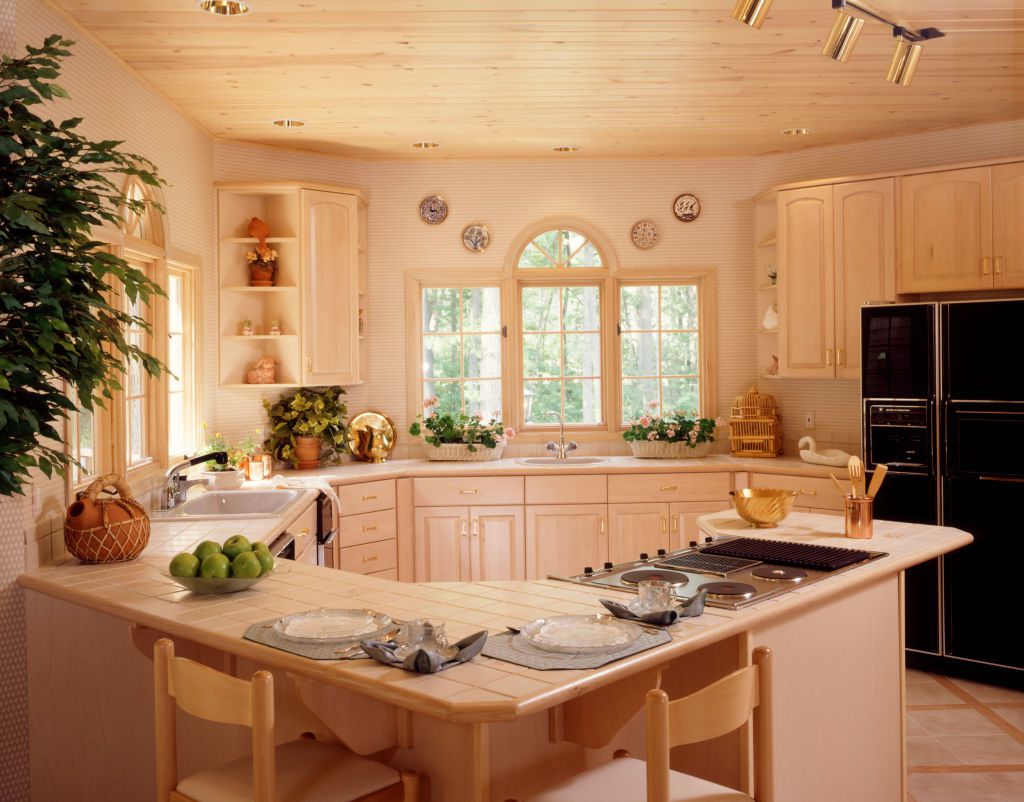
Nineties kitchens, with their cozy charm and nostalgic appeal, are making a comeback in home decor trends. Interior designers find that these kitchens, despite sometimes being seen as outdated, offer warmth and character that modern spaces often lack. Elements like bold tile patterns, wooden finishes, and playful layouts contribute to their enduring appeal. Designers are sharing insights into why these spaces remain beloved and which features are worth preserving in today’s homes.
Meet the Expert
- Peter Spalding is an interior designer and the co-founder of Daniel House Club, a product hub for interior designers.
- Nina Lichtenstein is the founder and principal home designer of her eponymous firm.
’90s Kitchens Are the Perfect Base
Emily Henderson Design / Photo by Kaitlin Green
From warm honey oak cabinets and laminate to overly busy backsplashes and tiled countertops, there are a few design trends of the ’90s that can feel outdated when it comes to a kitchen. But according to designer Peter Spalding, the space’s layout itself is what truly withstands the test of time.
“I actually prefer renovating the footprint of a ’90s kitchen to one from the last two decades,” Spalding says. “One of my biggest hot takes is that I hate gigantic kitchen islands, and ’90s kitchens didn’t really have those—they have workable, if often quite complicated plans.”
When it comes to updating a kitchen from the 1990s, Spalding also loves to embrace some of the postmodern architectural elements influenced by earlier decades, such as bold geometric shapes, curved countertops, and space-dividing panels.
“These kitchens were sort of the last gasp of the Venturian desire for complex and contradictory forms in architecture,” he says.
Want more design inspiration? Sign up for our free daily newsletter for the latest decor ideas, designer tips, and more!
They’re Bold and Playful
Glossy cabinets and countertops, neutral color schemes, and sleek, minimalistic features are all staples of a modern builder-grade kitchen—but these can make a space feel cold and impersonal. So for home designer Nina Lichtenstein, the best parts of a ’90s kitchen are its character and eclectic style.
“The charm of a 1990s-style kitchen lies in its playful approach to design,” she says. “I love the way ’90s kitchens embraced creativity through bold tile patterns, glass-front cabinets, and pops of color.”
Some of the other decor trends of the decade Lichtenstein and other designers love to see in today’s kitchens include light paint colors and wooden finishes, funky patterned wallpapers, and retro-style white appliances.
They’re Warming, Comforting, and Nostalgic
ClassicStock / Contributor / Getty Images
As cliché as it may sound, a kitchen truly is the heart of the home—and Spalding believes that kitchens built in the 1990s have a tendency to carry that welcoming, connected feeling in ways many modern kitchens simply don’t anymore.
“As far as providing a comfortable epicenter for the home, they were successful, even if their details were sometimes short of beautiful,” he says. “I actually prefer them over some of the overly showy contemporary kitchens that are way too connected to the other principal rooms of a house to be practical—’90s kitchens were less about inspiring envy, and more about bringing people together.”
For Lichtenstein, a lot of the love for a quintessentially ’90s kitchen comes from spending time in and growing up around them, and the memories and warmth their features instantly bring when stepping into the space.
“From arched cabinet cutouts to light oak finishes, these kitchens always evoke a major sense of comfort and nostalgia,” she says.
’90s Kitchen Elements Worth Keeping
Kate Marker Interiors
Whether it’s the layout or individual design features, both designers we spoke to agree: there are lots of aspects of a nostalgic ’90s kitchen worth keeping around in today’s spaces.
If you live in a home built in the 1990s and are considering a kitchen renovation, Lichtenstein says to think about which elements bring you the biggest sense of comfort, and to design and decorate around those for a thoughtfully newstalgic feel.
“To incorporate ’90s staples in a more modern space, try mixing vintage details with streamlined designs,” she says. “For example, a tiled backsplash with a geometric or checkerboard pattern can nod to the ’90s while still feeling fresh, and incorporating a vintage glass cabinet or light oak shelving can soften a contemporary kitchen’s sleek edges.”
If you’re renting or living in a newer home and find yourself daydreaming about a cozy kitchen inspired by your favorite throwback TV shows, take a trip to the thrift store to score some vintage furniture and decor, add butcher blocks to your countertops to bring the warmth of wooden cabinetry, or create backsplash patterns with peel-and-stick tiles to create the perfect blend of old and new in your space.
Read the full article here