



Groundcover plants are a genre of their own, offering a barrow-load of benefits in the garden. With a few of the best flowering groundcover plants, those advantages multiply.
Not only do these low-growing plants fill in the bare patches in garden beds and borders, but there are plenty of groundcover plants that suppress weeds, too. They’re the perfect solution for gardeners looking for plants that are equally as practical and beautiful.
I’ve rounded up some of the best flowering groundcover plants that you can plant now to keep weeds at bay, support wildlife and decorate your garden.
Article continues below
1. Groundcover roses
Groundcover roses are brilliant at managing weeds, but they’re also beautiful, fragrant additions to garden borders. They’ll produce a scented carpet of blooms (there’s actually a variety that’s named in honour of that), colouring in the gaps in your garden.
‘‘Scented Carpet’ is a very popular rambling ground cover rose, prized for its unusually strong, sweet scent which comes from an abundance of single, lilac-pink flowers which it produces consistently from summer through to early autumn,’ says Lucie Bradley, gardening and greenhouse expert at Easy Garden Irrigation.
‘Flower Carpet’ is another popular variety, available in a range of shades (but I think Rose ‘Flower Carpet Amber’ from Crocus is one of the prettiest).
2. Creeping phlox
Creeping phlox is another favourite among the Ideal Home team – it’s one of the best flowering groundcover plants, slow-growing, and blooms beautifully every spring. Our Senior Digital Editor, Jenny, is beating weeds in her garden borders with creeping phlox.
‘I’m using creeping phlox as sort of living mulch in my borders, planting it in between gaps to help smother any weeds before they have a chance to take over,’ says Jenny. ‘As it starts to spread, it’ll create a colourful, floral carpet that makes the space feel a little more intentional. And the beauty of this evergreen option is that it’s super low-maintenance!’
You can order a YouGarden Creeping Phlox Collection of 12 plug plants for just £15 from QVC.
3. Periwinkle
On a recent trip to Oxford Botanic Garden, one area of the gardens was just covered in dense periwinkle foliage – Vinca major var. Oxyloba, to be precise – and the deep purple-blue flowers were just beginning to appear.
‘This evergreen groundcover is prized for its rapid growth and ability to thrive in dry shade,’ says Julian Palphramand, head of plants at British Garden Centres. ‘With pretty blue or purple flowers in spring and summer, periwinkle is ideal for challenging sites where other plants struggle.’
You can order Vinca major (greater periwinkle) plants from Crocus. Or, go for Vinca minor (lesser periwinkle) plants from Gardening Express for more of a compact mat of flowers.
4. Armeria
Armeria is one of the best flowering groundcover plants for gardeners who love vibrant blooms. The plants are more commonly known as thrifts, and they’re evergreen perennials that grow a little differently from other groundcover plants.
‘Rather than spreading in flat mats like many other groundcover plants, Armeria has a wonderful habit of growing in dense, evergreen ball shapes, and the round forms they create add something different to the garden,’ says Fothergill’s senior horticultural content manager, Pim Dickson.
Thrifts are brilliant flowers for raised garden beds, and Pim says they’ll thrive in plenty of sun.
‘They are pretty bulletproof, live for many years, and flower for a long time, with their rounded lollipop seed heads remaining after flowering to continue adding interest,’ Pim adds.
Order Armeria maritima ‘Splendens’ from Crocus for bright pink flowers.
5. Erigeron
Erigeron, which looks very much like a profusion of daisies, is one of the best cottage garden plants out there, but it’s also one of the best flowering groundcover plants – and as a bonus, it’s really low-maintenance.
‘Commonly known as Mexican fleabane, this perennial has dainty white and pink daisy-like flowers blooming from May to November,’ says Julian from British Garden Centres. ‘Its spreading habit ensures continuous colour and attracts pollinators throughout the summer, making your garden abuzz with beneficial insects.’
Julian says you can plant Erigeron in rockeries and wall crevices, too. Crocus sells Erigeron karvinskianus plants in a range of sizes.
6. Aubrieta
For vibrant purple blooms, go for Aubrieta – it’s one of the best flowering groundcover plants, and one of the easiest to grow, too.
‘Aubrieta is a hardy perennial that forms dense mats, and it’s often entirely covered in flowers at this time of year,’ says Pim from Fothergill’s. ‘It is possibly the most well-suited companion for spring-flowering bulbs that you can get, as well as being reliable, low-maintenance, and drought-tolerant. It can be sown now to flower early next year, or bought as young plants and planted straight into the ground now.’
It’s one of the best trailing plants, too, which means you can plant it in wall crevices like you can with Erigeron. Pim says you can sow Aubrieta now for early blooms next year (order Fothergill’s Aubrieta ‘Cascade Mix seeds’ from Amazon), or buy young plants like this Aubrieta collection from J. Parker’s and plant them now.
7. Bellflowers
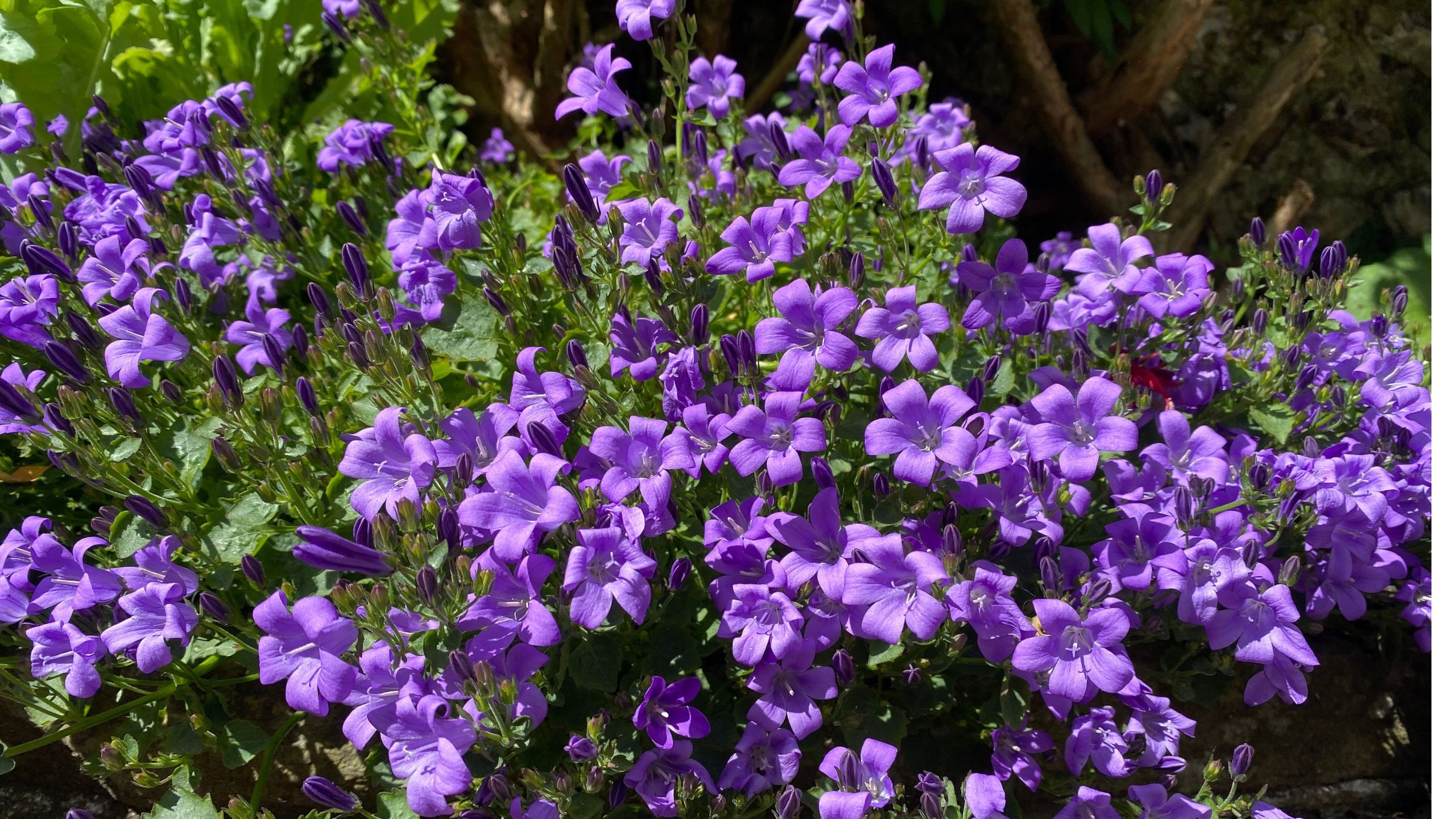
Bellflowers, or Campanula, are among the best plants for bees – and they also happen to be one of the top flowering groundcover plants.
‘If you’re looking for something almost indestructible, then Campanula carpatica, a creeping form of bellflower, is well worth considering,’ says Pim. ‘Once established, it forms dense mats of small, bright green leaves, which are almost completely covered with small bell-shaped flowers.’
Bellflowers tend to be trailing plants, so they’ll spill effortlessly over raised garden borders or, as Pim says, soften the edges of paths and patios.
‘Campanula carpatica can be sown indoors now to plant out in a few months when large enough, or bought as young plants for planting as soon as the soil starts to warm up.’
You can buy Campanula carpatica ‘Blaue Clips’ in 9cm pots from Crocus.
Flowering groundcover plants have a tonne of benefits, from suppressing weeds to providing a source of nectar for pollinators.
Read the full article here