



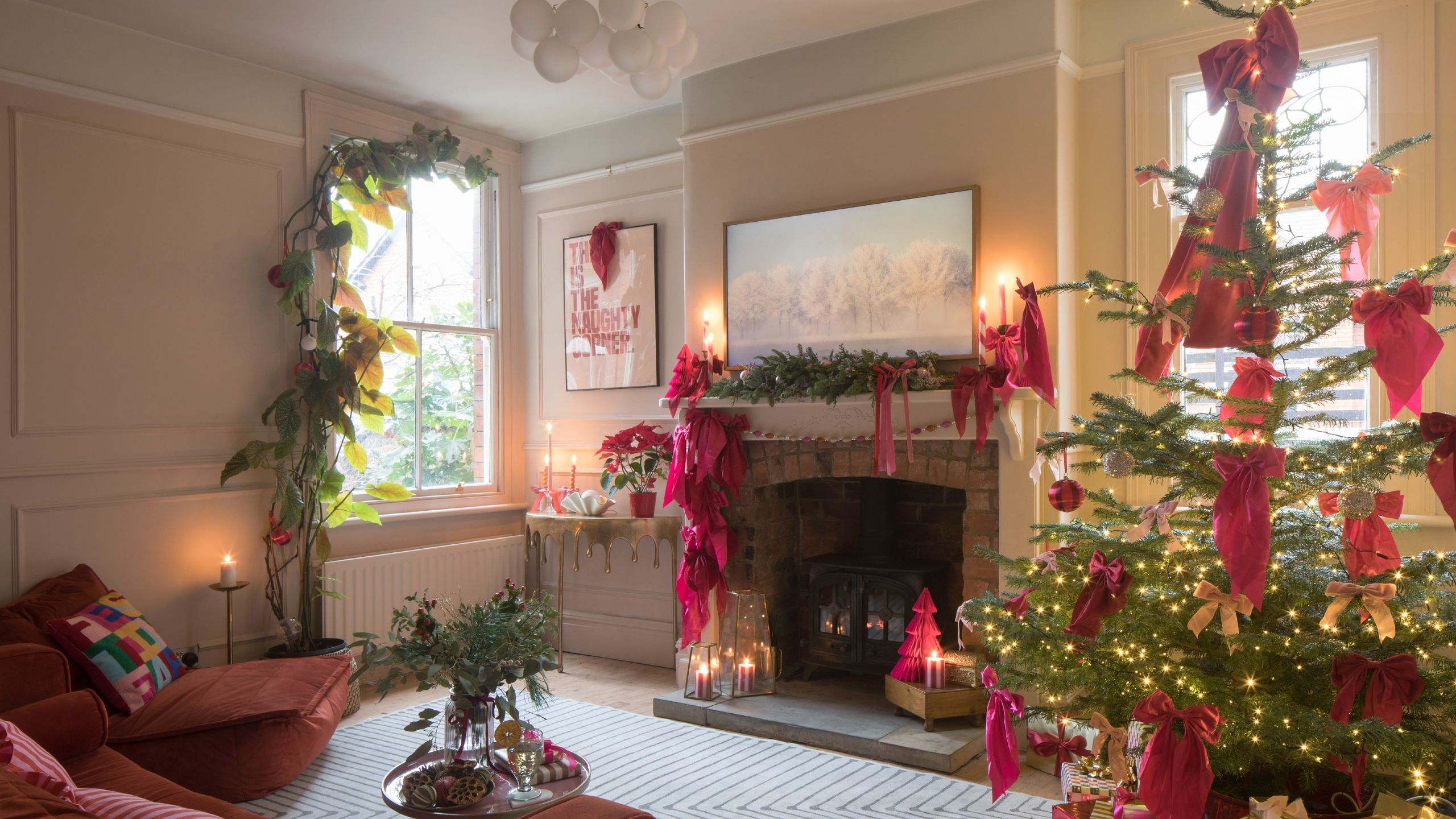
Your local supermarket is often a great place to pick up a real Christmas tree, with many stores stocking fresh, responsibly sourced varieties in a range of sizes.
If you plan on doing so, experts have revealed five things to look out for when shopping for one so you can buy the best real Christmas tree possible to bring home.
1. Choose the right time to shop
The key to selecting the right Christmas tree is picking one on the right day. Leave it too long, and you’re left with the dregs no one wants, too early, and your tree might not make it until the 12th night – which is why experts at B&Q say this weekend is best.
‘It is best to shop on the first peak weekend (November 29th or 30th) for the strongest selection of size, shape, and species. Most trees are cut around the same time, so it is best to purchase them sooner rather than later,’ says Mark Sage, Lead Outdoor Buyer at B&Q.
2. Assess how it looks
If the tree is netted, it can be hard to assess what its shape will look like when positioned in your home. Because of this, there are a few other indicators to look out for that can help you assess whether the tree is healthy or not.
‘What you are looking for with a healthy tree is one with a good green appearance and with few browning needles visible,’ says Lucie Bradley, garden and greenhouse expert at Easy Garden Irrigation.
‘If you are selecting a fir tree, such as a Nordmann Fir, then you would expect a healthy tree to have short needles that are well distributed around the stems and softer when compared to those of a spruce tree. These are a good choice of tree as their branches are dense and slightly upturned, making them perfect for decorating.
‘In contrast, when you are selecting a spruce tree, then a healthy tree will have sharply pointed needles, and you’ll see between 2 to 5 needles coming from a single point on the stem. Blue Spruce and Norway Spruce are the types you are likely to find when shopping for your Christmas tree.’
3. Do the freshness test
Mark also recommends completing the freshness test to ensure your tree is not past its best, and therefore will not drop needles all over your carpet.
‘Perform the ‘bend test’ – the needles should be bright green, flexible, and stay firmly attached to the branch when gently touched. It is important to avoid trees with dry or brittle needles,’ he says.
4. Consider your household
Another important factor you must consider is your household. Do you have a cat that tries to scale the tree? Or little fingers that are at risk of being pricked by spiky needles?
‘If you have small children or pets sharing your home over the Christmas period, then you should take this into account when selecting the type of real Christmas tree you buy. Ideally, select a tree with naturally soft needles, such as a pine or fir tree, rather than the sharp needles of a spruce tree. Choose a ‘non-drop’ tree, such as a Nordmann Fir, which retains most of its needles even after Christmas, and it has dried out,’ Lucie recommends.
You should also be careful to avoid the places you should never put your Christmas tree if you want it to look its best throughout the festive season. Protecting your tree from underfloor heating if you have it should be another key consideration.
5. Give it a ‘crucial cut’
After choosing your tree, there is one more step that you must not forget to do – the ‘crucial cut’. This ensures your tree stays fresh for as long as possible.
‘Before standing, it is advised to carefully saw 2.5cm (1 inch) off the base of the trunk. This removes the sap ‘plug’ that forms after cutting, allowing the tree to absorb water efficiently. You could even use the cut-off slice to make an annual tree decoration keepsake!’ says Mark.
Shop real Christmas trees online
As well as your local supermarket, there are some trusted online suppliers that will deliver high-quality real trees to your door.
Gardening Express
Fresh Christmas Tree – Traditional Potted Norway Spruce
The real tree is between 3ft and 4ft, making it a great options for small spaces. Plus, as it comes potted, you can plant it in your garden once the festivities are over.
B&Q
180-210cm 6ft Fraser fir Large Slim Real cut Christmas tree
This 6ft real tree is availble for click and collect in as little as 15 minutes at some stores. It claims to have excellent needle retention and strong branches to hold all your decorations.
Flower Market
Large Real Christmas Tree in Birch Pot 70-80cm
M&S are offering next day delivery on this stunning real tree. It even comes with the adorable snowman baubles and twinkling lights.
Do you have any other tips and tricks to pick the best real supermarket tree?
Read the full article here