

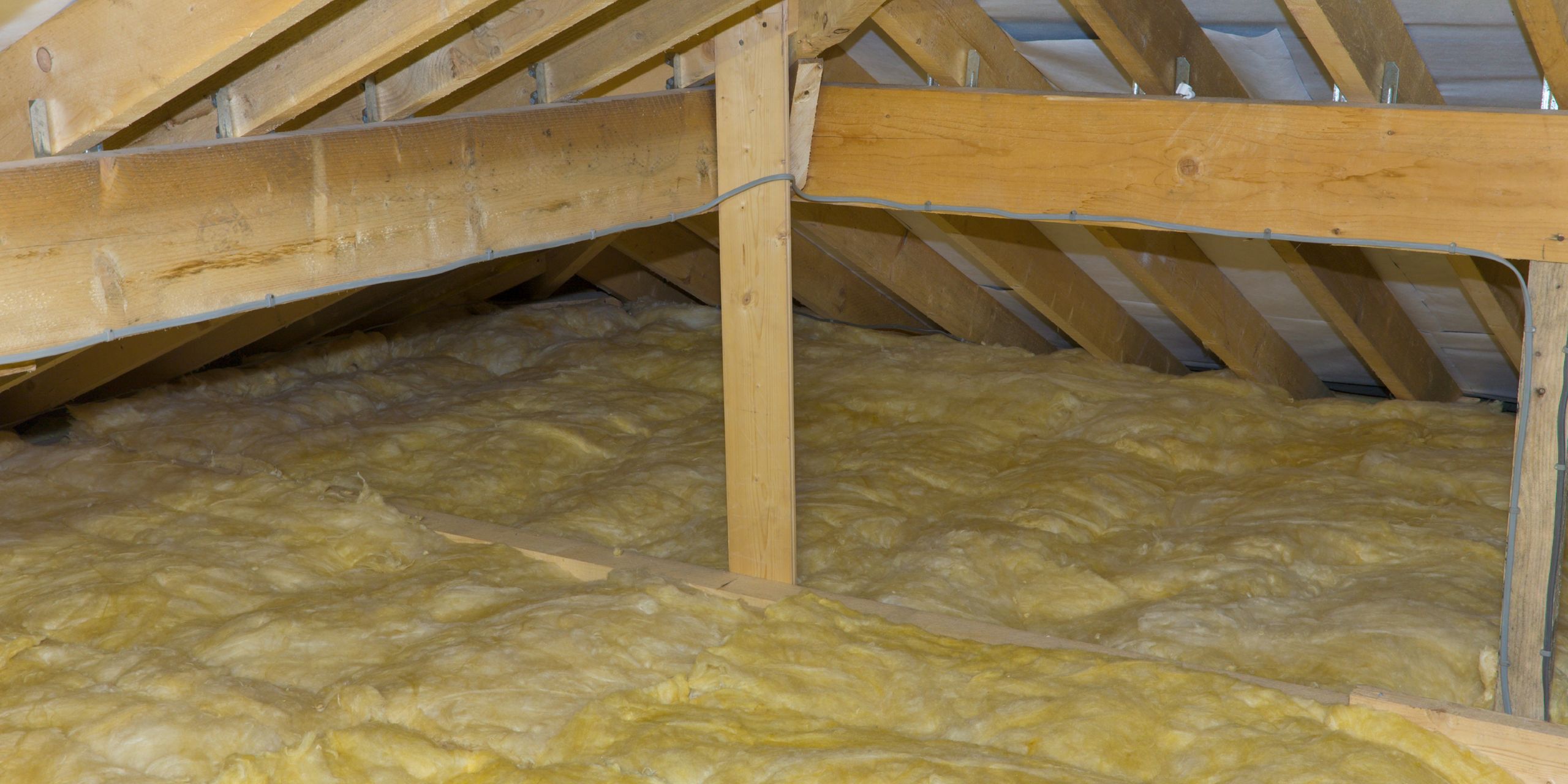
If your home is constantly feeling cold, you might be tempted to just turn the thermostat up to compensate. But if the chilliness is actually a symptom of an issue with your loft insulation, then whacking the heating up means you are wasting both energy and money.
According to the Energy Saving Trust, around 25% of an uninsulated home’s heat is lost through the roof. And so if your home feels like it’s losing heat, your loft space is a good place to start when it comes to investigating the problem. Even if your home isn’t losing heat right now, it’s still worth making a few tweaks to prevent heat loss in the future.
1. Inspect your existing insulation
It’s a good idea to check your loft insulation and make sure it’s in good working order so that it does its job properly. This should be a simple visual inspection to check for any obvious gaps or signs of damage or disturbance. While it’s normal that your insulation shouldn’t be going right into the eaves, if you spot other gaps or see spots where you don’t have enough insulation, it’s a good idea to get this sorted asap if you want to stay warm.
If you notice a musty smell or see any discolouration or sagging, this can be a sign of water damage. Listen out for unusual sounds too. Noises that sound like scratching, scurrying, buzzing, or chirping can all be signs that mice, rats, squirrels, bees, wasps or birds have set up home in your loft, which could be damaging your insulation.
Remember that what insulation is made of can be irritating to your skin and respiratory system, so don’t touch it without wearing appropriate PPE (or leave it to a pro).
If you do see signs of damage, it’s worth calling on a pro to resolve the infestation, remove the old insulation and install new where needed.
2. Insulate (and draught proof) your loft hatch
It’s all well and good having a well insulated loft space, but it’s all too easy to forget to insulate the loft hatch, which means you could still be losing a significant amount of heat without even realising it. So it’s important to make sure you seal any draughts and make sure it’s well insulated. If not, this could be a key spot for heat loss.
Fortunately, you can buy specifically designed loft hatch draughtproof strips, like these loft hatch seals from Amazon (£9.49), that are easily cut to size with scissors and fixed with nails.
Stormguard Around Loft Attic Hatch Door Draught Excluder
Specifically designed for loft hatches, these uPVC and rubber strips bridge the gap between the hatch and the frame and can seals gaps up to 7mm.
BPS Superior L Compliant ‘swing Down’ Insulated Loft Hatch
Consider replacing your uninsulated loft hatch with this well-insulated alternative. It’ll look no different when installed, but your home will feel warmer.
Attic Door Insulation Cover
If you think you can’t insulate your loft hatch because of any loft stairs fixed to it, then this insulated cover is exactly what you need.
3. Raise what you store in the loft
Unless you’ve done a loft conversion and use your attic as additional living space, then it’s likely that you’ll be using it for storage instead.
But did you know that incorrectly storing items in your loft could impact the integrity of your insulation, making it less effective and shortening it’s lifespan.
‘Loft mineral wool does its job by trapping still air, and the moment you compress it with boxes or boards you cut its thermal resistance sharply,’ says Alex Morrisey, Founder of Best Roofers. ‘That extra heat loss also drives more warm, moist indoor air into the cold loft where it can condense on timbers and sarking, especially through winter. Over time that moisture can rot rafters and ceiling joists, rust nails and brackets, encourage mould, and leave brown stains on ceilings.’
The solution is to raise your storage above the insulation. Doing this means you not only prevent the insulation being compressed, and ensure adequate airflow, but you also maintain the energy performance of your home.
The Loft Riser Stilts, 175mm Height Loft Insulation Spacer (64-pack)
Adding loft stilts means that you avoid compressing your insulation with loft boards which can make it less effective.
Loftzone Storefloor Loft Decking (without Boards)
If you need to store heavier items, then a more substantial system, like this one, will protect your insulation and give you the storage space you need.
Loft Ledge Truss Shelving Kit
Maximise your storage potential around your trusses, without compromising your insulation, with this Loft Ledge.
FAQs
How do I know if my loft is insulated properly?
To know with certainty that your loft is insulated properly, you’ll need an expert. They can come and assess your existing set up and offer advice on where it can be improved to make your home warmer.
But there are things you can look out for yourself that will give you a heads up that all is not well, and that there are signs your insulation needs replacing. These include:
- Your home feels colder than it used to
- Your energy bills are inexplicably higher than they used to be
- You’ve heard strange noises coming from the loft that you think may be pests
- Your loft boards have compressed the insulation
- A visual inspection shows gaps, disturbance or damage to the loft insulation.
Make sure you follow these loft insulation dos and don’ts for the best results when it comes to your homes comfort and energy bills.
Read the full article here