

Many people dream about being able to put their kitchen island ideas into practice. After all, a kitchen needs to have multiple uses as a socialising, eating and prep space, and an island can add valuable space and functionality.
Islands come in all shapes and sizes so can be designed to suit your home and personality. But you will need to first think about what you’ll use it for. Will it be a spot for extra prep? Or do you plan to turn it into the informal dining hub of your kitchen?
‘Kitchen islands are the perfect combination of aesthetic beauty and functionality. A clever kitchen island design will increase worktop space, improve storage capacity with innovative storage options and even potentially add a dining option by way of a breakfast bar,’ says Jonathan Stanley, VP of marketing at Caesarstone.
Article continues below
Kitchen island ideas
When designing and thinking about your kitchen layout ideas, your kitchen island ideas can make or break a space. You can play around with the colour, material, size and placement of your kitchen island to transform your space and suit your needs.
‘Visual appeal will always be key within any room. Yes, we want functional kitchens but we also want kitchens that look the part,’ notes Alex Main, director of The Main Company. ‘When designing a kitchen island, you need to think about what material to use on the counter – do you want to maintain a level of cohesion, selecting a material that will match the rest of the kitchen run? Or do you want to make a statement with a reclaimed wood raised bar or statement marble?’
‘In addition to valuable countertop space, an island provides ample storage. Large cupboards or pan drawers within a central island are extremely useful for storing bulky items or those used most frequently. Islands also provide a great base for open shelving, whether this is just on one side or spread across the whole island, allowing for the display of cookbooks and other decorative pieces.’
1. Contrast with a colourful island
Colour is essential to the home and business of Hugo and Olive, owners of Glebe House and this wonderfully colourful kitchen.
‘We worked together with Neptune designer Claire from their Bath store on the design,’ explains Olive. ‘Our priority was to have a large multipurpose island – for us to prep but also so we can be with the family crafting and playing in one place. We were drawn to the Henley Kitchen as it sits perfectly between modern and traditional style.’
The couple opted for natural oak base units complemented with wall cabinetry in Neptune’s Burnt Sienna and a large island in Burnham Red.
2. Choose a shape that works for your space
Most kitchen islands that you see are rectangular and this is for good reason – it’s a common shape that will work for most kitchen sizes, but it doesn’t have to be right for yours.
In this Herringbone House kitchen, the square design perfectly fits the larger floorplan and offers plenty of space for seating.
3. Choose a slimline island
Islands require a certain amount of clearance around each side to ensure that your kitchen layout is still functional, which can be a trickier task in small kitchens.
Slimline kitchen islands, like the style in this country kitchen, mean that you still reap the rewards of a typical island layout without losing too much floor space. To achieve this small kitchen island idea, you can opt for slimline freestanding styles or choose to have one made in the same style as your kitchen.
4. Plan according to lifestyle
Planning advice for kitchen islands usually rules against placing a sink on this central point, as it means dirty dishes remain in plain sight for guests to see. However, it’s important to choose what’s right for your family and lifestyle, as the owners of this New England-style kitchen discovered.
The area in front of the kitchen island is where the children play, so situating the sink on the island means that those cleaning up can remain involved in the activities occurring in the living spaces, resulting in a much more social layout.
5. Pick surfaces carefully
If you’re adamant about fitting an island into a small kitchen, or trying to make any kitchen look larger, it’s time to get clever with how to use visual tricks to increase the illusion of space.
The bold gold reflective island in this Georgian terraced family home is not only eye-catching but makes the room feel larger by reflecting the adjoining living area. It takes what could have been a visually busy Shaker kitchen design and adds an innovative space-enhancing touch.
6. Choose a freestanding island
A large island with plenty of storage isn’t right for every kitchen – this eclectic country kitchen with a freestanding island proves how a simple option with open legs can help to open up the room.
With ample colour, storage and decor in this barn conversion, opting for a more pared-back island keeps the centre of the kitchen balanced and allows connection to take importance.
7. Make room for ‘fun’ appliances
A wine fridge is far from a kitchen essential, but it does make a fun and luxurious addition to your cooking space. And an island is the ultimate place to position it.
An island provides extra room for storage, worktop space and of course a spot to add more appliances. If there are some fun appliances you have your heart set on, an island is the best place to house them.
8. Incorporate classic style
Freestanding kitchen islands are one of the easiest ways to adapt your small kitchen layout on a budget, and without going through a renovation.
If your kitchen is just about big enough to fit in an island, there are so many freestanding styles that create flexibility in your layout. Whether your style leans more traditional like in this country kitchen or you prefer a modern take (this Habitat island would be the perfect fit), a freestanding island will make your kitchen much more functional.
9. Double up on storage
Kitchen island storage ideas are essential for creating a functional space that works hard for your home. In this family home in York, drawers and cupboards are combined to maximise storage potential on the far side of the island.
‘We invested a lot of time planning a room that looks beautiful but is also practical,’ says Jess. The island, with its durable quartz worktop, is a social hub for entertaining but it also creates practical storage in the kitchen.
10. Add wow-factor with a waterfall worktop
A kitchen island is the perfect place to make a real statement. It’s separate to the rest of your wall cabinetry so it feels like somewhere where you can have a bit of fun with the design.
A waterfall worktop is the perfect way to make your kitchen island look more expensive. It’s simple in theory – you just need to extend your a slab of worktop material down the sides of your island, but the effect is super high-end and glam. Plus, it will make the sides of your island really easy to clean if there are any splashes and spills.
‘Waterfall edges really speak of high design, and they can help create that sleek and minimal look that people want in a contemporary kitchen space,’ notes Jonathan from Caesarstone. ‘They can be used to add a stunning visual element whilst hiding cabinetry and appliances. Waterfall features can be added to one or both sides of the island, or even the front or back, offering multiple design options depending on how you wish to use the space.’
11. Leave enough walkway space
When thinking about how to design a kitchen, consider how you will move through the kitchen and if you have enough space to walk around your island. You also need to consider when your cupboards or drawers are open, can you still walk around your island without bumping into anything.
‘Kitchens need to be as functional as they are beautiful, and sacrificing floor space to fit an island will just give an awkward, uncomfortable look,’ says kitchen deisgner Tom Howley. ‘The importance of walkway space should be a key consideration. When designing your layout, always leave a metre of walkway space on either one or two sides of your worktop, island, or peninsula counter. This is a functionally and aesthetically effective dimension to keep in mind.’
12. Fake the island effect with a peninsula counter
If you love the look of a kitchen island but don’t have enough space for a free floating unit, a peninsula kitchen idea could be the next best thing. Jutting out from a worktop they offer the opportunity to create the storage, seating area and display zone achieved by a kitchen island.
They can be styled with bar stools, or if you are using it to divide an open plan living space you can build in banquette seating next to one as an add option not available with a traditional large kitchen island
13. Match your worktop to your furniture
Matt Phillips, head of UK operations at Rotpunkt recommends matching your kitchen island worktop to your furniture for a seamless and durable finish.
‘High-pressure laminate finishes are becoming the preferred choice for furniture and worktop design that needs to work in tandem. As a result, kitchen worktops are now looking to the furniture for inspiration, seeing laminate solutions become the go-to for synchronising the kitchen doors and work surfaces in the same material and finish.’
14. Think about the finer details
Not thinking about the finer details is one of the kitchen island design mistakes that many people make. Take time to think about the details that will make your life easier and make using your kitchen a smoother and more enjoyable experience. ‘We find tremendous value in the finer details which are often hidden from view,’ says Matt Phillips from Rotpunkt.
‘Fully extendable drawer systems for smooth linear movement, soft-close hinges for a high degree of usability and exclusive handleless profile options with a variety of different chamfered edge detailing are just some of the examples where extra care and attention to specific design features can make all the difference.’
15. Take advantage of technology
Making use of technology can make your kitchen island ideas work harder for you. In this Husk kitchen, a seamless integrated induction hob means that the kitchen surface can be used for prep work without a gas hob getting in the way.
It also reduces visual disruption so the island can remain a tidy, clutter-free zone.
16. Soften with wood surfaces
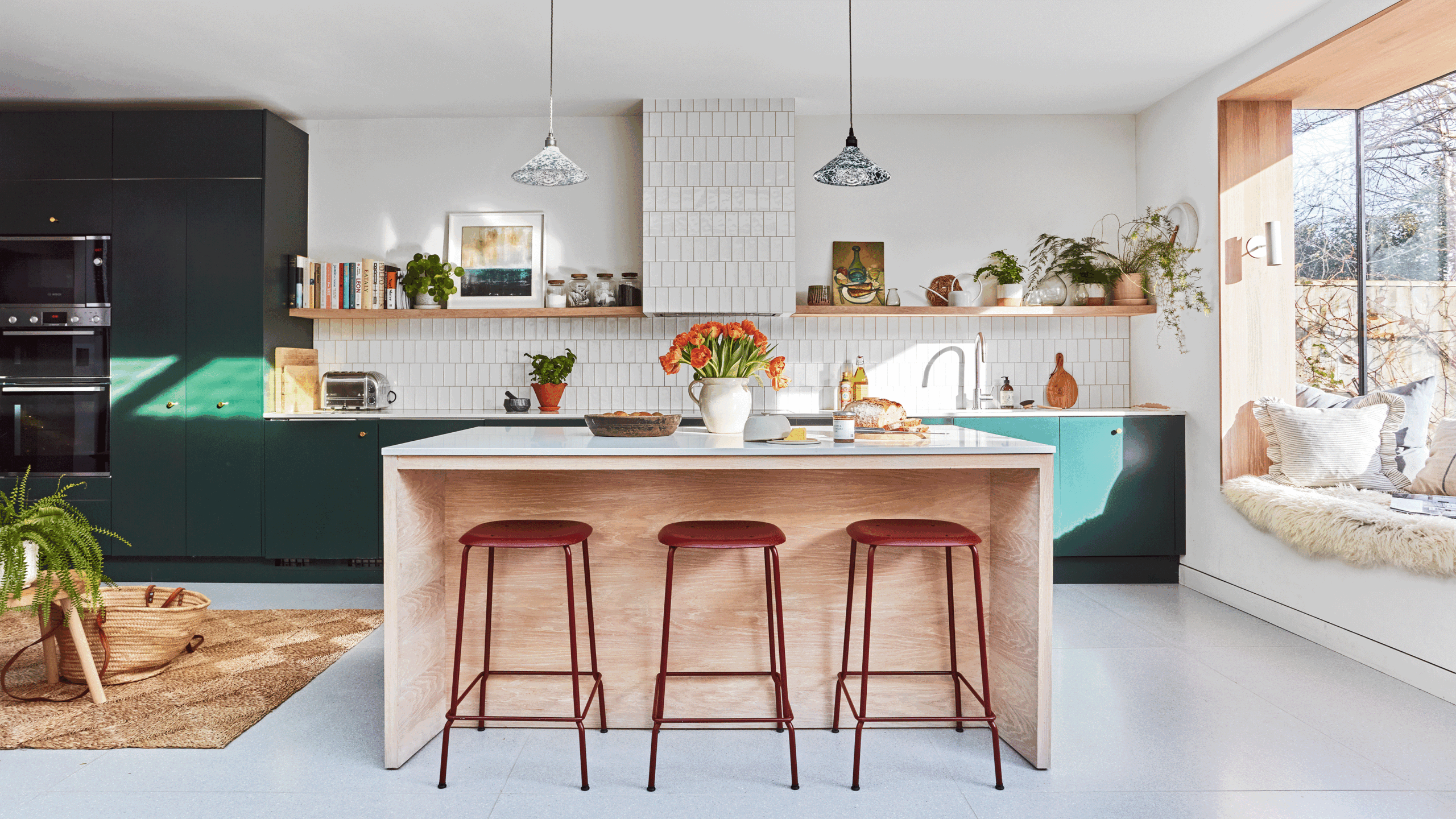
Natural materials are a big kitchen trend for 2026 and they’re a great way of grounding the design. In this contemporary kitchen extension in this Hertfordshire home, the dark green cabinets create an earthy colour scheme that is offset by the wooden island.
The exposed wood base is easy on the eye which is particularly important in an open plan kitchen and living room.
17. Zone an open-plan space with a longline island
Open-plan living layouts offer ample space for everything but without some division they can feel overly large and vacuous. Break up the space by using furniture to divide one large living area into smaller, more manageable zones.
A longline island creates a natural divide between kitchen and dining/living spaces. With cooking and prep surfaces on one side of the island, consider kitting out the reverse side with practical open shelving. Filled with books and display pieces, it makes a more decorative feature facing outwards as you enter the area.
18. Refresh a tired kitchen with a splash of colour
A central island is the optimum place for adding a pop of colour as part of your kitchen colour scheme to a neutral kitchen or dated decor. Painting the island a cheery, contrast shade allows a quick and easy refresh that can work wonders on a tired kitchen, without committing to a full room redo.
In practical spaces like kitchens, always go for a hardwearing, water-resistant paint finish that can handle regular wipe-downs of splashes and splatters. To save prep time if re-painting a wooden island, opt for purpose-made Cupboard paint – try Rust-oleum or Ronseal – it’s easy to apply to furniture and won’t need primer or top coat.
A kitchen island is the perfect place to welcome a brave colour choice in a kitchen colour scheme. While the colour is permanent it is not as daring as choosing a whole kitchen with coloured cabinets. You could always repaint the island at some point down the line, should you have a change of heart with the bold hue.
19. Incorporate extra storage on one side
Maximise every inch of a kitchen island with well thought-out storage ideas. Instead of standard end panels, put this wasted space to better use by incorporating a set of slimline shelves. At less than 10cm deep, a narrow gap like this works perfectly as a spice rack or a spot for stashing condiments and oils.
Alternatively, just add a couple of steel rungs and the slimline space is ideal for displaying cookery books, with covers facing outwards so they’re easier to identify. Here would be the perfect time to use a few kitchen organisers to tidy this space and maximise storage at the same time.
20. Make sure your island is well lit
As far as kitchen lighting ideas go, the island is one of the most important focal points – some would say the star of the show. While you want the entire kitchen to be lit for your needs it’s imperative to make sure the island fits perfectly within the lighting plan.
As it often serves as the main food prep station and the hub of entertaining it needs to be well-lit, most likely by multiple lighting options. Whether that’s overhead spotlights or lanterns, which you can dim for intimacy or brighten for practical task lighting, ensure the main focus for good lighting is the centre of the island.
FAQs
Are kitchen islands outdated?
Kitchen islands have been a staple of kitchens for many years, so some people may question if they are now an outdated concept that won’t fit in with their modern kitchen ideas, but this is seriously unlikely to happen.
‘A kitchen island is a multi-functional piece and should provide both extra workspace and storage – it’s a real staple in a kitchen,’ says Al Bruce, founder of Olive & Barr.
‘To find the right aesthetic for your style and kitchen, you can choose to create a cohesive look by opting for the same materials for both wall cabinets and the island. This is a timeless approach and doesn’t mean the kitchen will look samey. Playing with two main textures and colours provides a strong base for adding additional interesting elements, for example, upholstered stools, unique art and custom-made shelving.’
‘Alternatively, the kitchen island provides the ideal opportunity to get creative. Consider contrasting colours, why not opt for an island in a bold colour and choose softer tones for the rest of your kitchen cabinets?’
‘Play with texture too, by adding wooden shelving and a contrasting work surface. The kitchen is no longer a purely functional room, an eclectic look will ensure that your kitchen is inviting, stylish and somewhere you want to spend your time.’
What is the best size of a kitchen island?
‘The dimensions of your kitchen island will always be influenced by the size and layout of your kitchen,’ explains Tom Howley. ‘The first thing I do when I start to design a kitchen island is plot out the depth of the cabinetry.’
‘I’ll then look at the walkways between the cabinetry and where the proposed island will be,’ he continues. ‘I consider what is happening in each walkway, such as placements of sinks, fridges and hobs and the amount of space required to open doors. If it is a high-traffic area, I recommend making the island slightly smaller – this makes the whole space feel much more comfortable and spacious.’
‘As a general (but loose) rule of thumb, when planning the kitchen island, it’s best to map it out based on the idea of half-width to length,’ advises Al from Olive & Barr. ‘Rather than restricting yourself to specific measurements, think about proportions rather than size. This rule prevents the kitchen from feeling too long and skinny or wide and square.’
‘Those who are planning on having appliances like the dishwasher on the island need enough clearance to comfortably pull it out, that’s usually 1 metre between the island and kitchen cabinets. Those who aren’t planning on appliances can get away with a slightly tighter space of 800mm.’
What can I do instead of a kitchen island?
‘An alternative to islands – peninsulas denote where one part of your kitchen ends and another begins,’ recommends Tom Howley. ‘Connected to a wall on one side and offering extra space for seating or food prep, a peninsula design can work with several floor plans, especially in small kitchens which may benefit from the functional and sociable advantages of an island but may be limited in space. You can even have fun with your cabinetry colour scheme to add depth and movement to your space.’
‘It’s easy to see why kitchen islands are a popular choice in home design at the moment, however, the reality is that, if you have a small room, an island could dominate the space too much. In my experience, the two main reasons a client would want a peninsula or island would be to introduce a seating area and increase their preparation space.’
‘A peninsula allows for both and is incredibly effective in smaller spaces because of the reduced clearances required. It provides an entertaining area within a kitchen that otherwise would not have had the space, whilst affording additional worktop space in the kitchen itself to prepare and serve. In addition, the double-sided peninsula can act as a natural break to the space in your room, with the potential for other zones on the opposite side to your kitchen – think dining tables, sofas, a bar area or media wall.’
Whichever style, shape or size you opt for, an island is likely to make life in your kitchen easier, more streamlined and even more convivial.
Read the full article here